

Midea Rotisserie Toaster Oven Photography
- Published:
- 2018-10-29 12:02:03
- Lead Photographer:
- June (Product Photography Team Lead)
- Source:
- AIMI Visual Media Co., Ltd.
- Last Updated:
- 2026-09-16 23:59:00
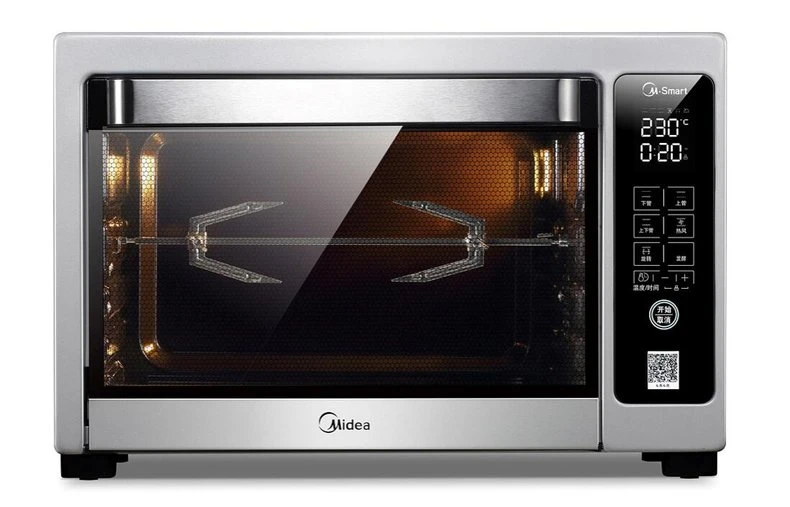
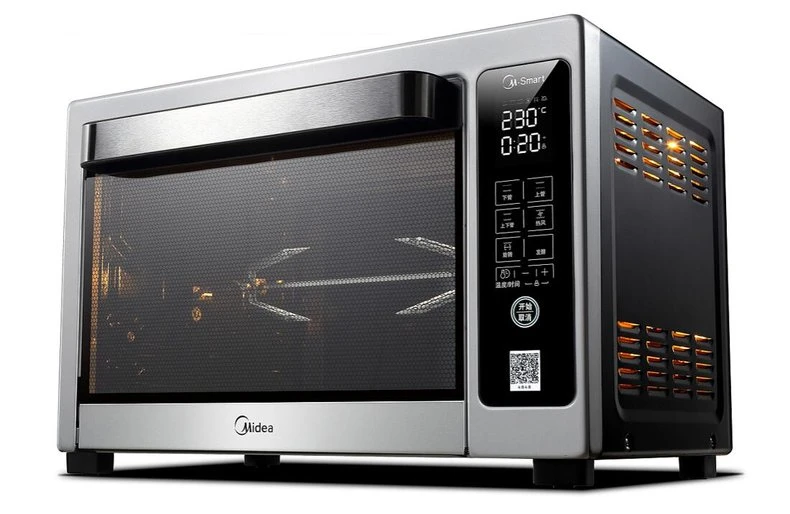
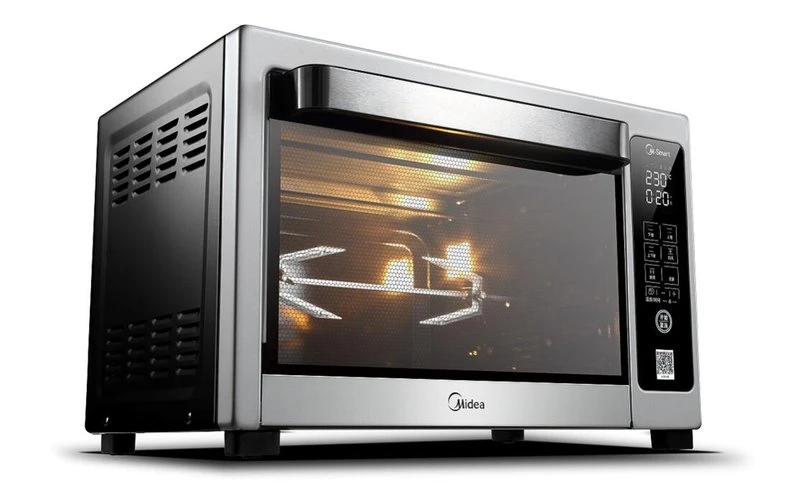
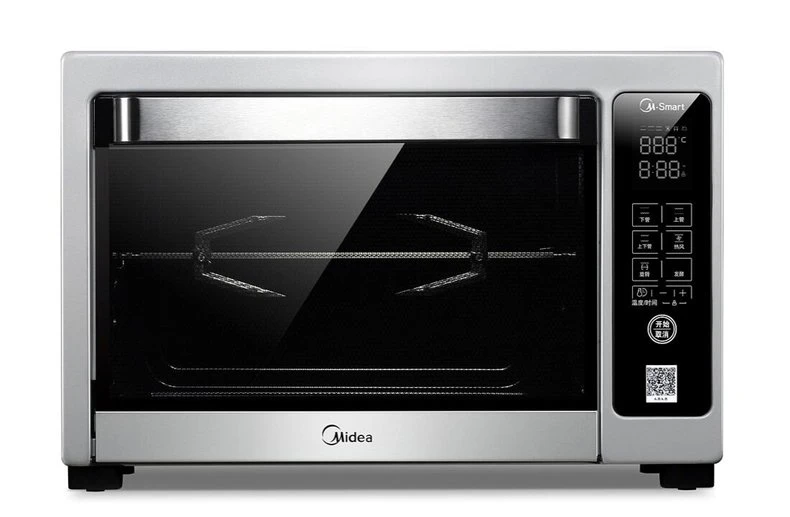
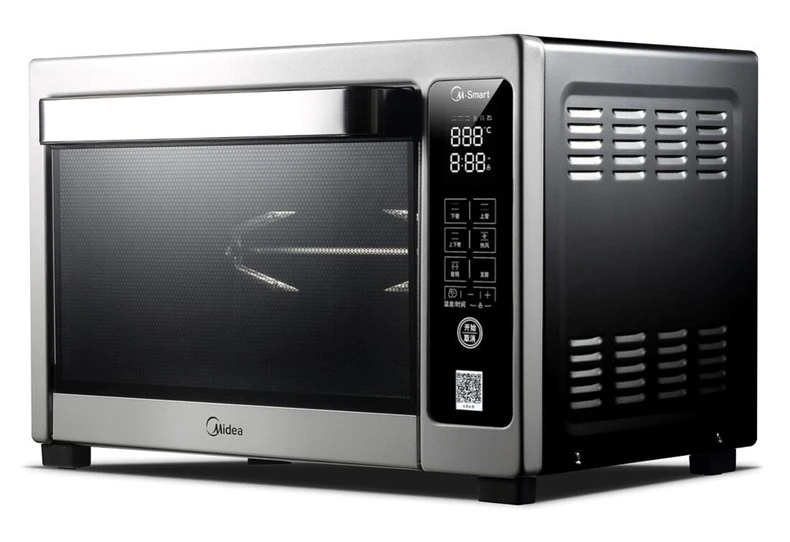
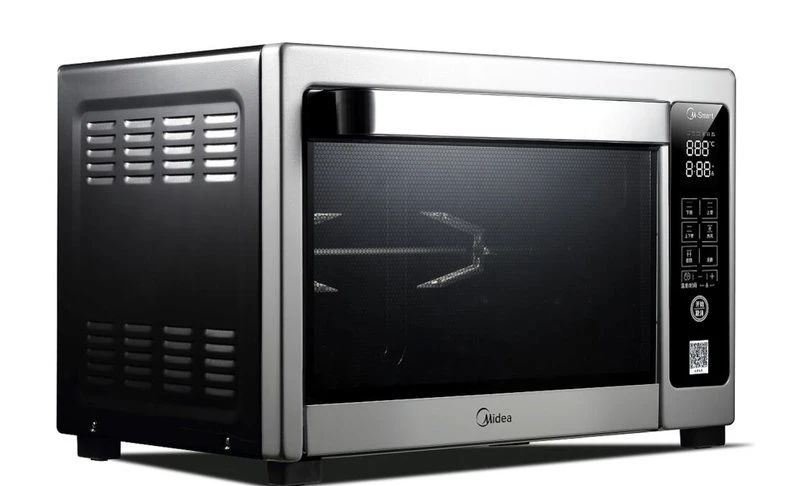
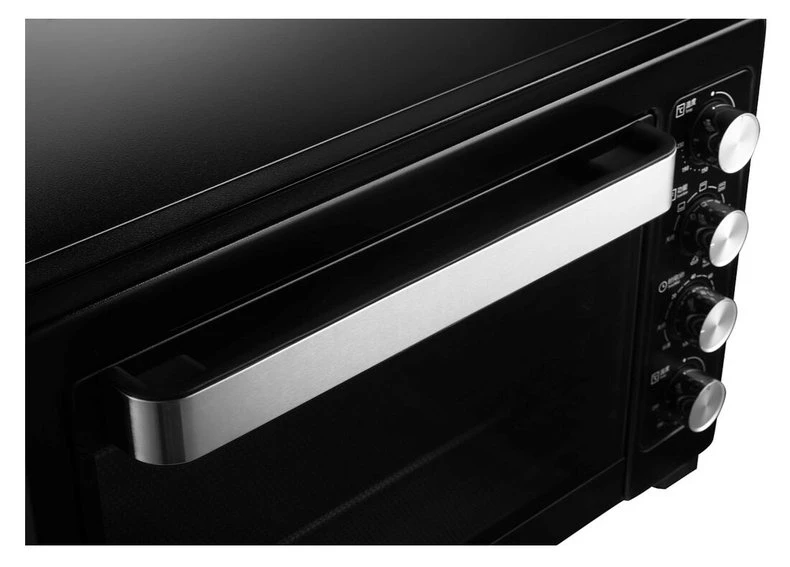
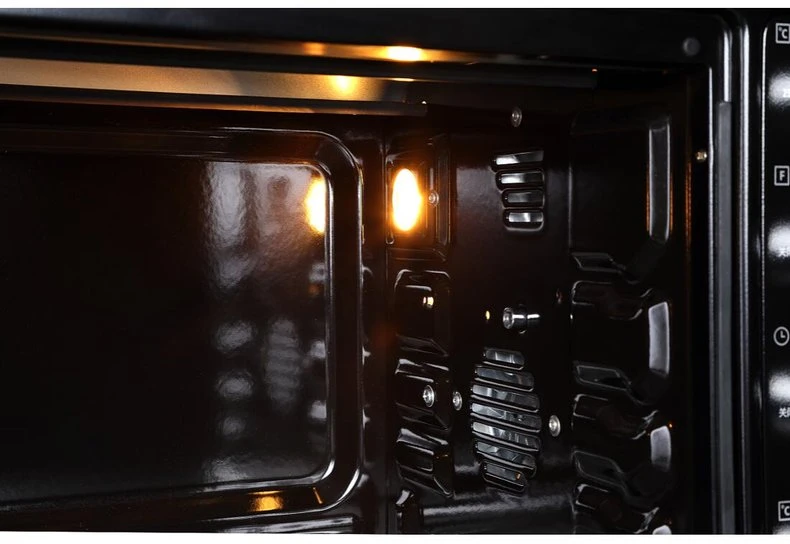
Eight frames for a Midea digital rotisserie oven plus its analog sibling: three angles captured twice each, lit with elements glowing orange and unlit in standby, then control bank and lamp-lit cavity details for the dial-controlled model to close the gallery.
▶ View full project details, specifications & FAQ
An oven’s proof is heat. The digital model was photographed working: elements glowing orange through the tinted door, the panel reading a real 230 degrees, each of the three angles captured again in standby so the listing can show both states. The analog model closes the set with its knob bank and a lamp-lit cavity frame.
| Project Overview | |
|---|---|
| Product type | Digital rotisserie oven; analog toaster oven |
| Deliverables | Eight frames across both states and models |
| Shoot location | AIMI studio, Guangzhou |
| Styling | Seamless white, ovens powered for lit frames |
| Usage | Marketplace gallery and product page |
Photography Challenges
1. Glowing elements against a dark door. Heating elements clip to white at cabinet exposure. Lit frames were metered for the glow first, then fill raised the cabinet, so the elements burn orange inside a readable oven instead of flaring through a black box.
2. Two states that must align. Lit and unlit pairs share exact framing so buyers can compare states. Camera and product never moved between the pair; only power state and exposure changed.
3. Smoked glass that hides the rotisserie. The tinted door swallows the interior in unlit frames. A low-power interior lamp pass kept the spit and racks visible without lifting the glass tint away.
Our Approach
State-pair capture
Each angle was shot lit, then unlit, from a locked position. The listing gains a working-state story that spec text alone cannot tell.
Glow-first metering
Element and display brightness set the exposure; scene fill followed. The 230-degree readout and the orange glow stay real, no painted effects.
Cavity detail pass
The analog model’s interior was shot with its own lamp on, racked rails and enamel walls readable, giving the simpler model its own proof frame.
"Cooking appliances earn trust by being caught working. Photograph the heat, keep the readout real, and the buyer stops imagining whether it works and starts planning where it fits." — June, Product Photography Team Lead
| Technical Specifications | |
|---|---|
| Camera | Full-frame DSLR, 50-85mm equivalents, locked per pair |
| Lighting | Glow-first metering; fill around powered elements |
| States | Lit and unlit pairs from identical positions |
| Detail | Interior lamp-lit cavity frame for analog model |
| Output | Web-resolution masters, eight-frame gallery |
Frequently Asked Questions
Can you photograph ovens with elements glowing?
Yes. We power the unit, meter for the glow first and fill the cabinet around it. The heating color and the temperature readout stay real, which buyers of ovens specifically look for.
What is the point of lit and unlit pairs?
The unlit frame sells the finish and build; the lit frame proves function. Captured from a locked position, the pair lets a listing show both without visual drift.
Can interior cavities be photographed clearly?
Yes. For enclosed cavities we use the product’s own lamp or a placed source, keeping racks, rails and enamel readable without flattening the tint of the door glass.
A cooking appliance with heat to prove?
Send the models. We will shoot them working and resting, with every degree of the glow kept real.
Get a Free Custom Quote View More Electronics CasesRelated services: Amazon FBA Photography · Near-Factory Photography
Related cases: Midea Slow Juicer Product Photography · Glass Bowl Halogen Air Fryer Photography · Skyworth Top-Load Washing Machine Photography
 Photography Insights
●Amazon Product Photography Requirements, Tips and How to Get It Done in China
- Amazon image rules for electronics listings: white main image, slot order and infographic limits.
●10 Product Photography Tips That Boost E-commerce Sales
- Ten image tips that lift conversion, from reflective-surface control to consistent SKU color.
●The Complete Guide to Amazon Product Photography 2026: Authoritative Solutions from Compliance to High Conversion
- The 2026 Amazon image playbook covering compliance, secondary slots and lifestyle frames for electronics.
●How to Choose an Amazon Product Photography Service: A 12-Point Checklist for Sellers, Brand Owners, and Ecommerce Teams
- Twelve questions to ask before booking, including how a studio handles chrome, glass and glowing screens.
●Product Photography Pricing in China - 2026 Complete Guide
- What drives per-SKU pricing for electronics shoots: set builds, multi-colorway coverage and retouch hours.