
A treadmill photographed empty is just a machine. A treadmill photographed with a runner, at a deliberate shutter speed, with the scenery behind re-created as it would feel in real use — that is the product. In May 2020, AIMI Visual Media began photography and advertising video work with JERRICK Health Technology, a fitness-equipment brand whose entire positioning depends on bringing outdoor running and cycling indoors.
About JERRICK Health Technology
JERRICK Health Technology Co., Ltd. was founded in Colorado with years of product R&D heritage behind it. The brand positions its equipment around fashion-forward design and human-centred ergonomics, with product teams working to continuously refine each series. JERRICK’s current focus is on simulated-outdoor fitness: indoor cycling and running platforms designed to create a sense of visual unity and immersive workout milestones. The photography brief spans both the hardware itself and the user-experience narrative that makes the hardware make sense.
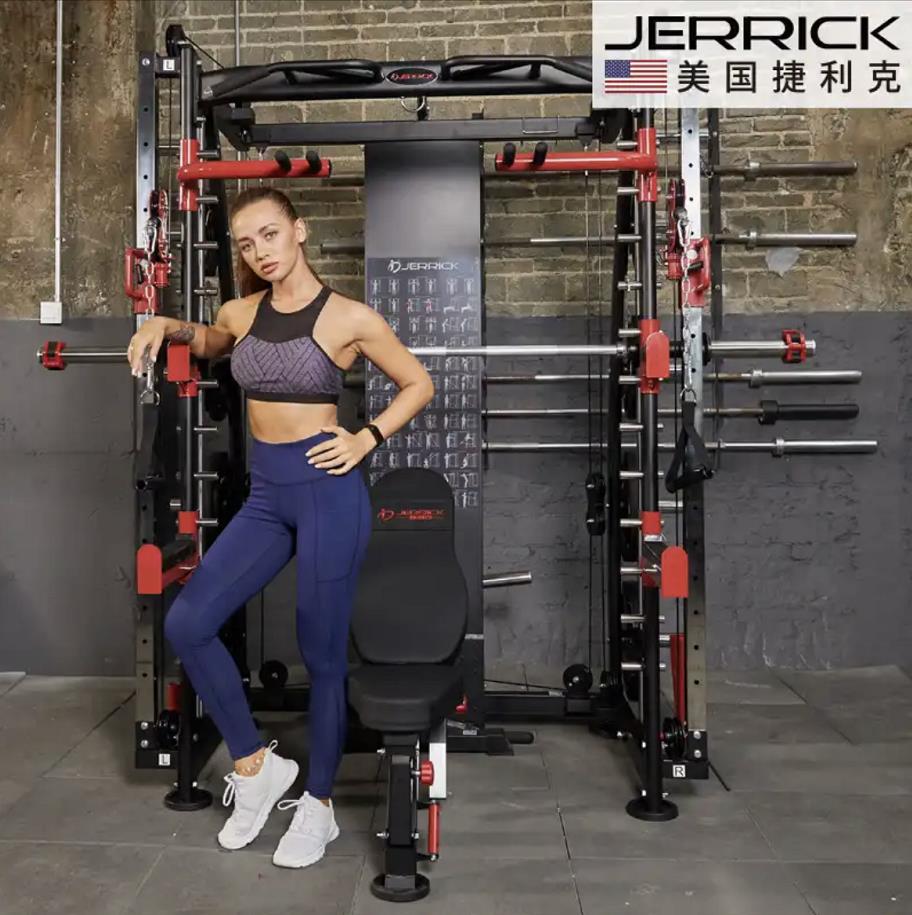
Why fitness equipment breaks the standard product-photography playbook
Most hardware photography can succeed with a clean backdrop, a well-resolved hero, and accurate detail frames. Fitness equipment cannot, for three reasons:
- The product is a verb, not a noun. A bike, a rower, or a treadmill looks inert at rest. Its selling proposition is how it behaves in motion under a real user — the resistance curve, the display response, the cabin sound profile. Static photography fails to communicate any of this.
- The purchase is emotional and competitive. Fitness buyers identify with an aspirational outcome. Photography has to project that outcome without drifting into stock-imagery cliche (shiny gym, smiling model, flexed arms).
- The screens matter. Modern fitness equipment integrates large displays for simulated outdoor scenery, metrics, or streaming content. The screen content shown in the photograph is as important as the machine behind it and has to be produced as its own asset.
The four-layer shot construction for JERRICK-style hardware
Layer 1 — the clean hero
A backlit, three-quarter studio frame of the equipment with integrated displays off. Shown with even grey background and subtle grounding shadow. Used for catalogue and specification pages.
Layer 2 — the motion frame
Equipment in use with a real user, shot at deliberate shutter speeds (typically 1/125 to 1/250 second for bikes, slightly slower for rowers) so wheels, cranks, and flywheels show the controlled motion blur that reads as activity without losing product legibility. The user is directed rather than modelled — real workout posture, not portrait posing.
Layer 3 — the display content
Simulated-outdoor scenery, metrics, or ride maps displayed on the equipment’s screens are produced as separate digital assets and composited onto the captured frames. Shooting screens live produces moiré and colour shift; compositing preserves legibility.
Layer 4 — the environment
For marketing hero frames, the equipment is placed in a scenario — an urban loft, a sunlit home gym, a minimalist studio room. This is where the “indoor hardware with outdoor energy” positioning reaches its visual payoff.
Ergonomics as a photography subject
JERRICK emphasises ergonomic design as a brand pillar. Photography responds with detail frames that are specifically legible as ergonomic features, not just as geometry:
- The grip angle on a rower handle, photographed from the user’s sight line.
- The seat-post contact area, shot close enough to show the padding density.
- The foot-strap mechanism, captured mid-adjustment.
- The display-tilt range, shown as a sequence rather than a single frame.
These detail shots move better on product-detail pages than on hero banners, and brands that plan them into the shoot list get noticeably better conversion data from e-commerce listings afterward.
About AIMI Visual Media
AIMI Visual Media is a commercial photography studio in Guangzhou, working across product photography, advertising video production, and visual design and direction. Sports and fitness experience covers home gym equipment, outdoor cycling, running, sports apparel and footwear, and connected fitness hardware.
Adjacent sports and performance work: Adidas, YONEX, UGG Auspecial.
Q&A — fitness equipment photography
Do you shoot with professional athletes or regular users?
Usually regular users whose body type matches the brand’s target demographic. The photograph has to feel achievable; a professional athlete changes the reading of the equipment from “you can use this” to “someone else uses this.” Athletes are booked only when the brand positioning specifically requires them.
How do you avoid the “gym stock photo” look?
By directing the user for authentic workout posture rather than modelled posture, shooting from deliberate angles (a three-quarter rear on a bike tells the activity better than a front hero), and avoiding excessive staging in wardrobe and props. Honest photography outperforms idealised photography in this category.
Can you produce the screen content as well as the hardware photography?
Yes. AIMI builds or sources simulated-outdoor scenery, metric overlays, and ride-map visualisations as separate assets, composited onto the hardware frames during post. This is typically faster and cleaner than attempting to shoot screens live.
What about connected-fitness app imagery and lifestyle frames?
App UI and companion imagery is a separate asset class and scheduled as a small, focused production alongside hardware photography. The goal is visual continuity: app screens, hardware screens, and lifestyle frames should all feel like one brand world.
How do we start?
Email maggie@airmie.com with the equipment SKUs, whether display-screen content is in scope, the target channels (e-commerce, retail, brand site, OOH), and the target user demographic. AIMI will respond with a four-layer shot plan.
Related case studies
- Adidas — sports footwear and apparel
- YONEX — performance sports equipment
- UGG Auspecial — technical footwear materials
- All AIMI case studies
Fitness equipment or connected-fitness program in the pipeline?
AIMI Visual Media runs fitness-hardware shoots on a four-layer plan — clean hero, motion frame, display content, environment — so hardware, user, and digital surface all read as one product experience rather than three disconnected assets. Send the SKU range and target user demographic; the studio will return a shot plan keyed to your e-commerce and brand-site goals.
Plan a fitness shoot maggie@airmie.com
 Related Articles