

Urban Set Streetwear and Footwear Photography
- Published:
- 2018-10-27 11:48:41
- Lead Photographer:
- Garbo (Senior Photographer)
- Source:
- AIMI Visual Media
- Last Updated:
- 2026-09-07 16:13:43
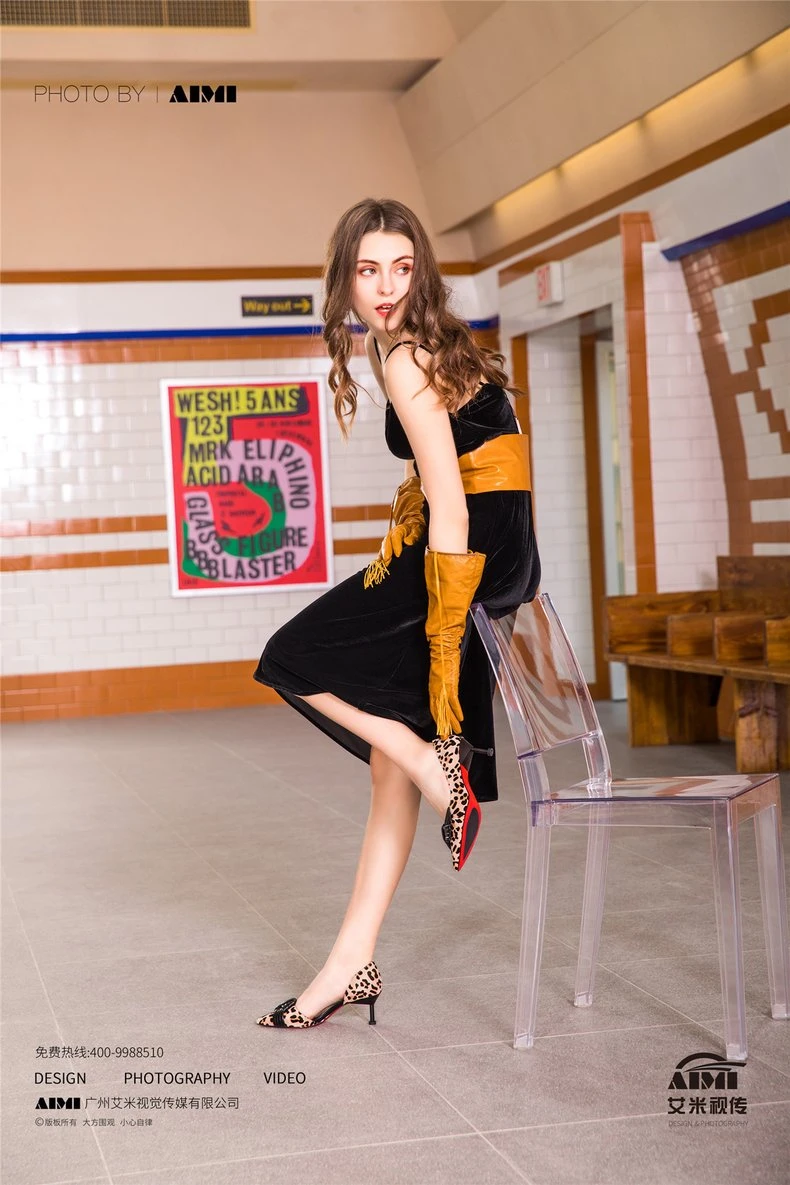
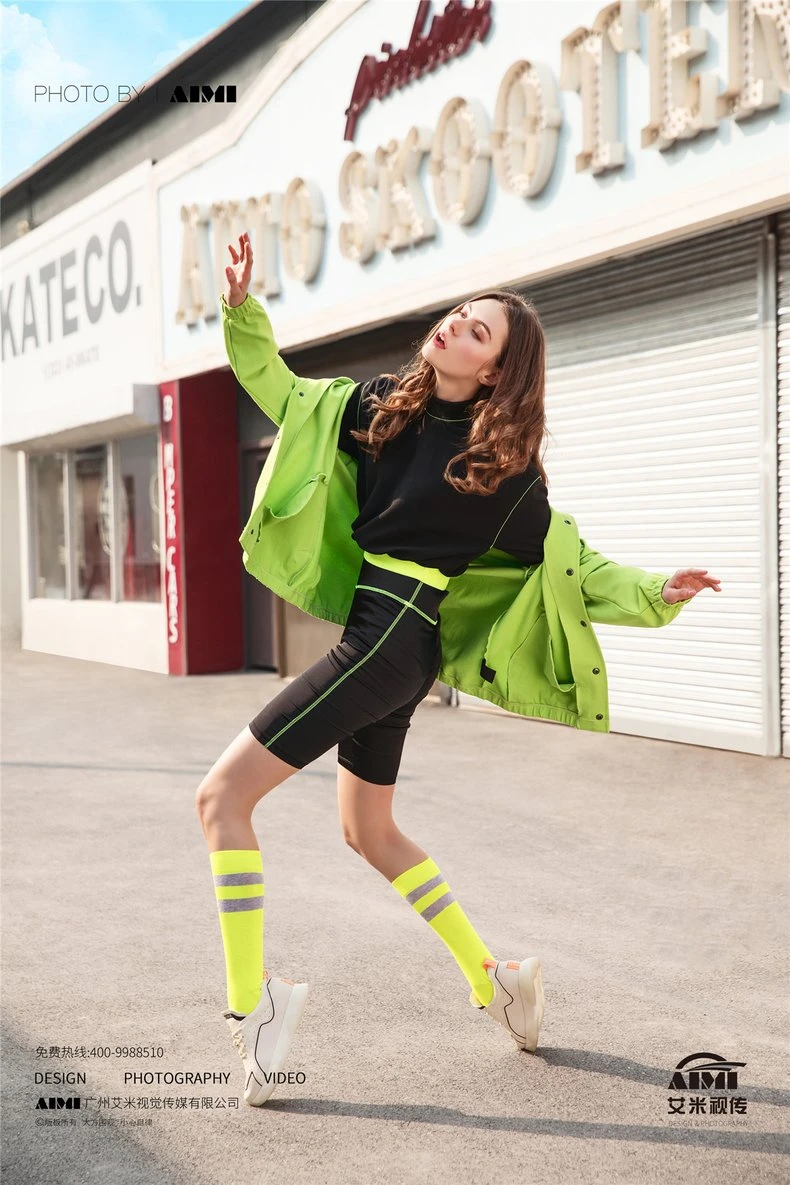
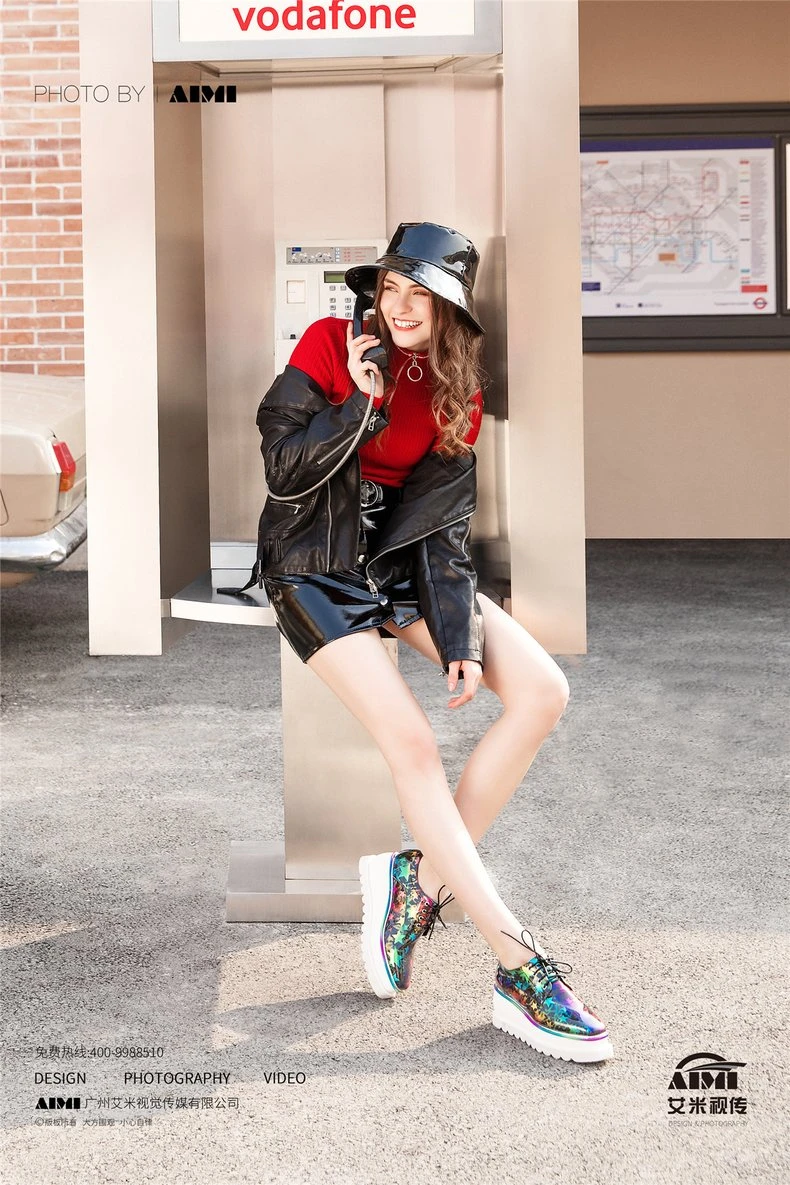
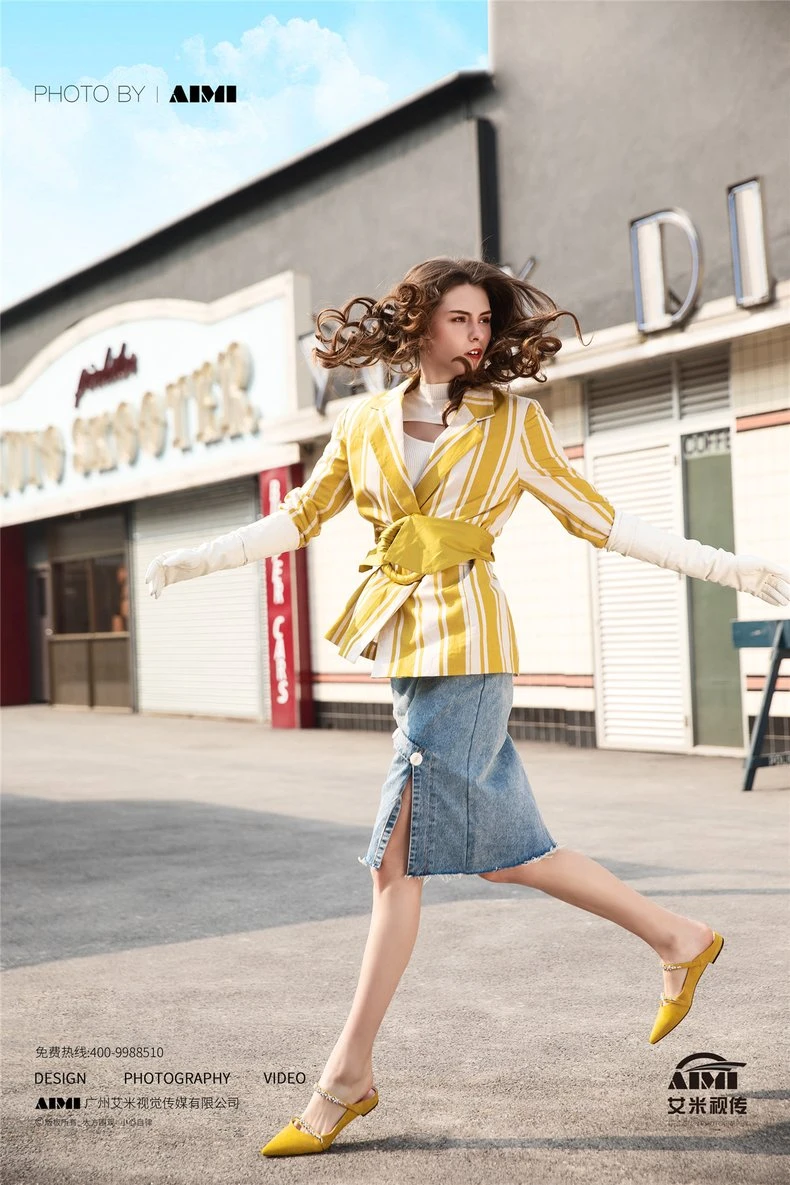
AIMI Visual Media photographed a four-frame streetwear editorial on built urban sets: leopard stilettos on a mock subway platform, holographic platform shoes at a staged payphone booth, and two street looks on dressed city streets. The 4 delivered images carry a full commercial license.
▶ View full project details, specifications & FAQ
The client was a streetwear and footwear seller whose drop mixes statement shoes with bold ready-to-wear: leopard-print pointed stilettos, holographic patent platform lace-ups, a neon-green jacket over black, and a yellow-and-white striped wrap blazer with a slit denim skirt. Real city streets give you no control, so we built the city instead: a mock subway platform with tiled walls and a bench, a staged payphone booth with brick and a transit map, and two dressed street corners with rolling shutters and signage. Four frames, one model, delivered with a full commercial license.
| Project Overview | |
|---|---|
| Client | Streetwear and footwear seller launching a mixed drop |
| Product | Leopard stiletto pumps, holographic patent platform shoes, neon jacket look, striped wrap blazer + denim skirt |
| Shots Delivered | 4 editorial images (2 footwear-led, 2 outfit-led) |
| Location | Built urban sets: mock subway platform, payphone booth, dressed streets |
| Lead Photographer | Garbo, Senior Photographer |
| Lighting | Hard sun-style key on the street frames, warm soft key on the platform sets |
| License | Full commercial: store, advertising, marketplace |
Photography Challenges
1. Built sets must survive the zoom test A mock subway platform convinces at full frame only if every edge is dressed: the tiles, the bench, the signage, the poster. Any undressed corner breaks the illusion and the product goes down with it. We composed each frame to use only the finished angles of the sets, checked the frame edges at capture for stray studio wall, and kept signage generic so the set reads as a city, not as a theme-park version of one.
2. Two footwear heroes with opposite personalities Leopard stilettos are glossy and loud; holographic platforms shift color with every degree of camera angle. The stilettos were shot low on the platform bench so the print reads against quiet tile, with the key feathered to keep the patent highlight a stripe instead of a blob. The holographic pair needed its angle chosen first: we rotated the shoe until the patent threw its full color shift toward camera, then locked everything else around that angle. Each shoe got the light and framing its material demands, which is why no single setup could have shot both.
3. Hard sun on a dressed street without the chaos The two street looks needed real summer-street energy, hard shadows, saturated color, but a dressed street corner is full of signage and props competing with the outfit. We placed the model in the cleanest slice of each corner, let the shutter and signage fall a step behind her, and used the hard key from front-side so her shadow anchors her to the pavement. The street stays loud; the outfit stays louder.
4. Four frames that must read as one drop Stilettos, platforms, a neon jacket, and a striped blazer do not naturally belong together, and a mixed drop photographed piecemeal looks like four different clients. We kept one model, one saturated warm grade, and one rule across all four sets: the product is always the most saturated object in its frame. The sets change wildly; the visual hierarchy never does.
Our Approach
Lighting
Position: street frames in a hard front-side key with real shadow on pavement; platform and booth sets in a warm large-source key with soft fill. Settings: exposure set for skin, highlights on patent leather feathered to stripes. Why: the two footwear materials and the two street looks span opposite light appetites, so each set got its own recipe under one shared warm grade.
Camera and exposure
Canon EOS R5, RF 35mm f/1.8 for the environmental street frames, RF 85mm f/1.4L at f/2.8-4 for the footwear-led frames, ISO 100-200, 1/250-1/800s. Why: the 35mm sells the built city while the 85mm isolates the shoes as products inside it.
Set and series
Four built sets used in one day, subway platform first for the stilettos, payphone booth for the platforms, then the two dressed street corners for the outfit looks. Why: building the city once inside the studio is what gives a four-frame editorial its location variety without a single permit, weather call, or location move.
"A built set is a promise you make to the viewer: give them one undressed edge and the whole frame collapses into theater. We dress the set, then we dress the light, and only then does the product walk on. That order of operations is how our photography team shoots every staged-world brief." — Garbo, Senior Photographer
| Technical Specifications | |
|---|---|
| Camera | Canon EOS R5 (45MP full-frame), handheld |
| Lenses | RF 35mm f/1.8 (street frames), RF 85mm f/1.4L (footwear frames) |
| Exposure | f/2.8-4 footwear, f/5.6 street, ISO 100-200, 1/250-1/800s |
| Lighting | Hard front-side key on streets, warm large-source key on platform sets |
| Set | Mock subway platform, staged payphone booth, two dressed street corners |
| Series | 4 frames: 2 footwear-led, 2 outfit-led |
Frequently Asked Questions
What does a four-frame urban editorial cost?
On-model editorial photography starts at $35 per image under the Growth tier, so a 4-image series like this one starts around $140, with model fees and set-build time quoted separately. All rates are starting prices; our 2026 pricing guide breaks down the tiers.
Why build city sets instead of shooting on real streets?
Control. On these four built sets we chose every tile, sign, and shadow, no permits, no weather calls, no pedestrians walking through the footwear frame. A real street gives you one chance at the light; a built street gives you the light whenever you are ready for it.
How do you photograph holographic or color-shifting shoes?
Angle first, everything else second. The holographic platforms in this series were rotated until the patent threw its full color shift toward the camera, and only then were the set and light locked around that angle. Shoot a color-shifting material square-on and you record its dullest version.
Can a mixed drop of shoes and apparel shoot in one day?
Yes, when each product gets its own set recipe under one shared grade. This series shot two footwear-led frames on the platform and booth sets, then two outfit-led frames on dressed streets, same model, same warm grade, one day. The visual hierarchy rule never changed: the product is always the most saturated object in frame.
How long does a set-built editorial take to deliver?
These 4 images were delivered in 3 business days: one shoot day across the four sets, one day of culling and client selection, one day of retouching. The sets were built and lit the day before, which is what makes a one-day shoot across four locations-shaped sets possible.
Do editorial frames like these work on marketplaces?
They work hardest in ad slots, lookbooks, and the lifestyle positions of a listing. The footwear-led frames in this series also serve as product images because the shoes stay sharp and legible inside the scene. The full commercial license covers store, marketplace, and advertising use.
Can the sets be reused for our next drop?
Yes. The platform, booth, and street flats live in our Guangzhou studio inventory and get re-dressed between clients. Returning brands reuse the built city with new dressing, which cuts the set-build line on the next booking.
A streetwear drop that needs a city built around it?
Streetwear and footwear editorials staged on our built urban sets in Guangzhou, with model, art direction, and full commercial license included from $35 per image.
Get a Free Custom QuoteView More Womenswear CasesRelated services: Amazon FBA Photography · Near-Factory Photography
Related cases: graphic tee street lookbook photography · street style wool coat photography
 Photography Insights
●How to Choose an Amazon Product Photography Service: A 12-Point Checklist for Sellers, Brand Owners, and Ecommerce Teams
- A 12-point checklist for picking an Amazon product photography service: portfolio depth, pricing transparency, licensing, and turnaround.
●Amazon Product Photography Cost Guide 2026: Complete Price Breakdown & ROI Calculator
- Amazon product photography costs broken down line by line for 2026, with an ROI framework for deciding how many images a SKU actually needs.
●The Complete Guide to Amazon Product Photography 2026: Authoritative Solutions from Compliance to High Conversion
- The complete Amazon image playbook for 2026: compliance specs, slot strategy, A+ Content, and conversion-tested image sequencing.
●Product Photography Pricing in China - 2026 Complete Guide
- Product photography pricing in China for 2026: what drives rates up or down, package tiers, and how to compare quotes on equal terms.
●Amazon Product Photography Requirements, Tips and How to Get It Done in China
- Amazon product photography requirements explained: image specs, main vs lifestyle slots, zoom minimums, and the listing mistakes to avoid.