

Structured Baseball Cap Monochrome Flat-Lay Photography
- Published:
- 2025-04-24
- Lead Photographer:
- June (Product Photography Team Lead)
- Source:
- AIMI Visual Media
- Last Updated:
- 2026-09-08 12:38:43
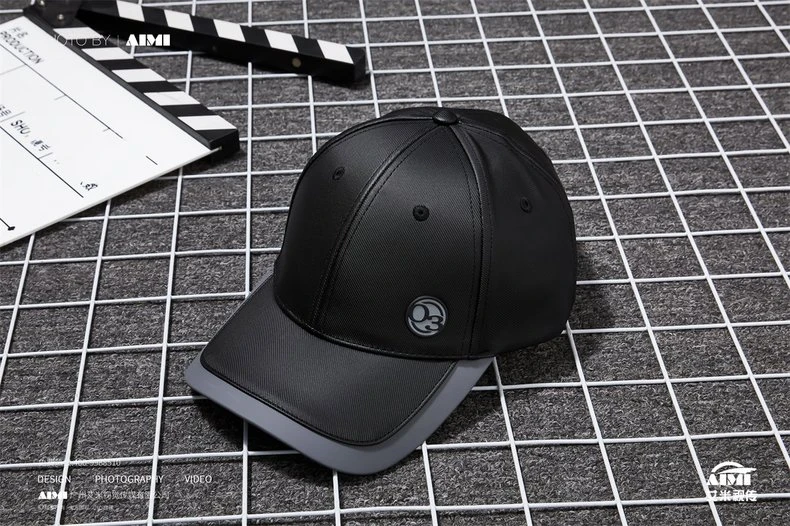
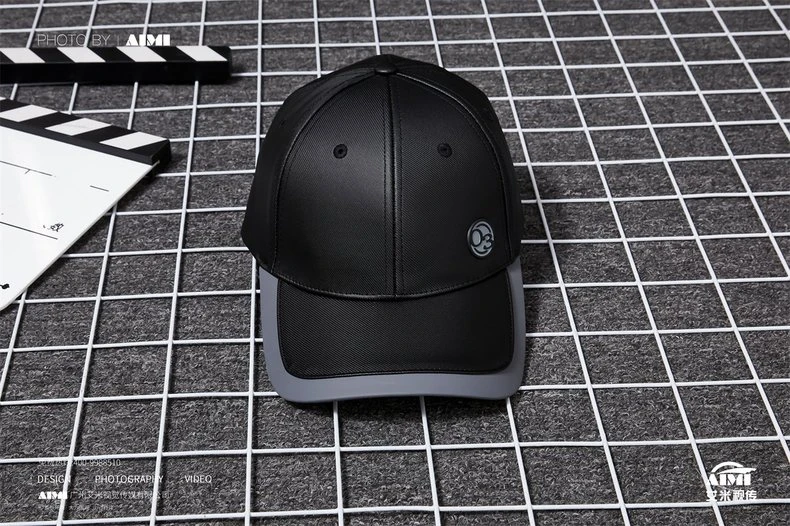
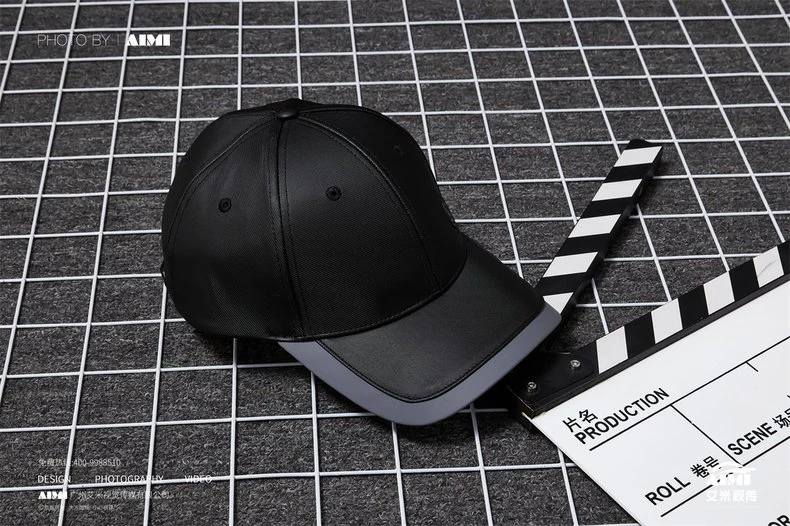
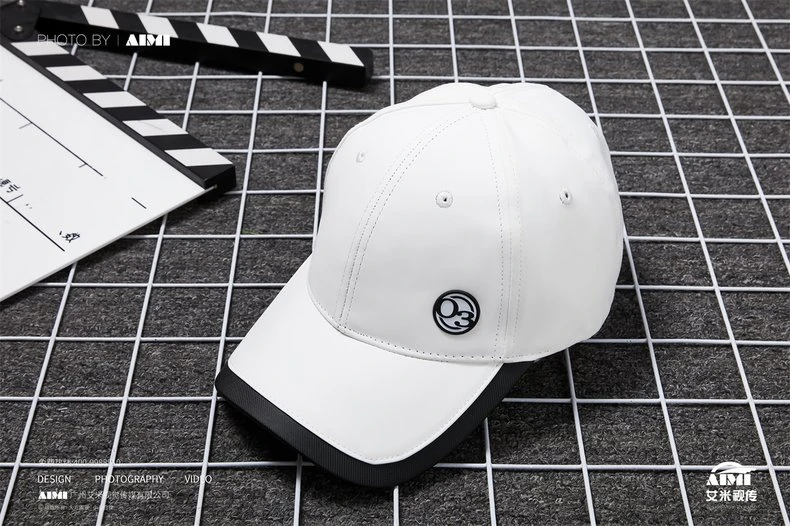
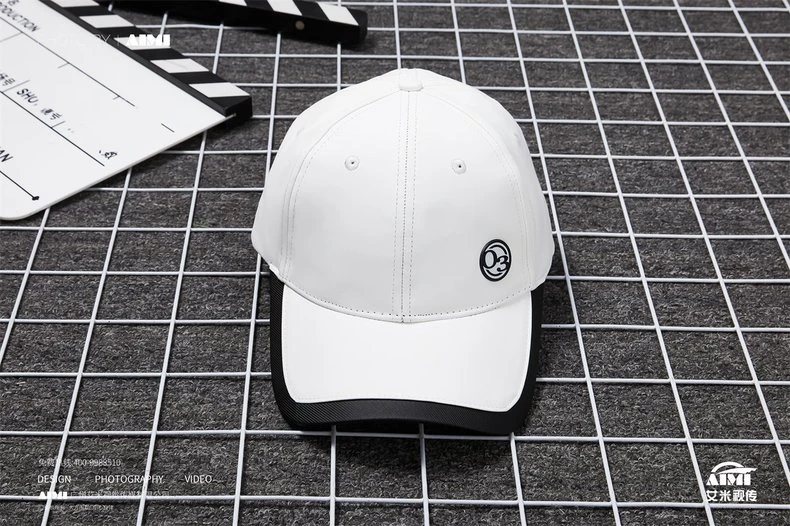
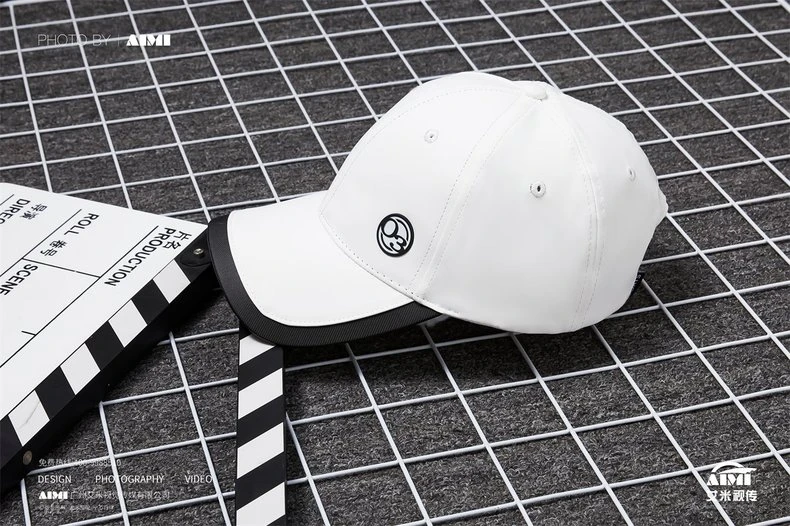
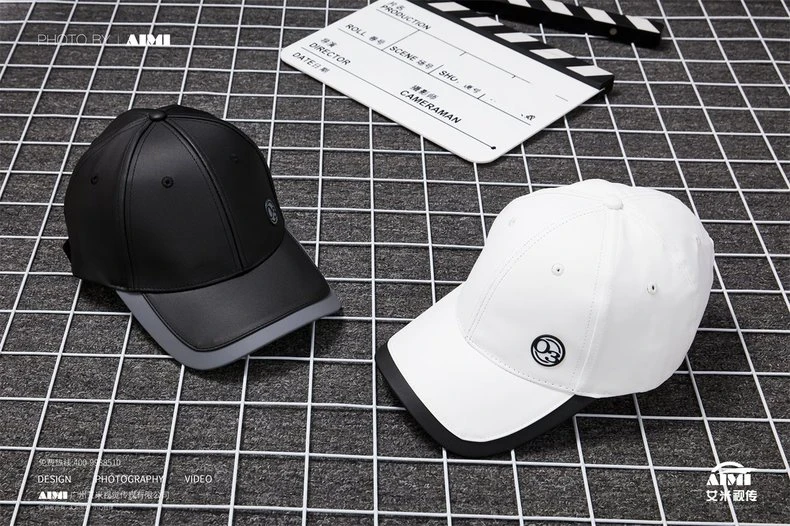
AIMI Visual Media photographed a seven-image monochrome flat-lay series of structured baseball caps at our Guangzhou studio: black, white, and two-tone caps on a dark felt set with a wire grid platform and film slate prop. Full commercial license, delivered in 2 business days.
▶ View full project details, specifications & FAQ
The client is a headwear seller whose structured cap line runs on monochrome: black, white, and two-tone six-panel caps with curved brims. Color caps sell on color; monochrome caps sell on structure and attitude, so the series was built as an editorial flat-lay world in our Guangzhou studio: dark charcoal felt, a white wire grid platform that levitates the caps off the surface, and a black-and-white film slate as a studio-context prop. Seven frames across three cap colorways, one overhead camera rig, with a full commercial license included.
| Project Overview | |
|---|---|
| Client | Headwear seller, monochrome structured cap line |
| Product | Six-panel structured baseball caps: black, white, two-tone |
| Shots Delivered | 7 monochrome flat-lay images |
| Lead Photographer | June (Product Photography Team Lead) |
| Shoot Location | AIMI Guangzhou studio, flat-lay rig |
| Turnaround | 2 business days |
| Usage License | Full commercial license |
Photography Challenges
1. Monochrome products leave nowhere to hide A black cap on dark felt is a shape recognition test: get the light wrong and the cap merges into the surface, get it too right and the felt turns into a flat gray void that kills the editorial mood. We lit the set with a large softbox at a low raking angle rather than from above, so the cap's crown catches a gradient while the felt keeps its texture in shadow. The black cap separates from the black set by a quarter stop of sheen along the brim edge, which is all a monochrome frame gives you, and all it needs.
2. A flat-lay cap loses the one thing buyers check: the crown shape Structured caps are bought on whether the crown holds its dome, and a top-down camera flattens that dome into a pancake. The wire grid platform solves the physics: the cap sits on the grid 15cm above the felt, so we can tilt it 20 degrees toward camera without the surface behind it changing. Every frame keeps a hint of the dome's profile while staying a flat-lay in feel, which is the compromise this product category requires.
3. White caps against a white grid blow out at the brim The white colorway sits on a white wire grid, and the brim edge simply vanishes where the two whites meet. We rotated the white cap so its brim crosses the grid's shadow lines rather than running parallel, and flagged the key off the grid for those frames so the platform drops half a stop. The brim keeps its outline, the grid keeps its graphic pattern, and the monochrome idea survives the one colorway that could have broken it.
4. An editorial prop has one job and one chance The film slate is there to say studio, attitude, production, and if it reads as a random movie prop the whole set tips into costume. It enters the frame at one corner only, cropped by the frame edge, always behind the cap plane so f/8 softness takes its text down to texture. A prop that becomes the second subject has failed; the slate stays a footnote in all 7 frames.
Our Approach
Flat-lay rig and raking light
Position: camera locked overhead on a copy-stand rig, white wire grid 15cm above charcoal felt, large softbox low at 30 degrees for a raking key, black flag trimming spill off the felt. Settings: 100mm macro at f/8, ISO 100, caps tilted 20 degrees toward camera on the grid. Why raking instead of overhead: overhead light on dark felt gives you a flat gray rectangle; a low raking key gives the felt a falloff gradient and gives the cap's crown a sheen edge, which is the only separation a black-on-black frame has. f/8 holds the cap and grid crisp while the felt drops just soft enough to read as surface, not as subject.
Monochrome grading discipline
Position: all 7 frames shot in one locked session, white cap block flagged separately. Why: a monochrome series lives on its grays agreeing with each other, and that agreement is a grading decision, not a lighting accident. We grade to the black-cap master: felt held at 18 percent gray, the grid at 85 percent, and the caps allowed to live anywhere between as long as the brim edge stays off the background value. White balance is technically irrelevant in a monochrome set and still locked at 5500K, because the moment it drifts, monochrome becomes a color accident.
Post-production
All 7 frames to one grayscale-true master: felt anchored at 18 percent, -6 highlights on the grid to keep its pattern, +8 texture on the crown fabric at a 30px radius, and a 0.4px output sharpen. No color grading at all, which on this set is the hardest discipline: the frames are checked in grayscale before delivery to confirm no channel drift crept in. Delivered as 2000px sRGB JPEGs plus full-resolution TIFFs.
"Monochrome is not the absence of color decisions. It is forty of them between black and white. — June" — June, Product Photography Team Lead
| Technical Specifications | |
|---|---|
| Camera | Canon EOS R5 (45MP full-frame), copy-stand rig |
| Lens | RF 100mm f/2.8L Macro at f/8 |
| Exposure | ISO 100, 1/160s sync, 5500K locked |
| Lighting | Low raking softbox at 30°, black flag on felt |
| Set | Charcoal felt, white wire grid platform 15cm raised, film slate |
Frequently Asked Questions
What does an editorial flat-lay series cost?
Styled flat-lay photography starts at $35 per image under the Growth package, so this 7-image monochrome series starts around $245. The felt-and-grid set build and a full commercial license are included, and matching white-background catalog frames start at $12 per image under Essential. All rates are starting prices; final quote depends on colorway count.
How long does a flat-lay series like this take?
This series was delivered in 2 business days from product arrival. The rig build and the black-on-black separation test take the first morning; once the raking light ratio is locked, all three colorways move through the platform in one session.
Can editorial flat-lays be used in marketplace listings?
In the detail and A+ slots, yes: the 2000px files exceed Amazon's zoom minimum, and the series was composed with listing positions in mind. The main image still needs a pure white background, which we shoot on a standard sweep starting at $12 per image. Most cap sellers order the sweep set and the editorial set together.
How do you keep a black cap visible on a black set?
By separating sheen, not color. A low raking softbox gives the cap's crown a gradient and the brim a quarter-stop bright edge, while the felt stays in textured shadow. The cap separates from the set by surface behavior, not by outline tricks, which is why these frames still work when compressed to thumbnail size.
Flat-lays flatten the crown. How does the dome survive?
The caps sit on a wire grid raised 15cm above the felt, so we can tilt each cap 20 degrees toward the overhead camera without the background changing. Every frame keeps a hint of the dome profile, which is the one structural fact structured-cap buyers check, while keeping the flat-lay look.
Can you do this monochrome treatment for other colorways?
The treatment is designed for monochrome lines: black, white, gray, two-tone. If your line adds a color colorway, we would build a separate colored set rather than force it into this one, because a red cap on charcoal felt stops being editorial and starts being a warning sign.
Is the film slate text a problem for marketplace rules?
No. The slate is cropped at the frame edge and sits behind the focal plane, so its text reads as texture, and it never appears in frames destined for the main image slot. Marketplace text rules apply to added graphics and watermarks, not to physical props inside the photograph.
Monochrome headwear that sells on structure, not color?
Editorial flat-lay sets, black-on-black separation, and crown-true cap photography from our Guangzhou studio, styled series from $35 per image with a full commercial license.
Get a Free Custom QuoteView More Bags & Accessories CasesRelated services: Amazon FBA Photography · Near-Factory Photography
Related cases: OZOON sports cap photography · racket sports backpack photography
 Photography Insights
●How to Choose an Amazon Product Photography Service: A 12-Point Checklist for Sellers, Brand Owners, and Ecommerce Teams
- A 12-point checklist for picking an Amazon product photography service: portfolio depth, pricing transparency, licensing, and turnaround.
●Amazon Product Photography Cost Guide 2026: Complete Price Breakdown & ROI Calculator
- Amazon product photography costs broken down line by line for 2026, with an ROI framework for deciding how many images a SKU actually needs.
●The Complete Guide to Amazon Product Photography 2026: Authoritative Solutions from Compliance to High Conversion
- The complete Amazon image playbook for 2026: compliance specs, slot strategy, A+ Content, and conversion-tested image sequencing.
●Product Photography Pricing in China - 2026 Complete Guide
- Product photography pricing in China for 2026: what drives rates up or down, package tiers, and how to compare quotes on equal terms.
●Amazon Product Photography Requirements, Tips and How to Get It Done in China
- Amazon product photography requirements explained: image specs, main vs lifestyle slots, zoom minimums, and the listing mistakes to avoid.