

Chandelier & Pendant Light Product Photography
- Published:
- 2025-08-24
- Lead Photographer:
- June (Product Photography Team Lead)
- Source:
- AIMI Visual Media Co., Ltd.
- Last Updated:
- 2026-09-14 21:05:18
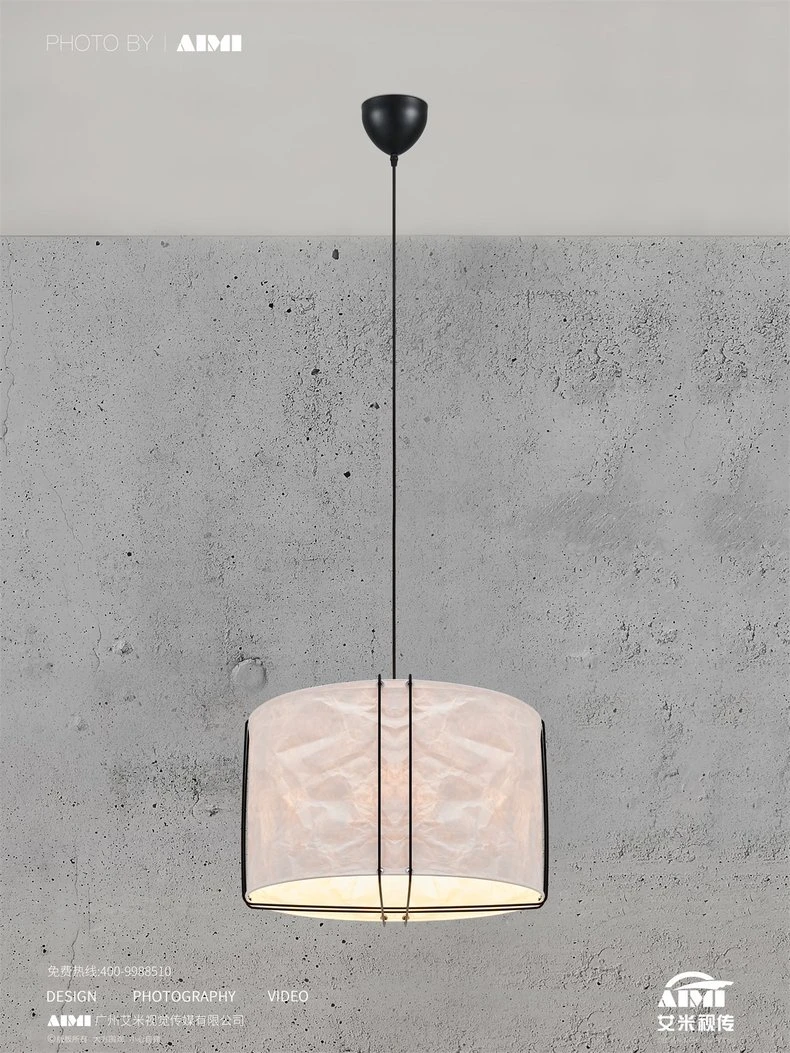
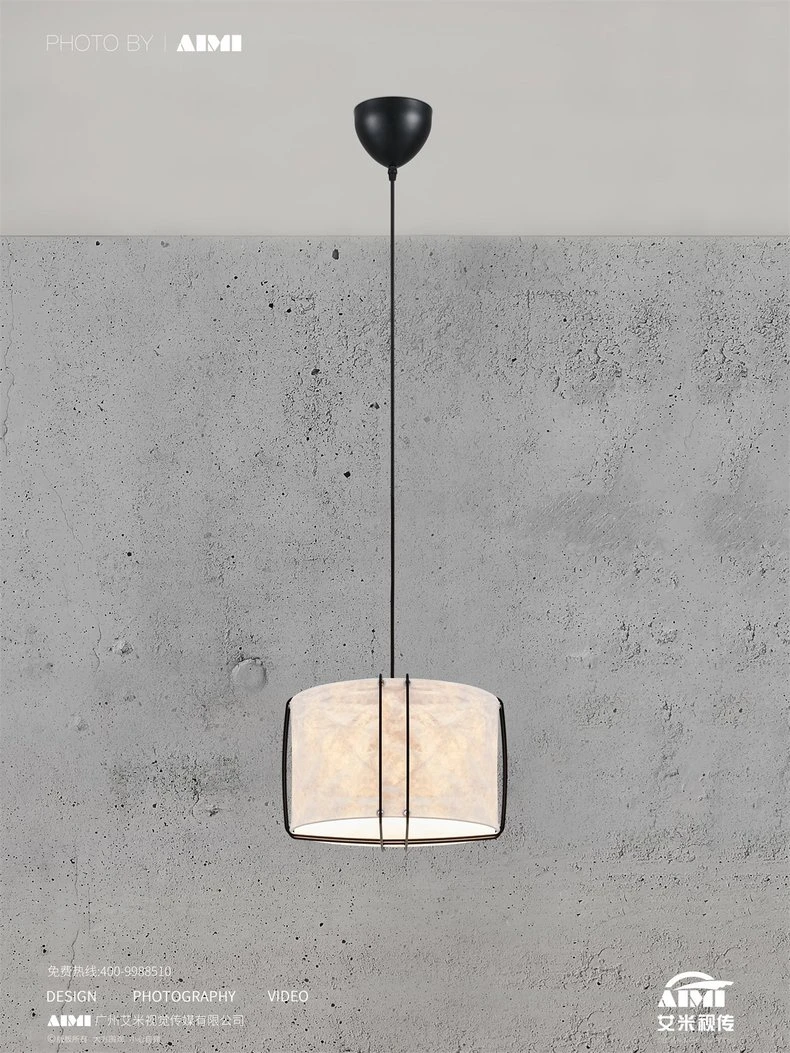
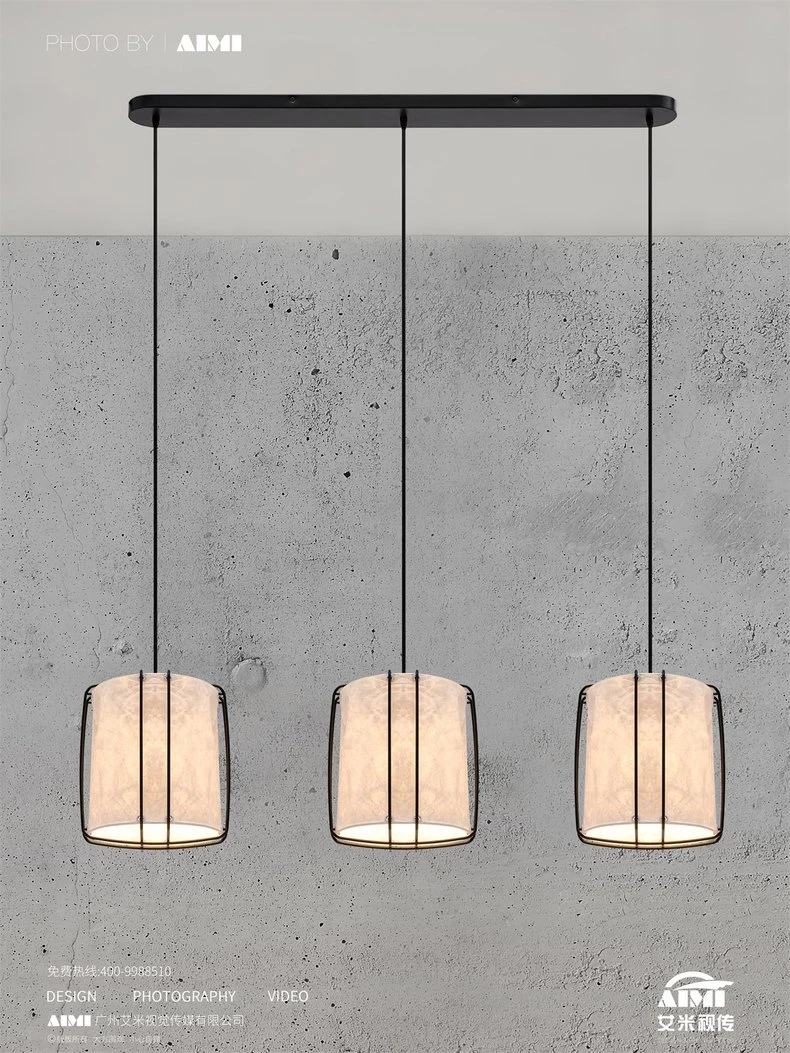
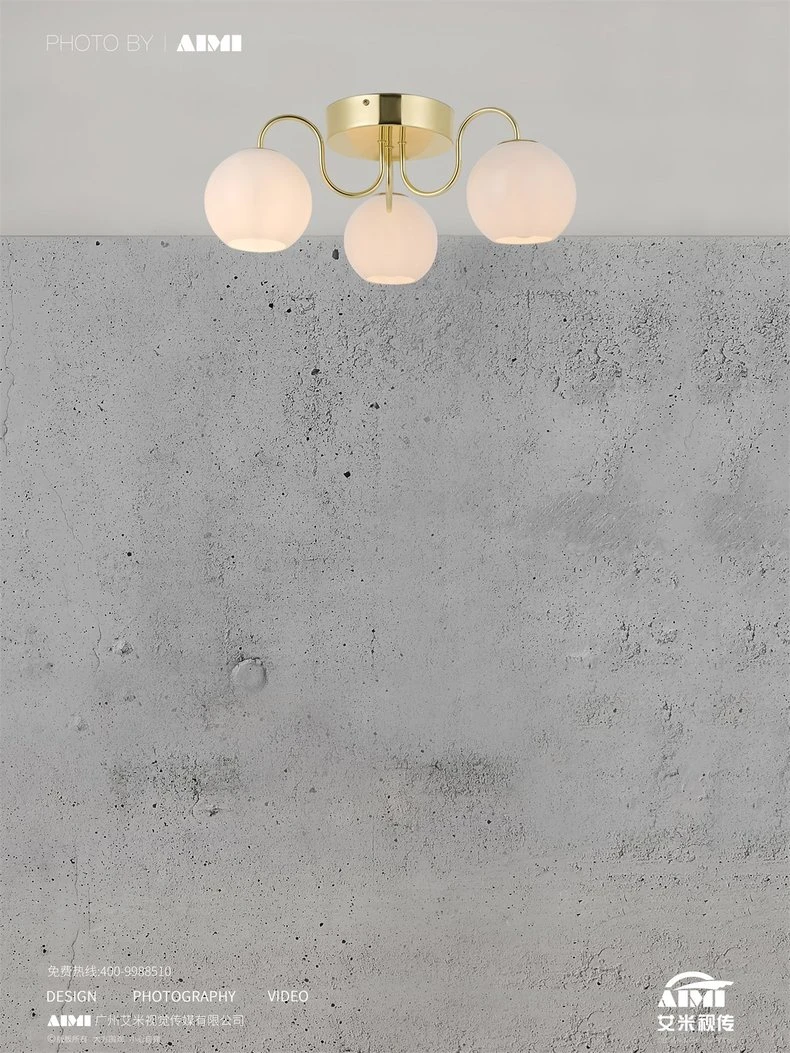
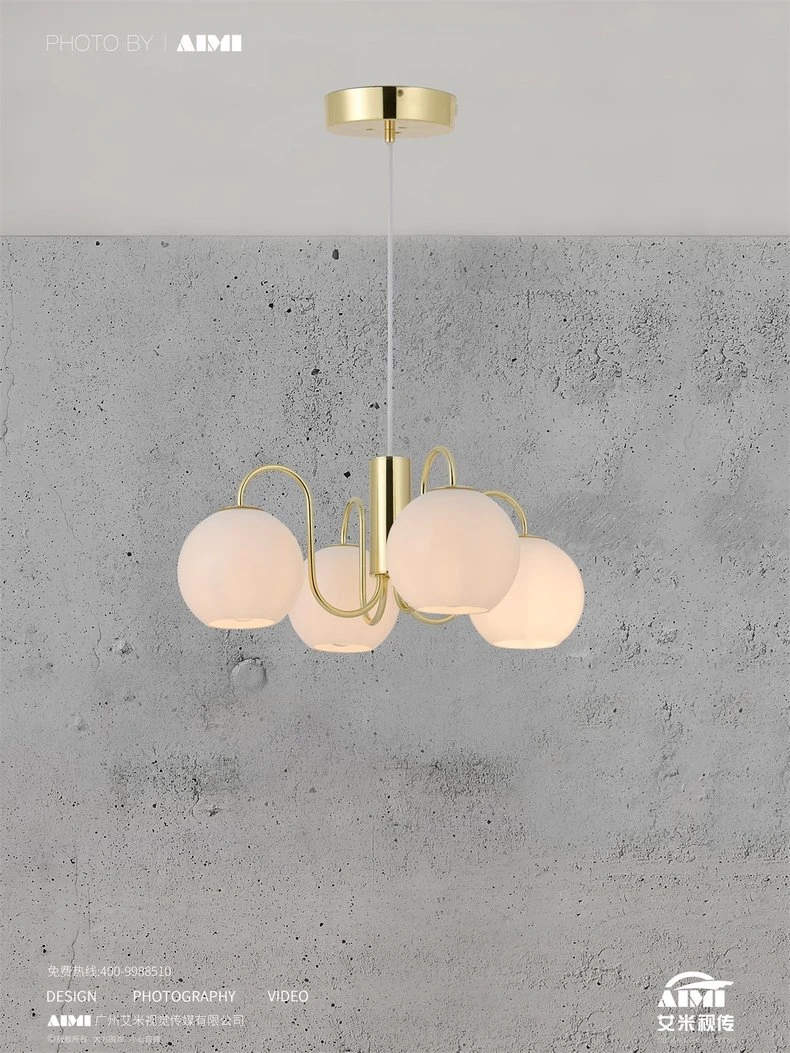
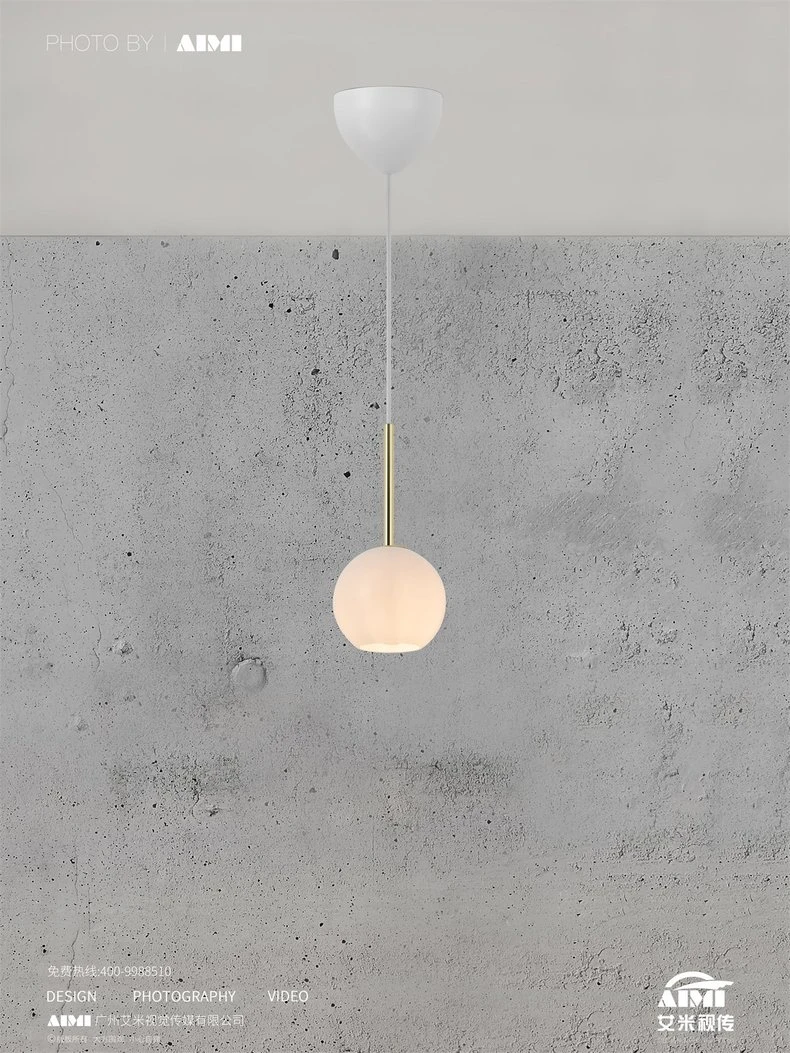
Professional photography for a chandelier and pendant light collection — 6 lit-state and material shots styled with a stock concrete backdrop, ready for Wayfair, Houzz and Shopify lighting catalogs. See more of this style in our furniture photography portfolio.
▶ View full project details, specifications & FAQ
A lighting manufacturer preparing an overseas catalog brought us a four-piece light fixture collection: a fabric drum single pendant, a 3-light linear pendant, a brass 3-globe semi-flush mount, and a brass 5-globe chandelier. All six shots were produced at the AIMI Visual Media studio in Guangzhou, China, . The fixtures were photographed in the studio and composited onto a stock concrete-wall backdrop in post — chosen because lighting buyers shop with rooms in mind, not white voids, and one shared backdrop keeps the whole collection visually consistent. The images were built for Wayfair, Houzz, Shopify DTC product pages, and the client's wholesale catalog for international retailers. Deliverables were 6 retouched files with a full commercial license, turned around in 2 business days.
Project Overview
| Item | Details |
|---|---|
| Client | Lighting manufacturer (export catalog) |
| Product | Chandelier and pendant light collection — 4 fixture types |
| Shots Delivered | 6 retouched images (5 lit-state, 1 unlit) |
| Lead Photographer | June — Product Photography Team Lead |
| Shoot Location | AIMI Visual Media studio, Guangzhou, China |
| Turnaround | 2 business days |
| Usage License | Full commercial license |
Photography Challenges
- A lit fixture spans 4-6 stops inside its own silhouette. Expose for the brass and fabric detail and the glowing shades clip to featureless white; expose for the glow and the hardware drops to black. A single frame cannot hold both — and a blown-out shade is exactly what makes lighting photos look amateur on a marketplace page.
- Polished brass and matte black metal behave as opposites. Brass mirrors everything in the studio, including softboxes, stands, and the photographer. Matte black cage wire absorbs light and visually merges with a gray backdrop behind it. One lighting map cannot serve both finishes — the brass would pick up cluttered reflections, or the black frame would lose its edges entirely.
- Thin rods and cage wire are the hardest mask in compositing. The suspension rods run under 3 pixels wide on the final frame and the drum cage wire is barely thicker. Any matte line or halo against the concrete's pitting reads instantly as a cutout, so edges were refined at full resolution instead of relying on automated selection tools.
- The 2700K glow must integrate with a neutral stock backdrop. The fixture is shot and color-balanced on its own, while the backdrop plate is neutral gray. If the glow's warmth is not carried onto the wall in post, the lamp looks pasted on — warm light floating over a surface it never touches. Buyers read light quality as product quality.
- Hanging fixtures must read perfectly plumb. A suspension rod 1-2 degrees off vertical reads as sloppy installation in a catalog crop. Pendants also swing between frames, so every capture had to be timed and checked against a level reference.
Our Approach
Lit-State Hero Shots (Dual-Exposure Composite)
Five of the six finals show the fixtures powered on with 2700K dimmable bulbs. For each angle we captured two frames: one exposed roughly 2 stops down to hold detail inside the glowing shades, and one for the metal and fabric surfaces with two flagged strobes at low power. The two frames were merged with luminosity masks — glow from the lamp frame, surfaces from the detail frame — then the finished fixture was masked onto the stock concrete backdrop plate. We chose manual compositing over automated HDR because mask control keeps the brass curves clean; HDR tends to halo around thin metal arms, and a halo is fatal once the subject sits on a busy texture.
Unlit Material Shot
Buyers also judge a fixture switched off, so the single drum pendant was shot unlit at full suspension drop. This frame shows the true ivory tone of the fabric, the black canopy hardware, and the complete canopy-to-shade length — information that matters for installation planning and that a lit shot physically cannot show, because the glowing fabric overexposes its own weave pattern.
Post-Production and Retouching
Each composite was finished with highlight recovery around -30 on the globes, split white balance (roughly 3200K inside the shades, neutral on the backdrop), and plumb correction within ±1 degree on every suspension rod. To ground each fixture on the stock plate, a soft warm spill was painted onto the concrete behind every lit shade, and the product's sharpening was matched to the backdrop's grain so neither element looks sharper than the other. Dust on shades and canopy hardware was cleaned. Finals were exported as sRGB JPEGs at 2048px on the long edge, plus WebP versions for the client's Shopify store.
"Four fixtures on one backdrop have to feel like one room. Keep the light logic identical across the set and the collection sells itself as a series." — June, Product Photography Team Lead
Technical Specifications
| Item | Specification |
|---|---|
| Camera | Canon EOS 5D Mark IV (30.4MP full-frame) |
| Lenses | EF 24-70mm f/2.8L (full-length pendant views at 50-70mm); EF 70-200mm f/2.8L (compressed chandelier angles) |
| Lighting | Fixtures' own 2700K dimmable bulbs; 2 flagged strobes with 150cm octa plus strip box for metal edge control |
| Sets | Studio shoot; stock concrete-wall backdrop composited in post |
| Talent / Props | None — pure product shoot |
| Retouching | Dual-exposure composite, luminosity masking, split white balance, ±1° plumb correction |
| Deliverables | 6 sRGB JPEG (2048px long edge) plus WebP; full commercial license |
Frequently Asked Questions
How much does chandelier and pendant light photography cost?
Creative styled photography like this collection starts from $35 per image under our Growth package, including styling, retouching, and unlimited revisions. White-background versions of each fixture can be added from $12 per image under our Essential package for marketplace main images.
How long does a lighting product shoot take?
This 6-image set was delivered in 2 business days. Rigging and leveling each hanging fixture adds roughly 30 minutes per piece, and the dual-exposure workflow adds about 20 minutes of bracketed capture per camera angle. Collections of 10 or more fixtures typically ship in 3-4 business days.
Are the images compliant with Wayfair, Houzz, and Amazon requirements?
Yes. Files are delivered in sRGB at 2048px on the long edge, above the 1000px minimum required for Amazon's zoom function and Wayfair's catalog upload. 3000px+ masters are available on request for print wholesale catalogs, and square-crop variants can be exported for Houzz editorial placements.
How do you photograph a lit chandelier without blowing out the shades?
We shoot two exposures per angle: one about 2 stops under for the glow, one for surface detail, then merge them with luminosity masks. The finished fixture is then composited onto the backdrop plate. This keeps filament and globe detail visible while surfaces stay properly exposed. A single exposure forces you to sacrifice one or the other.
How do you handle polished brass and matte black finishes in one collection?
Each finish gets its own lighting map. Polished brass faces a large 150cm diffused octa so reflections read as long, clean highlights instead of cluttered studio reflections. Matte black cage work gets a strip-box rim light to edge-separate it from the gray backdrop. Budget 30-45 minutes of setup per finish change.
Can you shoot a whole lighting collection in one session?
Yes. This project covered 4 light fixture types (single pendant, 3-light linear pendant, 3-light semi-flush mount, and 5-light chandelier) producing 6 final images of this lamp collection in one studio day.
Do you recommend lit, unlit, or both versions?
Both. Lit images sell the ambiance and convert; unlit images show true material color and hardware, which reduces return disputes. In this set, 5 of 6 images are lit and 1 is unlit. An unlit version can be added to any set at the standard Growth package rate of $35 per image.
Is the concrete background a real room?
No — it is a stock backdrop image composited in post. A digital backdrop keeps a multi-fixture collection visually identical from shot to shot and avoids set-build costs, which is why this 6-image set stays at the standard Growth package rate of $35 per image. A custom-built physical scene is also available from $35 per image under the Growth package when a project needs a specific interior.
Need professional chandelier photography for your lighting products?
AIMI Visual Media, Guangzhou, China — a 3,000 m² studio with rigging for hanging fixtures and in-house compositing, trusted by 6,000+ brands across 30+ countries since 2007.
Related services: Amazon FBA Photography · Near-Factory Photography
Related cases: LED wall sconce photography · LED table lamp photography · Latex bedding lifestyle photography
 Photography Insights
●How to Choose an Amazon Product Photography Service: A 12-Point Checklist for Sellers, Brand Owners, and Ecommerce Teams
- A 12-point checklist for picking an Amazon product photography service: portfolio depth, pricing transparency, licensing, and turnaround.
●Amazon Product Photography Cost Guide 2026: Complete Price Breakdown & ROI Calculator
- Amazon product photography costs broken down line by line for 2026, with an ROI framework for deciding how many images a SKU actually needs.
●The Complete Guide to Amazon Product Photography 2026: Authoritative Solutions from Compliance to High Conversion
- The complete Amazon image playbook for 2026: compliance specs, slot strategy, A+ Content, and conversion-tested image sequencing.
●Product Photography Pricing in China - 2026 Complete Guide
- Product photography pricing in China for 2026: what drives rates up or down, package tiers, and how to compare quotes on equal terms.
●Amazon Product Photography Requirements, Tips and How to Get It Done in China
- Amazon product photography requirements explained: image specs, main vs lifestyle slots, zoom minimums, and the listing mistakes to avoid.