
GIORGIO FEDON 1919 is one of the older surviving Italian leather-goods houses — a brand where the date is not a marketing flourish but part of the name. When a photography studio takes on a brief like this, the job is first to understand what has been being photographed, in some form, for a hundred years.
Brand history, condensed
The Fedon family establishes itself in the northern Italian craft tradition of fine leather working. The surrounding region becomes, over the next hundred years, the backbone of Italian luxury leather manufacturing.
Giorgio Fedon meets the Swiss watchmaker Berninen Keller at Milan’s MUBA industrial exhibition. Keller carries a family watchmaking tradition from Switzerland. Their collaboration fuses the two crafts that still define the house: Italian leather and Swiss horology.
After years of design and refinement, the collaborative line is formally launched. The 1919 date enters the brand name itself — Giorgio Fedon 1919 — and remains there a century later.
Giorgio Fedon 1919 engages AIMI Visual Media for graphic photography and advertising video production across its leather category.
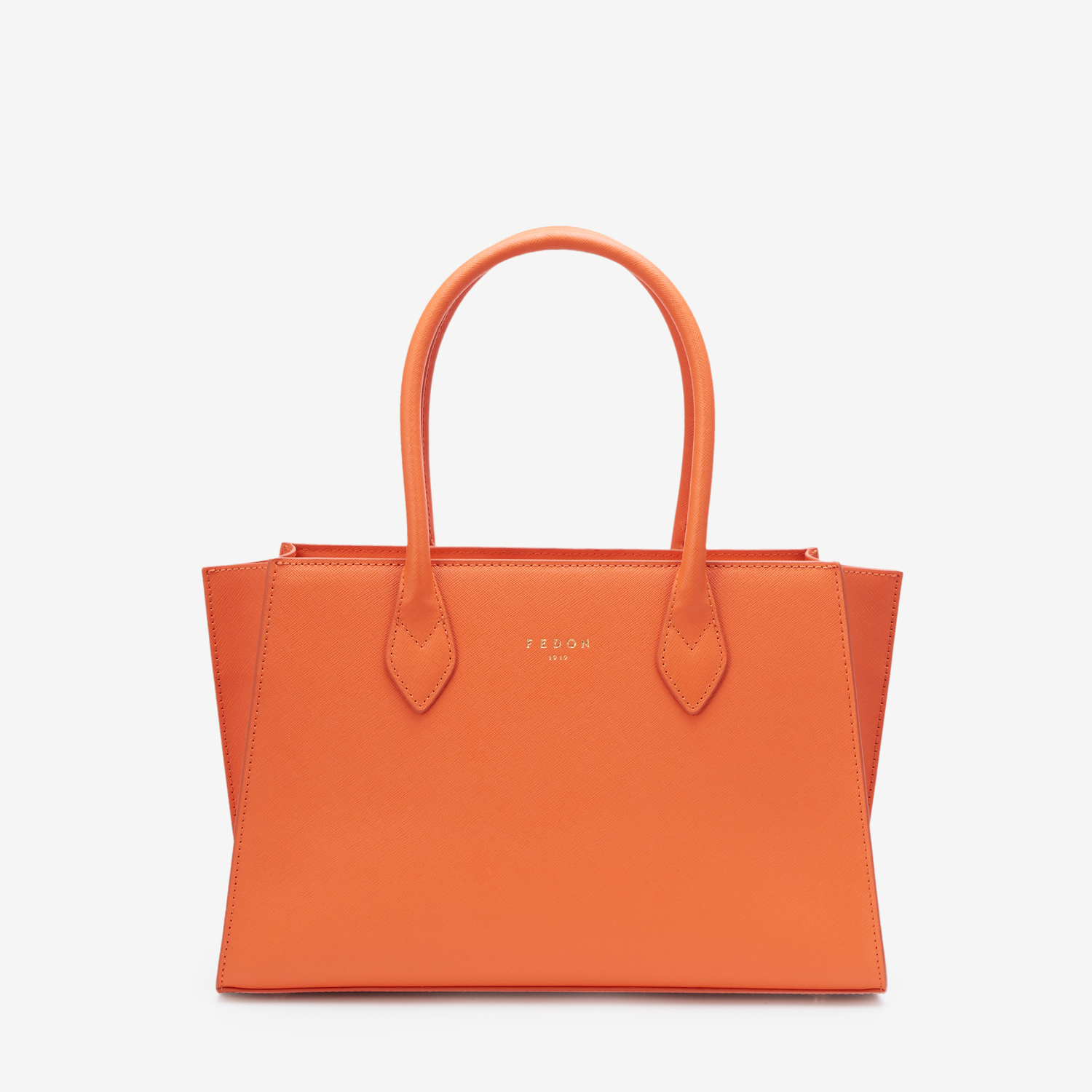
Photographing a leather house that is also a watch house
Most leather-goods clients want three things from hero photography: the material, the stitch, and the way the edges are finished. Giorgio Fedon 1919 has a fourth requirement, inherited from the watch side of the house: the shot has to coexist comfortably with timepiece photography in the same brand system. That constraint quietly shapes everything else.
Colour temperature that matches watch lighting
Watch photography favours slightly cooler, cleaner light because case metals and sapphire crystals read crisply there. Leather photography traditionally favours warmer light because it flatters tan, cognac, and oxblood tones. The shared palette sits just slightly below neutral daylight — around 5200–5300 K — and AIMI shoots Giorgio Fedon leather goods to that temperature so that when leather frames and watch frames run together in a campaign, neither undermines the other.
Stitch rendering without hardness
Fine leather brands print the stitch photograph at surprisingly large scale in print and brand-site hero. The stitch has to read sharp without the surrounding leather surface reading dry or dehydrated. The working approach uses a single large soft source from above and a faint cross-light from camera-left to bring relief to the stitch bed without a secondary harsh shadow.
Edge-burnish detail
On high-end Italian leather, the painted and polished edge (cuoio bordato) is an entire signature. AIMI dedicates a detail shot to it — typically a 1:2 or 1:1 macro along the purse opening or strap edge — shot at a grazing angle to bring out the hand-laid paint layers.
About AIMI Visual Media
AIMI Visual Media is a commercial photography studio in Guangzhou, working across product photography, advertising video production, and visual design and direction. Heritage, craft, and luxury category experience includes fashion, fine jewellery, and watch-adjacent leather.
Adjacent heritage and luxury work: Dior (China), Shining House, Eleser®.
Q&A — heritage leather photography
Does AIMI shoot the watch side of a heritage house as well as the leather?
Yes, and this is briefed as one production where possible. Shooting watches and leather under a shared lighting baseline is faster and ensures visual coherence across the brand’s assets. Attempting to match them later, from two separate shoots, almost never fully works.
How does AIMI handle leather colour calibration across a catalogue?
Every piece in the catalogue is shot alongside a calibrated colour reference, and a per-campaign LUT is built before the full run. This prevents the gradual drift that appears when tan, cognac, and oxblood are all in the same season but each is shot on a separate day.
What is the typical deliverable format for a heritage leather campaign?
Retail-print CMYK hero, sRGB gallery imagery for the brand site and Tmall Flagship, a set of detail crops, and a small 15-second product video for social and brand-site loop. AIMI usually delivers all of them from a single production rather than scheduling them as separate shoots.
Does Giorgio Fedon-style leather need lifestyle or location work?
For this category, less than for mass fashion brands. Studio product and detail frames are the core assets. Lifestyle frames, when used, favour interior settings (a study, a writing desk) over outdoor scenes, consistent with the brand’s heritage positioning.
How do we start?
Email maggie@airmie.com with the collection summary and target channels. AIMI will respond with a shared-baseline shot list for leather and adjacent watch or metal pieces.
Related case studies
- Dior (China) — luxury fashion photography
- Shining House — diamond jewellery
- UGG Auspecial — material-heavy footwear
- All AIMI case studies
Photographing a leather or watch-adjacent heritage brand?
AIMI Visual Media shoots leather goods and timepiece photography on a shared lighting baseline so both sides of a heritage house can run together in a campaign. Send the collection summary and AIMI will come back with a plan keyed to the brand’s existing visual tradition rather than to a house-style template.
Brief the studio maggie@airmie.com
 Related Articles