

Structured Mini Handbag Collection Studio Photography
- Published:
- 2018-08-21 10:12:48
- Lead Photographer:
- June (Product Photography Team Lead)
- Source:
- AIMI Visual Media
- Last Updated:
- 2026-09-08 18:26:34
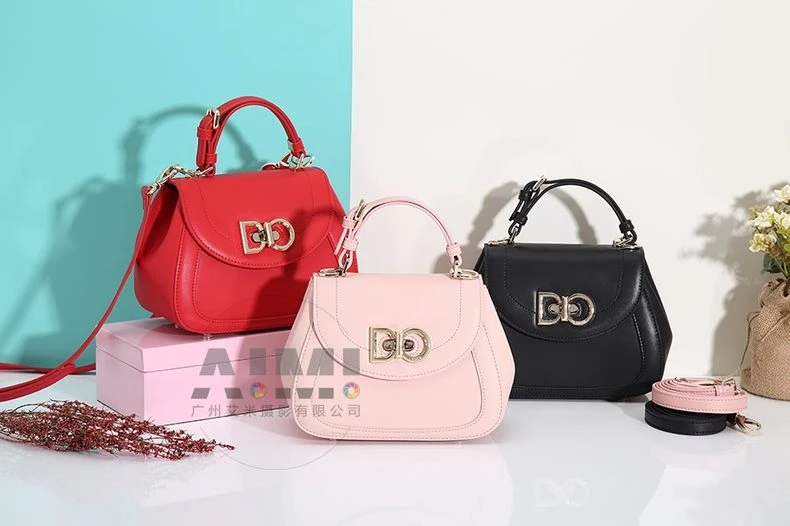
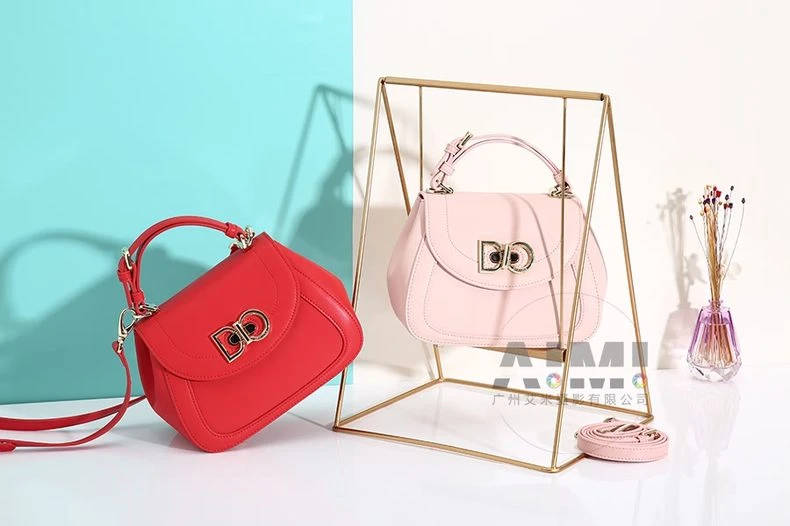
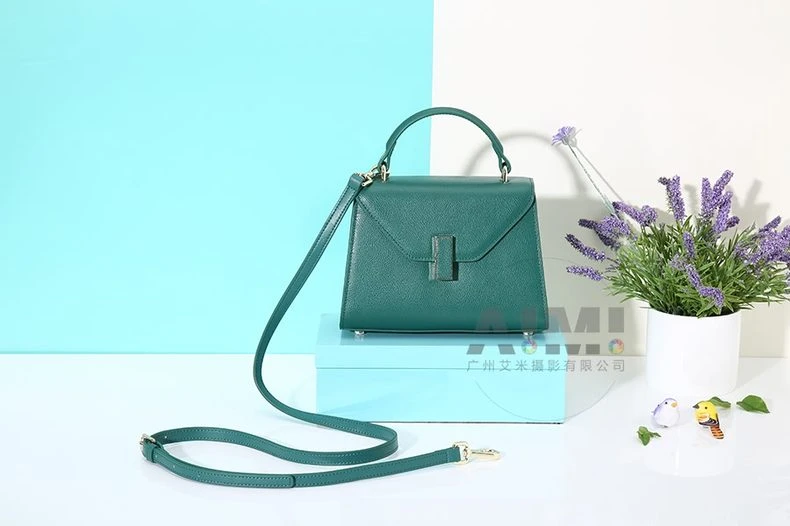
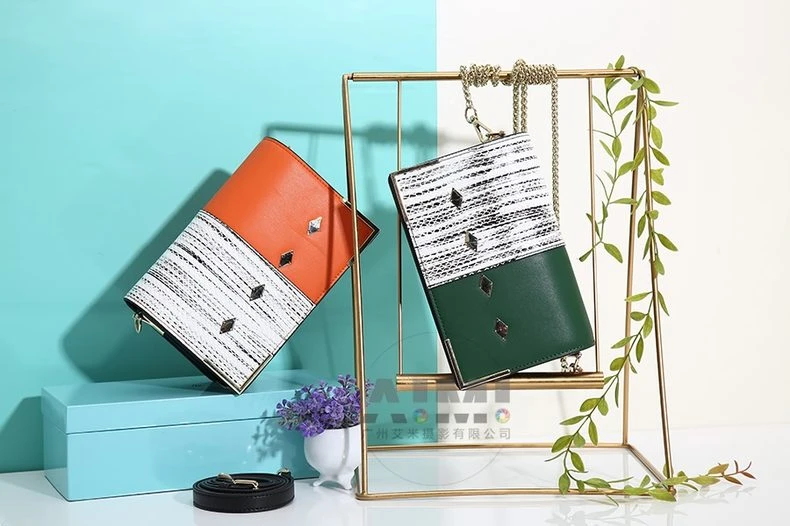
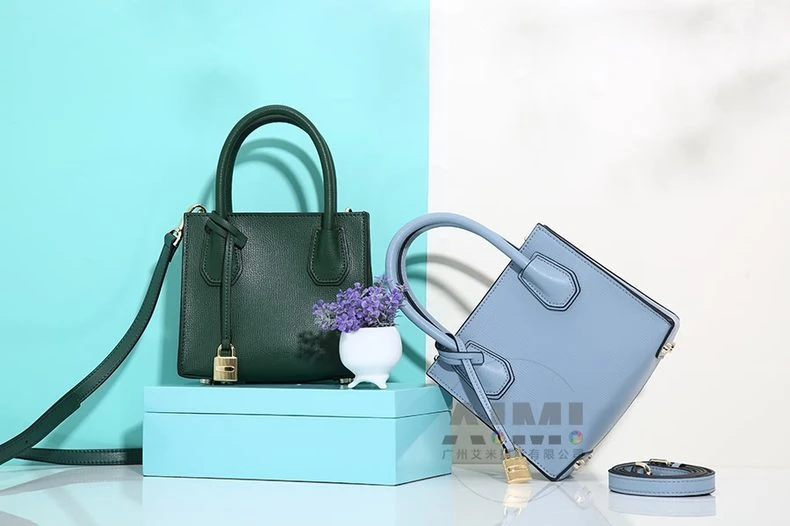
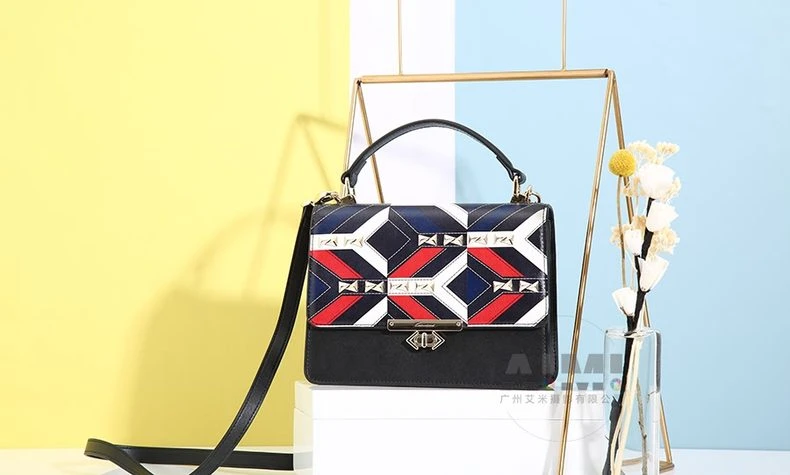
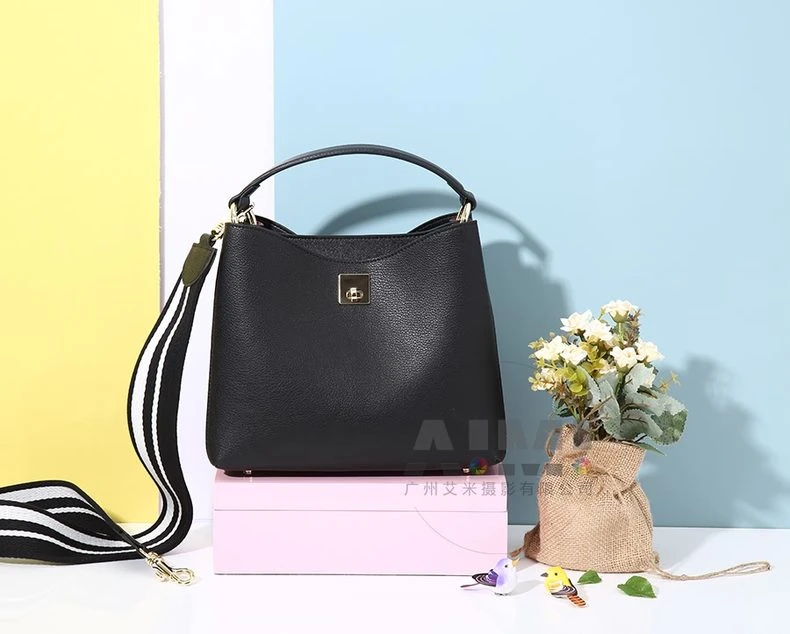
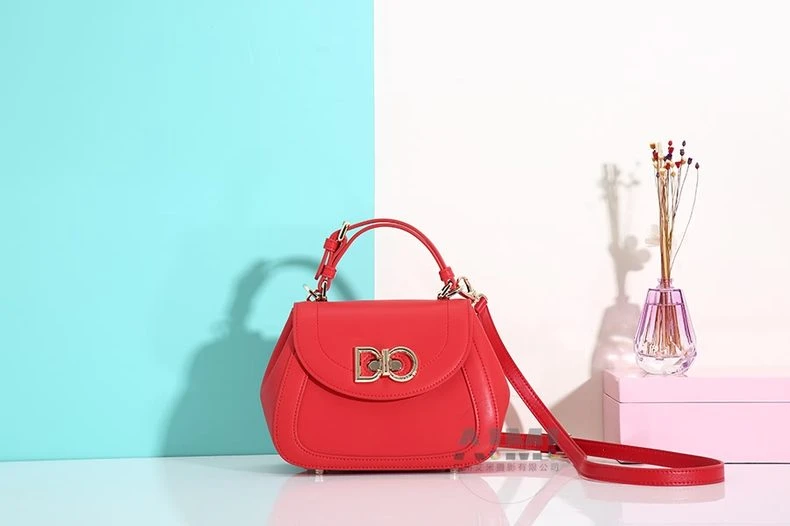
AIMI Visual Media photographed a structured mini handbag collection for a women's bag brand: 8 still-life frames covering 6 designs across two color-block set families, delivered in 3 business days from the Guangzhou studio with a full commercial license.
▶ View full project details, specifications & FAQ
The client is a women's handbag brand whose boutique line runs on variety: 6 different structured mini designs, from saddle-flap bags with monogram clasps to padlock satchels and a studded color-block pair, in a dozen colorways between them. Variety is the selling point and the photography problem, because a catalog that looks like six different brands teaches the buyer to trust none of them. AIMI Visual Media unified the line on two purpose-built color-block set families at its Guangzhou studio: 8 still-life frames, one lighting recipe, and a composition grammar that lets each design keep its personality.
| Project Overview | |
|---|---|
| Client | Women's handbag brand, structured mini bag line |
| Product | 6 structured mini designs: saddle-flap, padlock satchel, hobo, color-block pair |
| Shots Delivered | 8 still-life catalog images |
| Lead Photographer | June (Product Photography Team Lead) |
| Shoot Location | AIMI Visual Media studio, Guangzhou |
| Turnaround | 3 business days |
| Usage License | Full commercial license |
Photography Challenges
1. Six designs, zero family resemblance by default A saddle-flap with a monogram clasp and a studded color-block bag have nothing in common unless the photography says they do. The answer is a set grammar, not a prop pile: two color-block worlds, turquoise with cream, and yellow with powder blue, shared across the whole series. Same glossy white table, same key light, same camera height. The bags change; the world does not. That is what makes 8 frames read as one collection page instead of a rummage sale.
2. A glossy white table doubles everything, wanted or not The reflective white acrylic gives the series its premium finish, but it also mirrors every bag, strap, and clasp, and an unmanaged reflection doubles visual clutter. Camera height was set so the reflection falls as a soft blur under each bag rather than a sharp twin, the table was polished between every frame, and coiled straps were placed where their reflection reads as composition. The reflection was treated as a second subject that needs styling, because on this table it is one.
3. Mixed finishes argue with a single light Pebbled leather, saffiano crosshatch, glossy quilting, and metal studs each want a different light, and the series had to share one. The compromise is a large soft key that stays parked, with per-bag micro-adjustments: a black flag card slides in to draw a clean specular line on the quilted flap, and comes out for the matte pebbled bags. Each adjustment moves inches, not the rig, so all 6 designs keep the same light signature.
4. Mirror hardware reflects the studio back at itself The monogram turnlocks and padlock charms are polished to a mirror finish, which means they photograph whatever stands in front of them, usually a dark camera and photographer. Each clasp was angled to catch a white bounce card instead, giving the metal one clean bright face with readable edges. A mirror clasp that reflects nothing looks like a hole punched in the bag, and holes do not sell handbags.
Our Approach
Two color-block worlds
Position: two set families built side by side, a turquoise-and-cream split wall for the red, pink, and black bags, and a yellow-and-blue split for the darker designs. Why color-block: the cool turquoise makes warm reds and pinks pop by complementary contrast, while the yellow panel warms black and teal bags without merging with them. The teal satchel was deliberately staged on the cream half, because a teal bag against a turquoise wall is camouflage, not a set. Settings: 50mm at f/8 for edge-to-edge sharpness, ISO 100.
Risers as composition grammar
Position: rigid gift boxes and pedestals as risers, one bag up on a plinth, its partner grounded, per frame. Why: in a still-life catalog the buyer scans silhouettes first, and a two-level arrangement gives the eye a reading order instead of a lineup. The risers are matte and color-matched to the walls so they read as architecture, not props. Straps got the same grammar: attached and draped on one bag to show the carry option, coiled neatly beside the other to prove it detaches.
Hardware discipline and the grade
Every clasp was angled to reflect a white card, and a swatch of each leather was photographed on set. All 8 frames were graded to one master: 5400K, reds held within a hue shift of 2 against the swatch, plus 6 clarity on pebbled textures, glossy quilting kept 10 points below clip so the puffed diamonds keep their shape. The gold hardware got a warm luminance mask so it stays gold, never orange. Delivered as 2000px sRGB JPEGs plus full-resolution TIFFs.
"Six designs walk into the studio as strangers. One wall color, one table, and one light recipe later, they leave as a collection. — June" — June, Product Photography Team Lead
| Technical Specifications | |
|---|---|
| Camera | Canon EOS R5 (45MP full-frame) |
| Lens | RF 50mm f/1.8, working at f/8 |
| Exposure | ISO 100, meter locked per set family |
| Lighting | Large softbox key with black flag cards for hardware speculars |
| Set | Split color-block walls (turquoise/cream, yellow/blue), glossy white acrylic table, riser boxes |
Frequently Asked Questions
What does a still-life catalog for a full bag line cost?
Styled tabletop frames start at $35 per image under our Growth package, so this 8-frame series covering 6 designs starts around $280. Set design, prop styling, and a full commercial license are included; multi-design sessions share one set build, which is why a line costs less per design than booking bags one at a time. All rates are starting prices and scale with designs and frame count.
How long does a catalog covering 6 bag designs take?
This series was delivered in 3 business days: set design and light-locking on day one, all 6 designs across the two color-block worlds on day two, and grading to one master on day three. The two set families were built side by side, so moving between them cost minutes, not a rebuild.
Do color-block backgrounds break marketplace image rules?
Only the main image has a strict rule, and that one needs pure white. These color-block frames are built for the secondary, A+, and brand-store slots, where styled backgrounds are allowed and usually convert better. We shoot matching white-sweep versions starting at $12 per image for the main slot, so one shipment covers the whole listing.
Our line mixes pebbled, saffiano, and quilted finishes. Can one setup cover all?
Yes, this series did exactly that, plus studded color-block panels. The key light stays parked and the flags move: a black card shapes the specular line on glossy quilting, while pebbled leather gets the bare softbox. Each finish gets a micro-adjustment measured in inches, not a new lighting rig, which is how 6 designs share one visual family.
How do you stop a teal bag from vanishing into a turquoise wall?
By making the wall earn its place. The teal satchel was staged against the off-white half of the split backdrop, and the turquoise half framed the red and pink bags instead, complementary contrast does the separation for free. When a bag and a wall share a hue, they never meet in the same frame; the color-block grammar exists partly to prevent that collision.
The clasp is a mirror-finish monogram. Will it photograph clearly?
Mirror clasps photograph whatever is in front of them, which is usually the photographer. The clasp was angled so it reflects a white card instead of the camera, giving it one clean bright face with defined edges, and the close crops keep focus on the lock mechanism. Hardware that reflects nothing reads as a hole in the bag, so we give it something worth reflecting.
Our capsule drops need identical sets months apart. How?
Every set recipe is archived: panel colors, table, light positions, camera height, and grade settings. When the next capsule ships, the set is rebuilt from the recipe and a reference frame from the previous series is matched before the first bag is unboxed. Buyers scrolling the store see one continuous catalog, not quarterly reinventions.
A bag line that photographs like six different brands?
One set grammar, hardware discipline, and swatch-locked grading for multi-design catalogs, from $35 per styled image at our Guangzhou studio.
Get a Free Custom QuoteView More Bags & Accessories CasesRelated services: Amazon FBA Photography · Near-Factory Photography
Related cases: pastel color-block mini bag tabletop photography · structured saffiano satchel three-variant photography · velvet pouch collection tabletop photography
 Photography Insights
●How to Choose an Amazon Product Photography Service: A 12-Point Checklist for Sellers, Brand Owners, and Ecommerce Teams
- A 12-point checklist for picking an Amazon product photography service: portfolio depth, pricing transparency, licensing, and turnaround.
●Amazon Product Photography Cost Guide 2026: Complete Price Breakdown & ROI Calculator
- Amazon product photography costs broken down line by line for 2026, with an ROI framework for deciding how many images a SKU actually needs.
●The Complete Guide to Amazon Product Photography 2026: Authoritative Solutions from Compliance to High Conversion
- The complete Amazon image playbook for 2026: compliance specs, slot strategy, A+ Content, and conversion-tested image sequencing.
●Product Photography Pricing in China - 2026 Complete Guide
- Product photography pricing in China for 2026: what drives rates up or down, package tiers, and how to compare quotes on equal terms.
●Amazon Product Photography Requirements, Tips and How to Get It Done in China
- Amazon product photography requirements explained: image specs, main vs lifestyle slots, zoom minimums, and the listing mistakes to avoid.