

Mobile TV Cart Product Photography
- Published:
- 2018-10-26 00:58:03
- Lead Photographer:
- June (Product Photography Team Lead)
- Source:
- AIMI Visual Media Co., Ltd.
- Last Updated:
- 2026-09-16 23:59:00
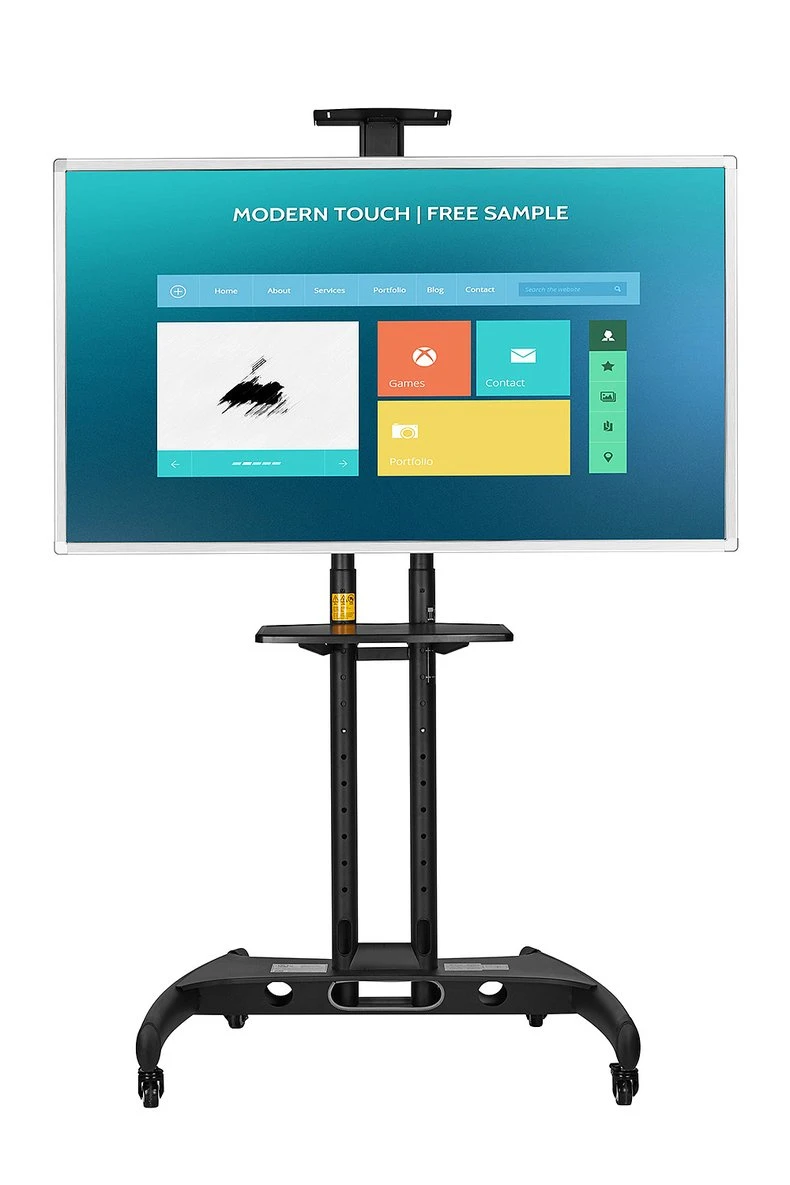
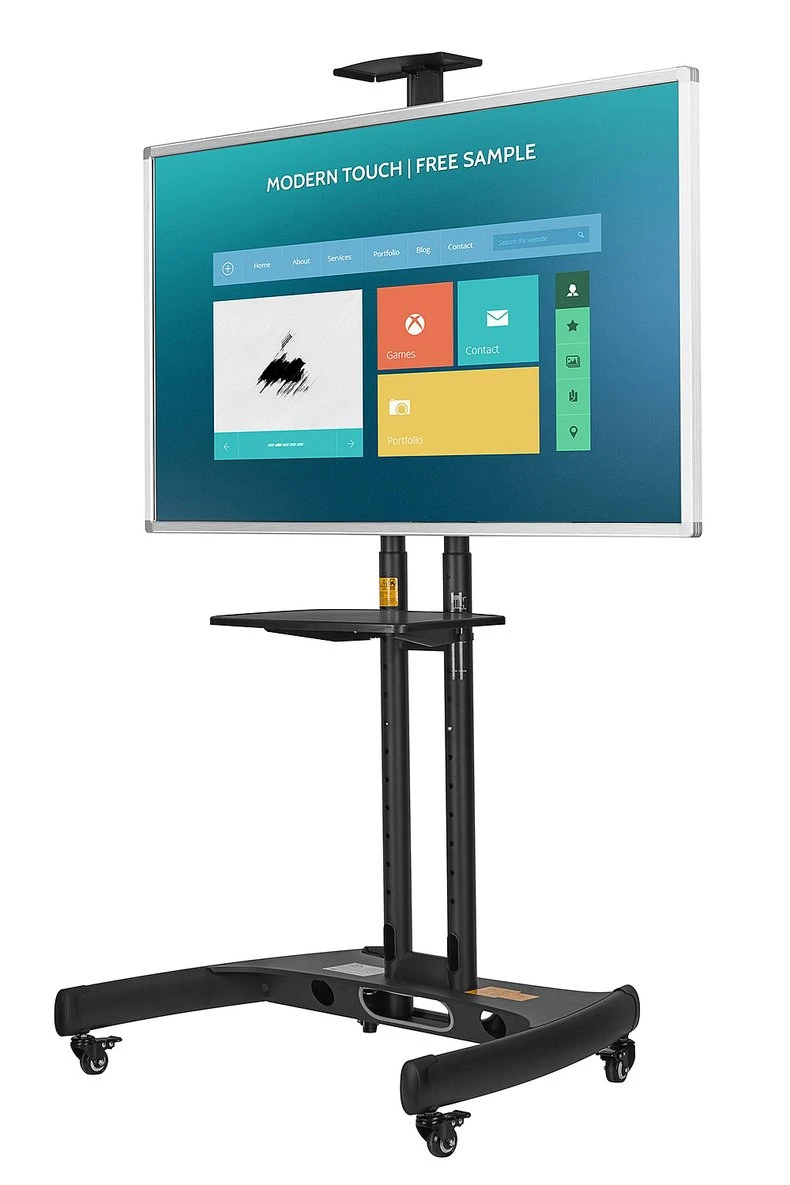
Two frames for a heavy-duty mobile display cart: a square front elevation that shows the full stand with a screen fitted, and a three-quarter that reads the height-adjustment posts, AV shelf and lockable caster base in one clear readable view.
▶ View full project details, specifications & FAQ
A display cart sells on load, adjustment and mobility, and none of those photograph in a single angle. The front frame carries the silhouette and the mounted screen; the three-quarter does the working details, with the punched adjustment holes, shelf and caster brakes all legible. A demo screen was fitted so the stand photographs doing its job.
| Project Overview | |
|---|---|
| Product type | Height-adjustable mobile TV and display cart |
| Deliverables | Front and three-quarter catalog frames |
| Shoot location | AIMI studio, Guangzhou |
| Styling | Seamless white, demo display fitted |
| Usage | Marketplace listings and AV distributor catalog |
Photography Challenges
1. A black stand holding a black screen. The powder-coated stand and the display’s off-state glass merge into one dark mass. Rim strips behind the posts and a placed reflection on the screen separated the layers so stand and screen read as two objects.
2. Adjustment holes are the feature. The punched post holes prove the height range, and they vanish under flat light. A slight side rake drew each hole as a readable dot along the post.
3. Casters that must look like they lock. The brake hardware on each caster is a purchase detail. The base was lit low enough that wheels and brake levers keep their shape instead of sinking into shadow.
Our Approach
Two-frame coverage plan
Front for silhouette and scale, three-quarter for the working details. Two disciplined frames answer the listing’s questions without padding the gallery.
Layer separation lighting
Rim strips behind the stand and one controlled screen reflection keep the dark-on-dark assembly readable.
Demo screen fitted on set
The cart was photographed carrying a display, because an empty bracket tells the buyer nothing about proportion or load presence.
"Utility hardware is sold on visible engineering: holes, brakes, welds. Light for the details a buyer would check in a showroom, and the photograph does the demonstrating." — June, Product Photography Team Lead
| Technical Specifications | |
|---|---|
| Camera | Full-frame DSLR, 50-70mm equivalents, leveled |
| Lighting | Rim strips for dark layers; raking detail light |
| Staging | Demo display fitted for proportion |
| Coverage | Front plus three-quarter detail angle |
| Output | Web-resolution masters |
Frequently Asked Questions
Can you photograph stands and carts with screens fitted?
Yes. We fit a demo display so the stand photographs under load, which communicates proportion and purpose instantly. The screen content can be your demo material or a neutral placeholder.
How do you keep black hardware readable?
With rim light behind the structure and a raking detail light for holes and hardware. Dark products need separated layers, not more overall brightness.
Is two frames enough for a utility product?
When the product has one job, a front frame plus a detail three-quarter covers it. We plan coverage against the listing’s actual questions rather than padding angles.
Utility hardware that sells on details?
Send the product. We will light the holes, brakes and welds that buyers check, in frames sized for your listing slots.
Get a Free Custom Quote View More Electronics CasesRelated services: Amazon FBA Photography · Near-Factory Photography
Related cases: Television and Digital Signage Kiosk Photography · Digital Kiosk and Panel Heater Catalog Photography · Commercial Display Freezer Photography
 Photography Insights
●The Complete Guide to Amazon Product Photography 2026: Authoritative Solutions from Compliance to High Conversion
- The 2026 Amazon image playbook covering compliance, secondary slots and lifestyle frames for electronics.
●How to Choose a Product Photography Studio in Guangzhou, China
- A buyer checklist for vetting Guangzhou studios on glossy-surface lighting, composite work and retouch depth.
●Product Photography Pricing in China - 2026 Complete Guide
- What drives per-SKU pricing for electronics shoots: set builds, multi-colorway coverage and retouch hours.
●10 Product Photography Tips That Boost E-commerce Sales
- Ten image tips that lift conversion, from reflective-surface control to consistent SKU color.
●Why Global Brands Outsource E-commerce Photography to China
- Why electronics brands consolidate packshot, detail and lifestyle photography with one China studio partner.