

Television and Digital Signage Kiosk Photography
- Published:
- 2019-01-10 14:28:43
- Lead Photographer:
- June (Product Photography Team Lead)
- Source:
- AIMI Visual Media Co., Ltd.
- Last Updated:
- 2026-09-16 23:47:00
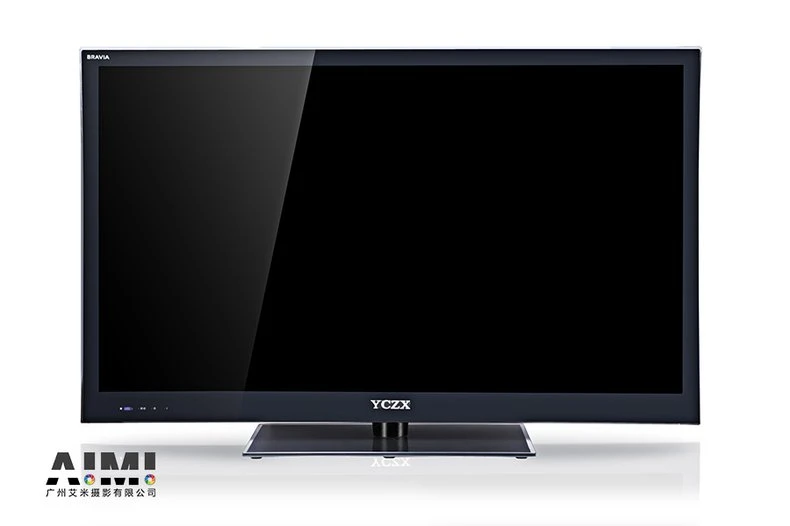
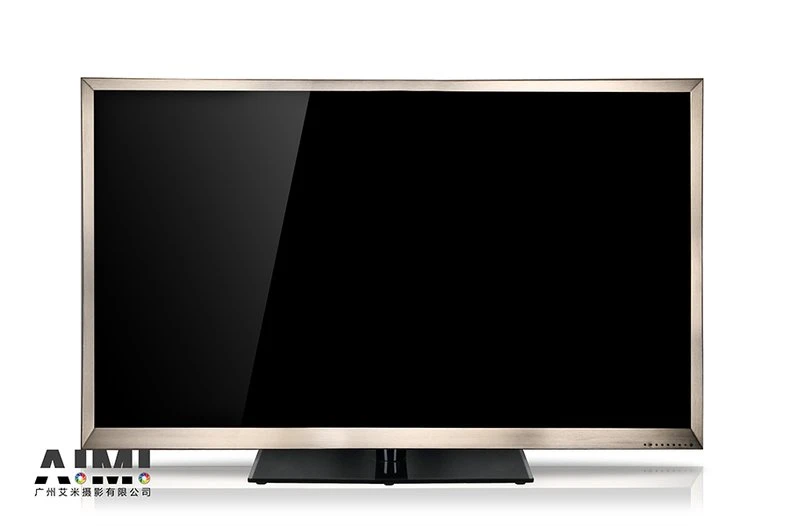
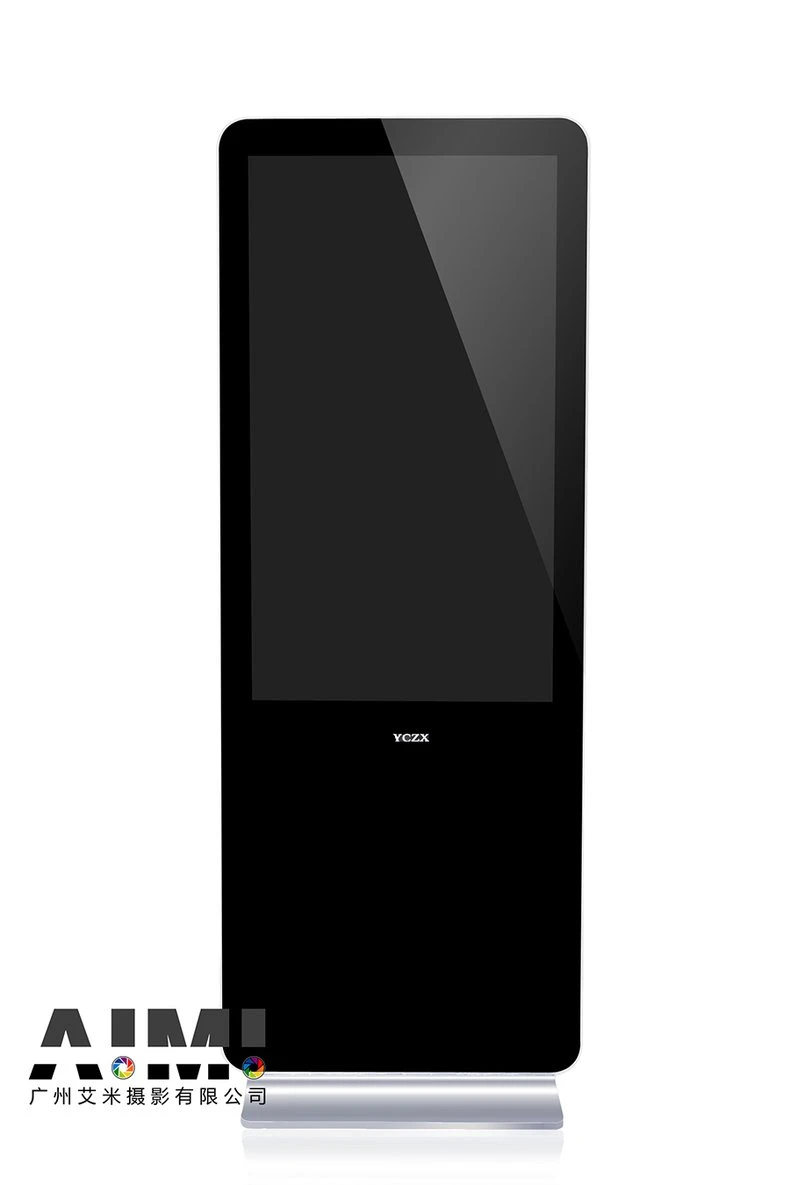
Three frames for a display manufacturer covering two retail TV colorways and a floor-standing signage kiosk: big, glossy, dark products photographed on a reflective white sweep with their screens off, each sharing one lighting plan and one deliberate screen reflection.
▶ View full project details, specifications & FAQ
Large screens are among the hardest packshot subjects: a switched-off TV is a black mirror the size of a window, and the kiosk is taller than the photographer. The session used one sweep, one lighting plan and three product swaps, keeping the diagonal softbox reflection identical across frames so the set reads as a single coordinated catalog.
| Project Overview | |
|---|---|
| Product type | Flat-screen TVs in two bezels; vertical signage kiosk |
| Deliverables | Three hero packshots on a reflective sweep |
| Shoot location | AIMI studio, Guangzhou |
| Styling | Seamless white with mirrored floor reflection |
| Usage | Catalog, distributor listings and trade-show materials |
Photography Challenges
1. Two black mirrors of different sizes. A dead screen reflects the entire studio. Instead of fighting reflections away, we placed one long diagonal softbox reflection across every screen at the same angle, turning an unavoidable artifact into a deliberate design element that ties the set together.
2. Champagne metal versus gloss black. The two TVs differ only in bezel finish, but the metallic bezel photographs several stops brighter than the black one. Exposure and fill were rebalanced per unit so both frames sit at the same visual weight on the page.
3. Reflections on the floor, controlled. The white sweep is reflective enough to mirror each base. That reflection was kept and groomed in retouch rather than removed, because a floating TV looks wrong to buyers; a soft mirrored base grounds the product.
Our Approach
One lighting plan, three subjects
The key, fill and strip lights stayed fixed while products were swapped onto the same taped marks. Screens were cleaned and polarized identically, which is why the diagonal highlight lands in the same place on all three frames.
Per-unit exposure balancing
The champagne bezel got slightly reduced fill to hold its metallic tone; the kiosk got an extra flag to keep its gloss black fascia from merging with its screen.
Retouch for finish, not structure
Dust, fingerprints and floor marks were cleaned; the pedestal reflections were groomed into smooth gradients. No geometry was altered, so distributors see the exact unit that ships.
"With big black screens you do not eliminate reflections, you curate them. One honest highlight, placed deliberately, tells the buyer more about the glass than a dead black rectangle ever will." — June, Product Photography Team Lead
| Technical Specifications | |
|---|---|
| Camera | Full-frame DSLR, 50-70mm equivalents, leveled tripod |
| Lighting | Strip softboxes angled for controlled screen reflection |
| Surface | Reflective white sweep; reflections groomed in post |
| Handling | Gloved two-person moves for the kiosk and TVs |
| Output | Web and print-resolution masters per frame |
Frequently Asked Questions
Can you photograph very large products in studio?
Yes. Our Guangzhou studio takes products up to signage kiosks and large appliances. Units are moved by two people on protective flooring, and the sweep, lighting and camera marks stay fixed so multi-product catalogs keep one consistent look.
Should TV screens be photographed on or off?
For catalog work, off. A powered screen moirés against the camera sensor and its content dates the image. A dark screen with one controlled highlight shows the glass and bezel honestly and stays usable for years.
Can you match frames across a whole display catalog?
Matching is the default: fixed camera marks, one lighting plan, and the same reflection logic per product family. New models shot months later can be matched to the same template.
A display line that needs one consistent catalog look?
Send the model list. We will fix the setup once and run every screen through it, so your catalog reads as a single family rather than a folder of one-offs.
Get a Free Custom Quote View More Electronics CasesRelated services: Amazon FBA Photography · Near-Factory Photography
Related cases: Smart Door Lock Product Photography · Commercial Beverage Cooler Photography · Hydraulic Press Machine Catalog Photography
 Photography Insights
●How to Choose a Product Photography Studio in Guangzhou, China
- A buyer checklist for vetting Guangzhou studios on glossy-surface lighting, composite work and retouch depth.
●Product Photography Pricing in China - 2026 Complete Guide
- What drives per-SKU pricing for electronics shoots: set builds, multi-colorway coverage and retouch hours.
●The Complete Guide to Amazon Product Photography 2026: Authoritative Solutions from Compliance to High Conversion
- The 2026 Amazon image playbook covering compliance, secondary slots and lifestyle frames for electronics.
●Why Global Brands Outsource E-commerce Photography to China
- Why electronics brands consolidate packshot, detail and lifestyle photography with one China studio partner.
●How to Choose an Amazon Product Photography Service: A 12-Point Checklist for Sellers, Brand Owners, and Ecommerce Teams
- Twelve questions to ask before booking, including how a studio handles chrome, glass and glowing screens.