

Rose Gold Robot Vacuum Multi-Angle Photography
- Published:
- 2019-01-10 14:34:50
- Lead Photographer:
- June (Product Photography Team Lead)
- Source:
- AIMI Visual Media Co., Ltd.
- Last Updated:
- 2026-09-16 23:47:00
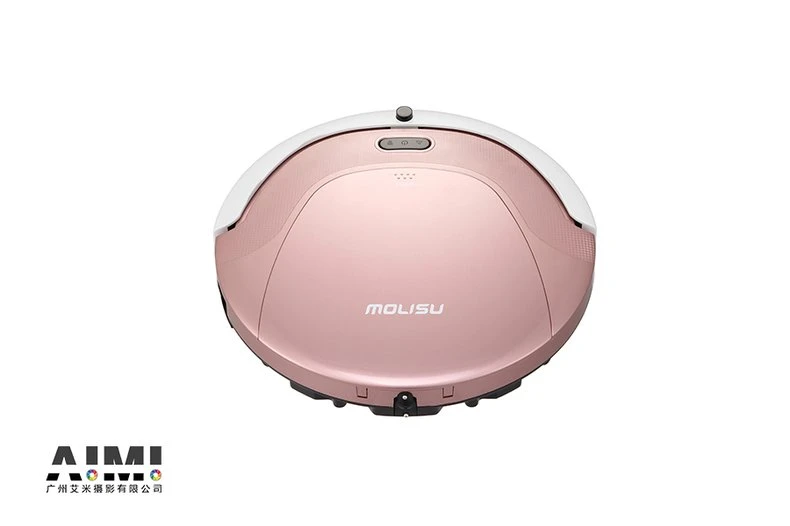
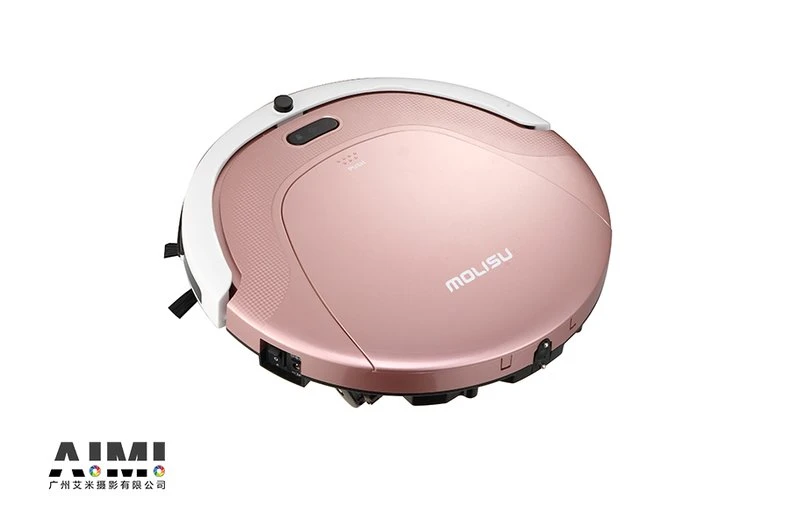
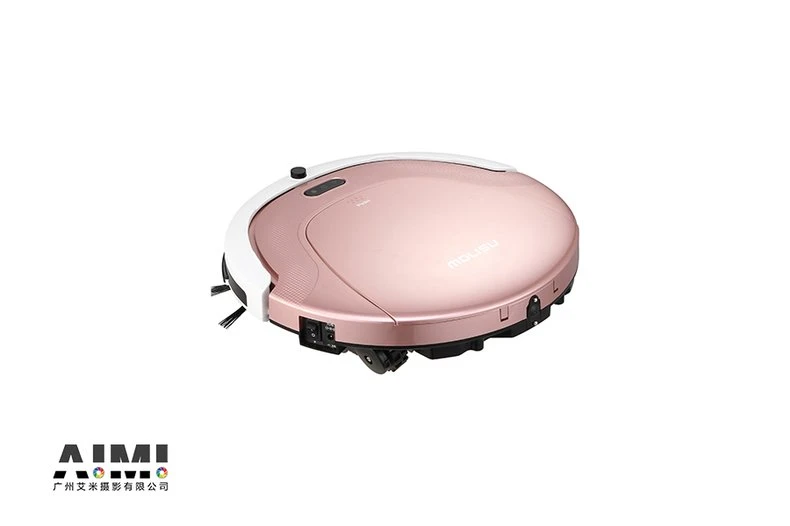
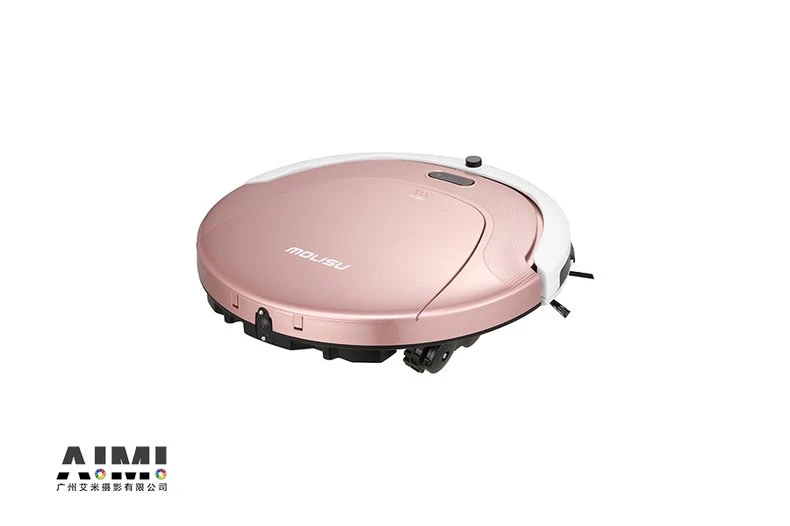
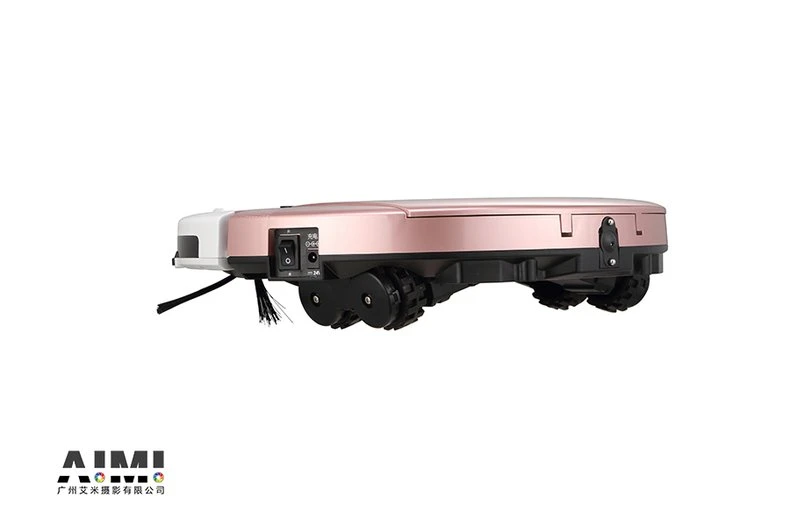
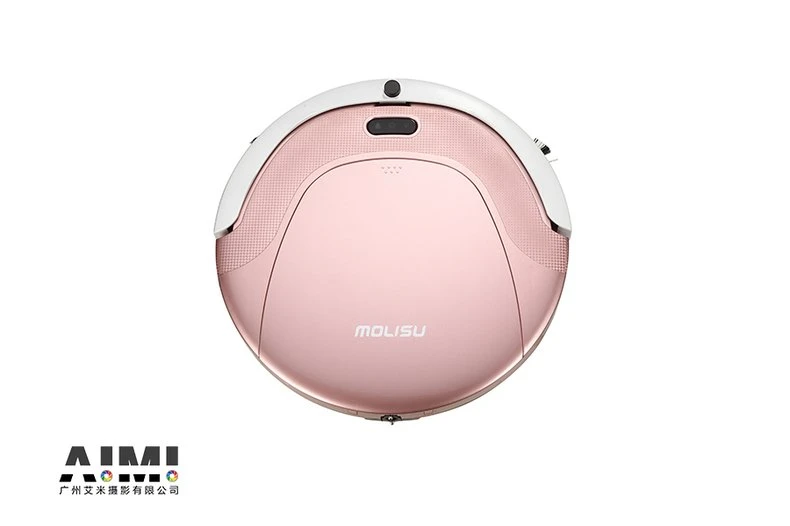
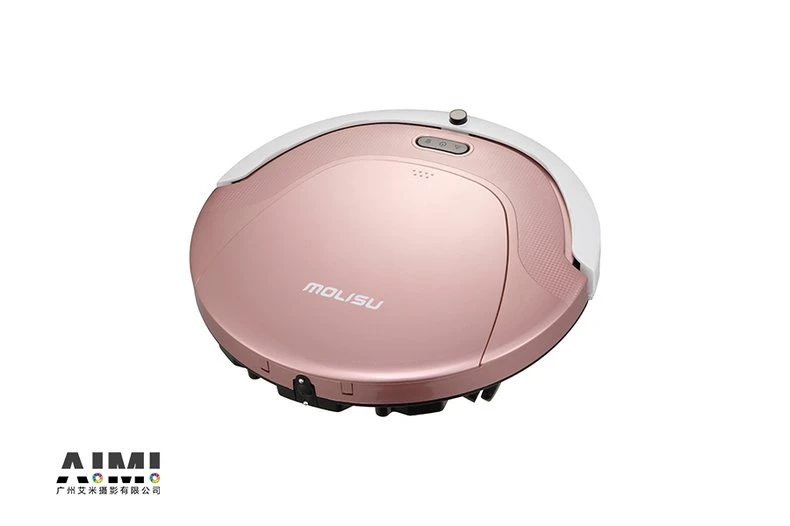
Seven frames walking around one rose gold robot vacuum: top hero, control deck, side brush, slim profile and the undercarriage buyers rarely see, all in one locked lighting plan that keeps the metallic shell consistent at every angle without moving the key light.
▶ View full project details, specifications & FAQ
Robot vacuums are bought on features the buyer cannot touch: sensors, brushes, ground clearance. The shot list was built as a slow orbit, starting at the top hero and dropping frame by frame until the camera is at floor level showing drive wheels and charging contacts. One lighting plan ran the whole orbit so the rose gold finish never shifts between angles.
| Project Overview | |
|---|---|
| Product type | Robot vacuum cleaner, rose gold metallic finish |
| Deliverables | Seven frames covering all listing angles |
| Shoot location | AIMI studio, Guangzhou |
| Styling | Seamless white, shadowless, no props |
| Usage | Marketplace gallery and product page feature modules |
Photography Challenges
1. A metallic dome that reflects from every direction. The curved rose gold shell picks up the studio from any angle. Large overhead diffusion created a clean soft gradient on the dome, and each camera position was checked for stray reflections before capture rather than cleaned later.
2. The undercarriage problem. Showing wheels, brush and contacts means flipping the product, and flipped products photograph dead without help. The unit was propped on a hidden support and lit from below with a bounce card so the underside reads as designed hardware, not a dark cavity.
3. Seven angles, one product color. Metallic finishes change hue with viewing angle. Frames were compared against a locked reference during the shoot and fill was trimmed per angle, so the shell is the same rose gold in frame seven as in frame one.
Our Approach
Orbit-style shot list
Positions were planned as a descending arc around the product before the session: high front, three-quarter, low three-quarter, profile, undercarriage, top hero. Planned angles move faster on set and guarantee the listing covers every feature.
Big diffusion for curved metal
A single large overhead soft source gave the dome one smooth highlight at every camera position, so no angle needed a lighting rebuild.
Feature-led framing
Each frame exists to answer a buyer question: how slim is it, what does the bumper look like, what is underneath. Framing was composed around the feature, not the other way round.
"A good multi-angle set is an argument laid out in order. Walk the buyer around the product, answer each doubt with a frame, and never let the finish change its mind between angles." — June, Product Photography Team Lead
| Technical Specifications | |
|---|---|
| Camera | Full-frame mirrorless, 50-85mm equivalents |
| Lighting | Large overhead diffusion; bounce fill for underside |
| Support | Hidden prop for undercarriage frame, removed in post |
| Color control | Locked reference frame; per-angle fill trim |
| Output | Web-resolution masters, full gallery set |
Frequently Asked Questions
How many angles does an appliance listing need?
Five to seven is the working range: hero, control deck, profile, back and one or two feature details. We plan the orbit before the shoot so each frame answers a specific buyer question instead of repeating the hero.
Can you photograph the underside of a product?
Yes. The product goes on a hidden support with bounce fill underneath, and the support is removed in retouch. Underside frames matter for anything with wheels, vents or contacts.
How do you keep metallic finishes consistent across angles?
With one large soft source that covers all camera positions, plus a locked reference frame on set. Each new angle is compared against it and fill is trimmed before capture, so the finish never drifts.
A product buyers need to walk around?
Send it with its feature list. We will plan the orbit, lock the finish, and return a gallery that answers doubts in order.
Get a Free Custom Quote View More Electronics CasesRelated services: Amazon FBA Photography · Near-Factory Photography
Related cases: Ultra-Slim Robot Vacuum Photography · Mini Hi-Fi Stereo System Photography · Radar Detector Product Photography
 Photography Insights
●Amazon Product Photography Requirements, Tips and How to Get It Done in China
- Amazon image rules for electronics listings: white main image, slot order and infographic limits.
●The Complete Guide to Amazon Product Photography 2026: Authoritative Solutions from Compliance to High Conversion
- The 2026 Amazon image playbook covering compliance, secondary slots and lifestyle frames for electronics.
●10 Product Photography Tips That Boost E-commerce Sales
- Ten image tips that lift conversion, from reflective-surface control to consistent SKU color.
●Product Photography Pricing in China - 2026 Complete Guide
- What drives per-SKU pricing for electronics shoots: set builds, multi-colorway coverage and retouch hours.
●How to Choose an Amazon Product Photography Service: A 12-Point Checklist for Sellers, Brand Owners, and Ecommerce Teams
- Twelve questions to ask before booking, including how a studio handles chrome, glass and glowing screens.