

Water Filter Pitcher Product Visualization
- Published:
- 2019-06-19 11:21:08
- Lead Photographer:
- June (Product Photography Team Lead)
- Source:
- AIMI Visual Media Co., Ltd.
- Last Updated:
- 2026-09-16 23:47:00
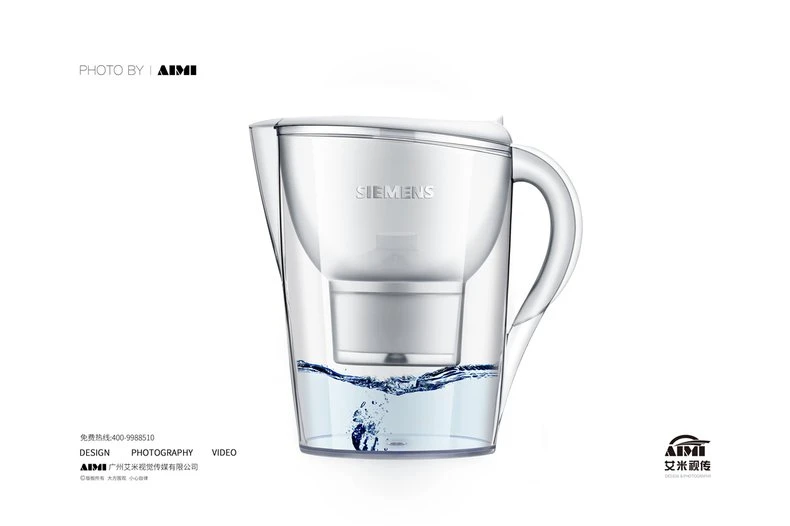
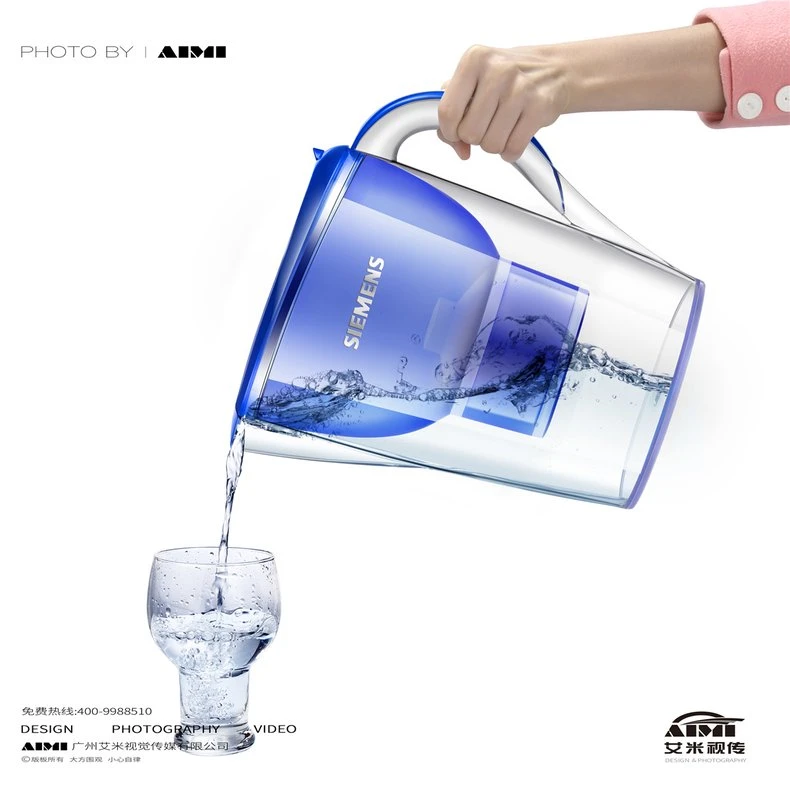
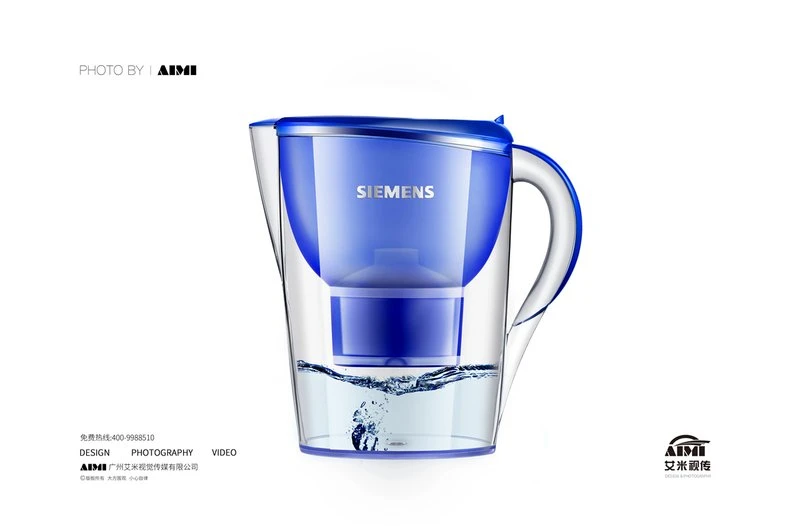
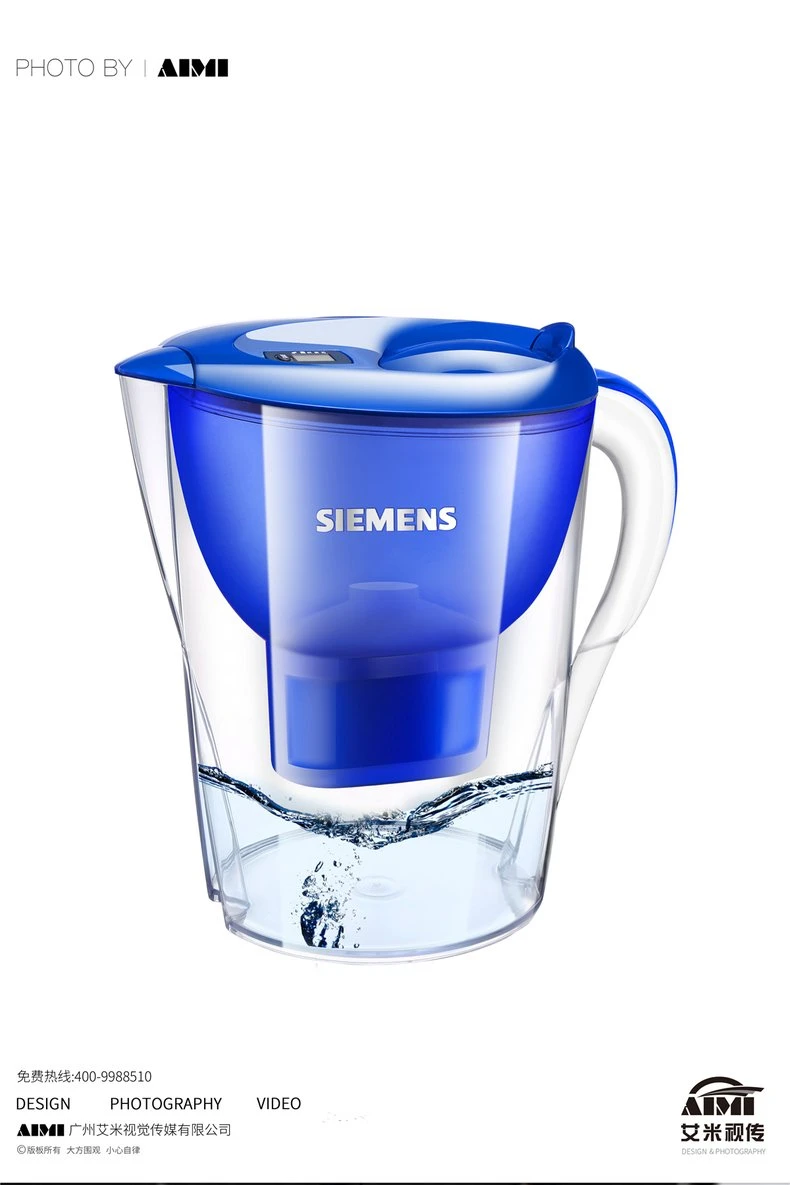
Four frames for a countertop water filter pitcher in two colorways: photoreal 3D product renders for the static frames, and a pour-action shot that composites a photographed hand and glass with the rendered pitcher, built before mass production units existed.
▶ View full project details, specifications & FAQ
The pitcher existed as pre-production samples, which made photography slow and expensive: every angle would need a flawless physical unit. Instead the product was built as a photoreal 3D model with accurate clear plastic, water and filter cartridge, rendered for the static frames. For the pour shot, a real hand and glass were photographed and the rendered pitcher was composited in, matching perspective and light.
| Project Overview | |
|---|---|
| Product type | Gravity-fed water filter pitcher, two colorways |
| Deliverables | Three render frames plus one composite action shot |
| Production | Photoreal 3D modeling, rendering and compositing |
| Styling | Seamless white; single glass prop in the action frame |
| Usage | E-commerce gallery and launch materials before mass production |
Design and Visualization Challenges
1. Clear plastic is the hardest material to fake. A filter pitcher is mostly transparent: body, water and cartridge stack three layers of refraction. The model used measured wall thickness and correct indices of refraction so light bends through the assembly the way it does through the real unit.
2. Two colorways from one build. Once the geometry and materials were right, the white and blue variants were material swaps on the same model. Both frames share lighting and angle, so the pair compares cleanly on the listing.
3. A human hand that has to hold a render. The pour frame composites a photographed hand and glass with the 3D pitcher. The hand was shot against a matched background with the pitcher’s handle position marked, and the render was lit to the photographed light so skin, glass and plastic share one scene.
Our Approach
Dimension-true modeling
The model was built from product drawings, including internal filter geometry that shows through the body. Buyers zoom; the inside had to be as accurate as the outside.
Render tuned for e-commerce
A studio-style white environment and soft key were simulated so renders sit naturally beside photographed products in the same catalog.
Photography-guided compositing
The hand and glass were shot first with marked grip positions, then the pitcher was rendered to that camera. Matching contact shadows and a shared light direction close the gap between render and photograph.
"3D earns its place when the product is not shootable yet. Build it true to the drawings, light it like a photograph, and when real units arrive the catalog already knows what they look like." — June, Product Photography Team Lead
| Technical Specifications | |
|---|---|
| Modeling | Dimension-true build from product drawings |
| Materials | Measured clear plastic, water and cartridge stack |
| Rendering | Studio-style white environment, soft key |
| Composite | Photographed hand and glass, matched light direction |
| Output | Web and print-resolution masters |
Frequently Asked Questions
When does 3D visualization beat photography?
When physical units are unavailable, inconsistent or pre-production. Renders built from drawings are dimension-true, endlessly repeatable, and colorways become material swaps instead of new shoots. Once production units exist, photography can take over.
Can renders sit next to real photos in one catalog?
Yes, if they are lit like photographs. We simulate the same studio environments we shoot in, so rendered and photographed products share light logic and background treatment.
Can you combine renders with real photography?
Yes. Action frames like the pour shot composite photographed hands, props or scenes with the rendered product. The photograph is captured first with marked positions, and the render is matched to its camera and light.
Product not ready for its close-up yet?
Send the drawings. We will build it true, render it like a photograph, and composite the human moments where the frame needs them.
Get a Free Custom Quote View More Electronics CasesRelated services: Amazon FBA Photography · Near-Factory Photography
Related cases: Glass Health Kettle Lifestyle Photography · Television and Digital Signage Kiosk Photography · Electric Rice Cooker Product Photography
 Photography Insights
●How to Choose a Product Photography Studio in Guangzhou, China
- A buyer checklist for vetting Guangzhou studios on glossy-surface lighting, composite work and retouch depth.
●Why Global Brands Outsource E-commerce Photography to China
- Why electronics brands consolidate packshot, detail and lifestyle photography with one China studio partner.
●Product Photography Pricing in China - 2026 Complete Guide
- What drives per-SKU pricing for electronics shoots: set builds, multi-colorway coverage and retouch hours.
●The Complete Guide to Amazon Product Photography 2026: Authoritative Solutions from Compliance to High Conversion
- The 2026 Amazon image playbook covering compliance, secondary slots and lifestyle frames for electronics.
●10 Product Photography Tips That Boost E-commerce Sales
- Ten image tips that lift conversion, from reflective-surface control to consistent SKU color.