

LED Headlight Bulb Product Photography
- Published:
- 2018-11-12 10:29:50
- Lead Photographer:
- June (Product Photography Team Lead)
- Source:
- AIMI Visual Media
- Last Updated:
- 2026-09-07 09:37:32
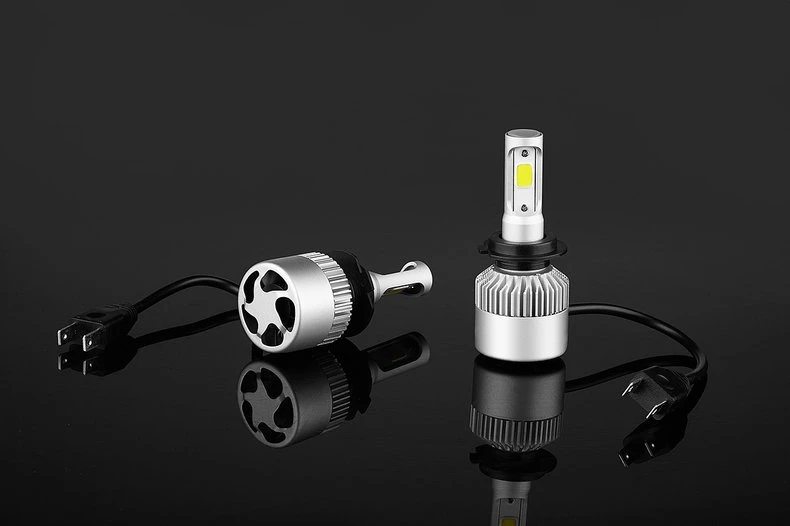
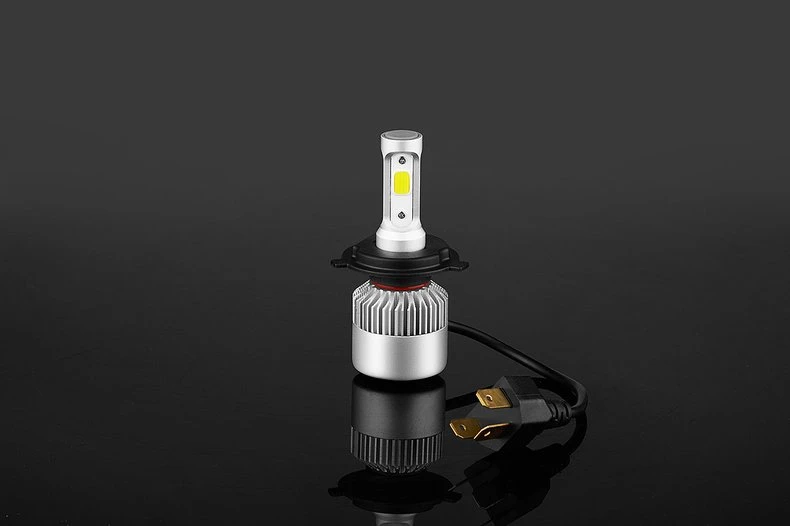
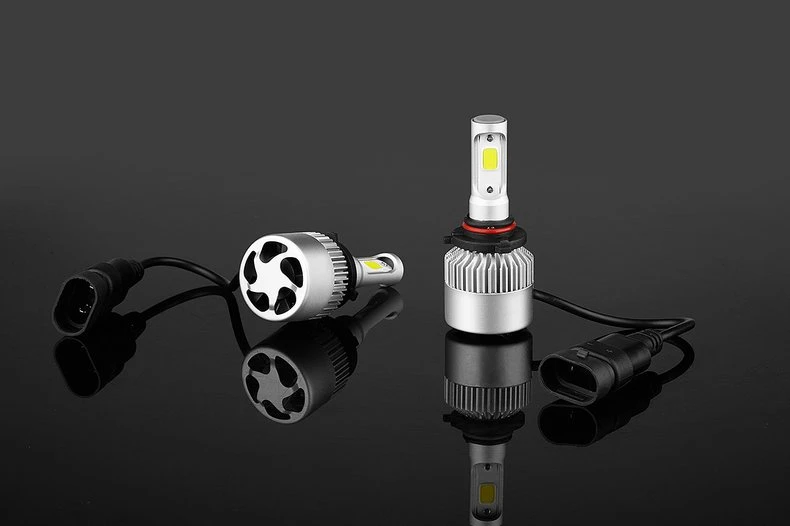
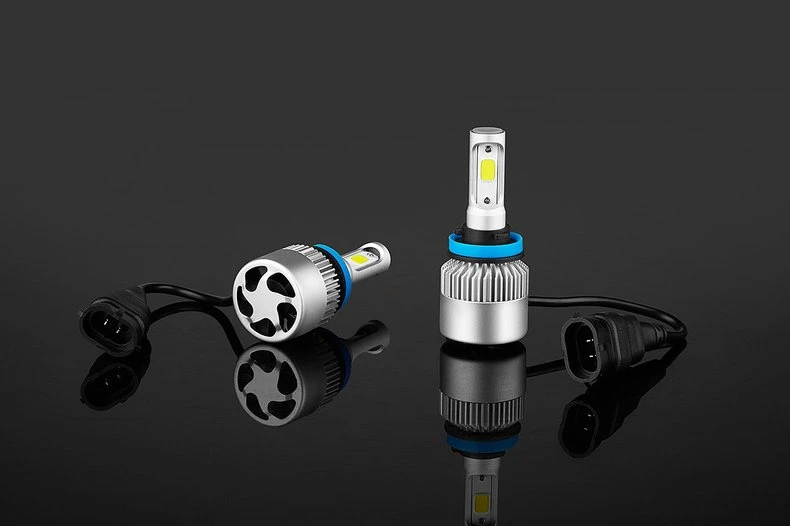
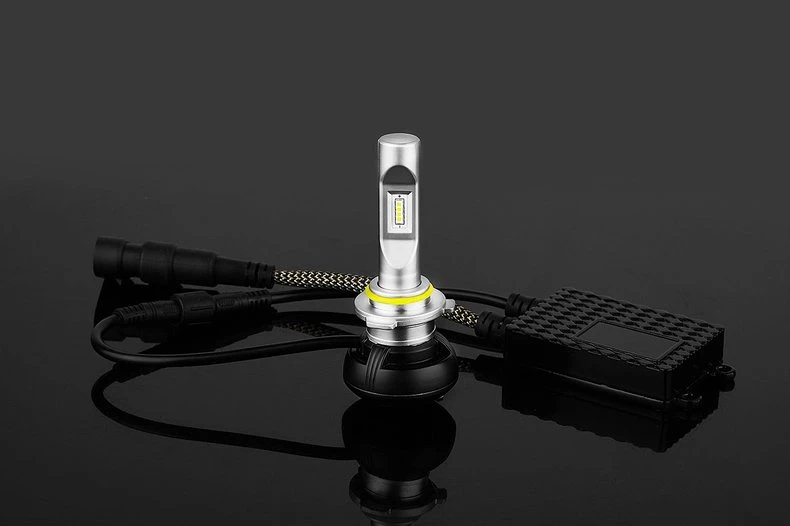
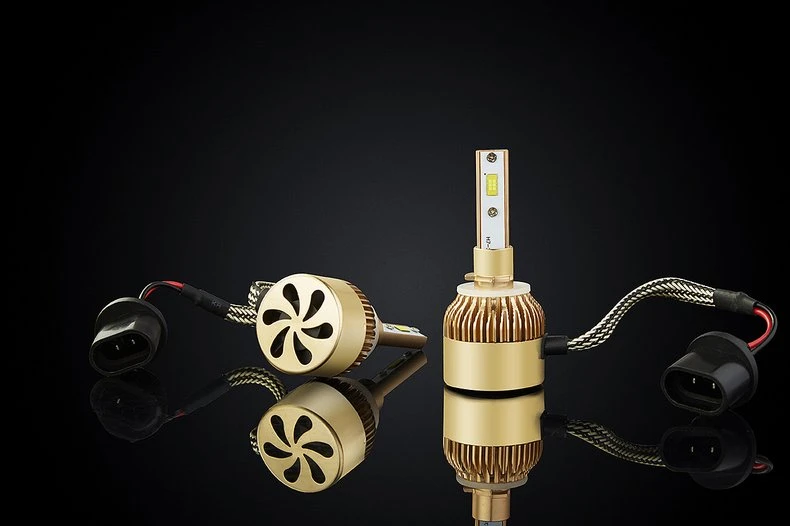
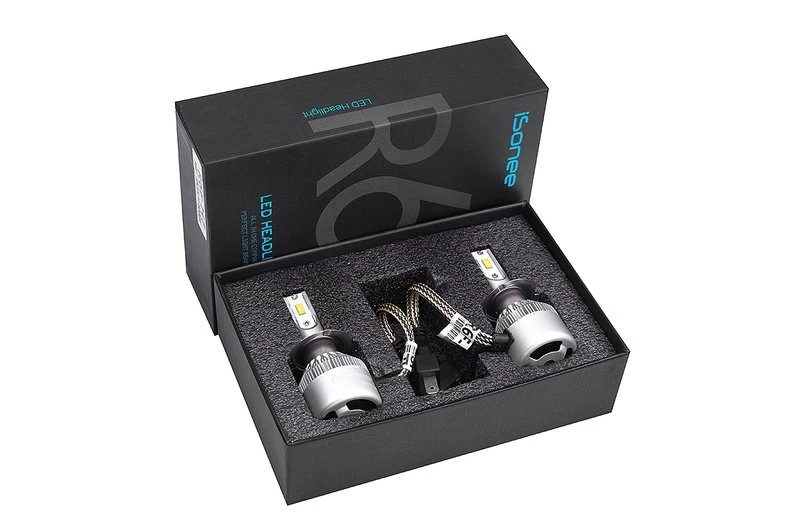
AIMI Visual Media photographed this aftermarket LED headlight conversion bulb line at its Guangzhou studio for an automotive lighting seller. The 7-image set covers fan-cooled H4 and H7-style kits on a black mirror surface plus a retail packaging shot, from emitter close-ups to full-kit layouts with drivers and braided wiring.
▶ View full project details, specifications & FAQ
An LED conversion bulb is a promise about engineering: machined heatsink, real fan, clean emitter, proper connectors. Buyers in this category zoom into product photos looking for exactly those four proofs. This automotive lighting seller needed a set that survives that zoom. We shot 7 frames at AIMI Visual Media's 3,000 m² studio in Guangzhou: six on a black mirror surface that doubles the product's presence, plus one retail box shot on white for the packaging story.
| Project Overview | |
|---|---|
| Client | Automotive lighting seller (aftermarket LED line) |
| Product | Fan-cooled LED headlight conversion bulbs, H4 and H7-style kits |
| Shots Delivered | 7 images: 6 dark-surface product shots, 1 packaging shot |
| Lead Photographer | June, Product Photography Team Lead |
| Shoot Location | AIMI Visual Media studio, Tianhe District, Guangzhou |
| Turnaround | 5-7 business days (standard schedule) |
| Usage License | Full commercial license |
Photography Challenges
1. Machined aluminum mirrors the entire studio. The heatsink fins are satin aluminum, and they reflect everything: softboxes, stands, the camera, the photographer. The usual fix, wrapping the product in more diffusion, kills the metallic read and turns the fins grey and plastic-looking. Instead, the light sources were placed so the reflections fall as clean gradients running along the fin stack. A tidy reflection is what makes metal read as metal; the material is judged by what's mirrored in it.
2. Black parts on a black table against a black wall. Connectors, fan housings, and braided leads are all black, sitting on a black mirror surface in front of a dark gradient backdrop. Left to themselves, the cables dissolve into the background and the bulb looks like it's floating. The separation comes from a rim light that traces the black plastics with a thin edge, plus the mirror surface itself, whose reflection redraws every shape underneath the product.
3. The yellow emitter must glow without clipping. The COB emitter chip is the first thing buyers zoom into, and it's a trap: under studio power it clips to featureless white, underexposed it turns dull mustard. Exposure was set for the chip first, keeping the yellow saturated with its surface texture intact, then the fins and plastics were filled back up around it. The emitter in these frames reads as a component, not a blob.
4. A kit photo is a layout problem, not a lighting one. Bulb, driver, braided pigtails, connectors, box: the buyer wants to see everything that ships. Scattered parts look like a yard sale. Each kit was laid with the cables curved into deliberate leading lines, one bulb upright to show the emitter and seal ring, one laid down to show the fan end and connector, so a single frame documents both functional ends.
Our Approach
Dark-Surface Product Shots
Six frames were shot on glossy black acrylic with a dark gradient backdrop. A large softbox at front-side lays a smooth gradient highlight along the aluminum fins, and a second source behind adds the rim that separates the black plastics from the background. The upright-plus-laid-down pairing repeats through the set by design: the standing bulb shows the emitter, seal ring, and collar, the horizontal one reveals the fan vent and connector. Everything ran on a Canon EOS 5D Mark IV, shot at an aperture small enough to keep both bulbs in the pair sharp.
Reflection as a Compositional Tool
The mirror surface wasn't a styling accident: the reflection doubles the product and gives a single frame two angles' worth of information. Camera height was chosen so the mirrored bulbs read clean and symmetrical, and the braided leads were curved into S-lines that pull the eye from connector to emitter. Frame 7 switched doctrine entirely: the retail box on white, high-key and even, because packaging sells to distributors, not drivers, and it needs a different visual logic.
Post-Production & Retouching
Black mirror acrylic shows every dust particle and fingerprint, so each frame went through a full surface cleanup at high magnification before color work. The emitter's yellow was kept hue-true, holding saturation without letting the chip blow to white at its hotspot. Stray reflections of stands and flags were edited out of the table where geometry made them unavoidable. Masters were delivered at full 30.4-megapixel resolution, so the heatsink machining survives marketplace zoom.
"Metal isn't lit, it's reflected: what you place around the product matters more than what you point at it." — June, Product Photography Team Lead
| Technical Specifications | |
|---|---|
| Camera | Canon EOS 5D Mark IV (30.4 MP full-frame) |
| Lighting | Large softbox front-side for fin gradients, plus rim source for black plastics |
| Surfaces | Glossy black acrylic, dark gradient backdrop, white sweep for packaging |
| Coverage | 7 frames: H4/H7-style kits, upright + laid-down pairs, retail box |
| Post-Production | Surface dust cleanup, hue-true emitter, reflection editing |
| Delivery | 5-7 business days, full commercial license |
Frequently Asked Questions
What's the rate for LED bulb product photos?
White-background frames start at $12 per image under Essential. Styled dark-surface shots like these start at $35 per image under Growth, putting a 7-image set at roughly $245 and up. All rates are starting prices; the final quote depends on your kit count and whether packaging shots are included.
How long does a 7-image shoot like this take?
Standard delivery is 5-7 business days from product arrival in Guangzhou. Dark-surface work runs slower than white-background work because the reflection geometry has to be solved before shooting starts, and that setup time is what the final images are made of.
Do these work as Amazon listing images?
The set was built for exactly that split: styled dark-surface frames serve as secondary and A+ images, and white-background mains are shot to Amazon's pure-white spec in the same session. A+ layouts are a separate service starting at $80 per SKU.
How do you photograph shiny metal without reflections of the studio?
By designing the reflections instead of fighting them. Light sources are placed so what mirrors in the aluminum reads as clean gradients along the fins, and anything that would reflect as clutter gets flagged or moved. Metal is judged by what it mirrors, so the studio gets arranged for the reflection, not just the product.
Can buyers see the actual LED chip clearly?
Yes. Exposure was set for the emitter first, so the yellow COB chip keeps its color and surface texture instead of clipping to white. At full 30.4-megapixel resolution, the chip, the fin machining, and the connector terminals all survive a buyer's zoom.
Can you shoot the whole kit with its packaging?
That's frame 7 of this set: the retail box with its foam insert, shot on white. Kit layouts with the external driver and braided leads are covered in the product frames, and box shots for distributors can be added to the same shoot.
Need professional photography for your automotive lighting products?
LED kits, bulbs, and lighting accessories: dark-surface and catalog sets engineered for buyer zoom, from our 3,000 m² Guangzhou studio.
Get a Free Custom QuoteView More Automotive CasesRelated services: Amazon FBA Photography · Near-Factory Photography
Related cases: Dash cam product photography · Chrome car aroma diffuser photography
 Photography Insights
●How to Choose an Amazon Product Photography Service: A 12-Point Checklist for Sellers, Brand Owners, and Ecommerce Teams
- A 12-point checklist for picking an Amazon product photography service: portfolio depth, pricing transparency, licensing, and turnaround.
●Amazon Product Photography Cost Guide 2026: Complete Price Breakdown & ROI Calculator
- Amazon product photography costs broken down line by line for 2026, with an ROI framework for deciding how many images a SKU actually needs.
●The Complete Guide to Amazon Product Photography 2026: Authoritative Solutions from Compliance to High Conversion
- The complete Amazon image playbook for 2026: compliance specs, slot strategy, A+ Content, and conversion-tested image sequencing.
●Product Photography Pricing in China - 2026 Complete Guide
- Product photography pricing in China for 2026: what drives rates up or down, package tiers, and how to compare quotes on equal terms.
●Amazon Product Photography Requirements, Tips and How to Get It Done in China
- Amazon product photography requirements explained: image specs, main vs lifestyle slots, zoom minimums, and the listing mistakes to avoid.