

Knit Sneakers and Leather Slip-On Shoes Product Photography
- Published:
- 2025-06-26
- Lead Photographer:
- June (Product Photography Team Lead)
- Source:
- AIMI Visual Media Co., Ltd.
- Last Updated:
- 2026-09-09 17:41:10
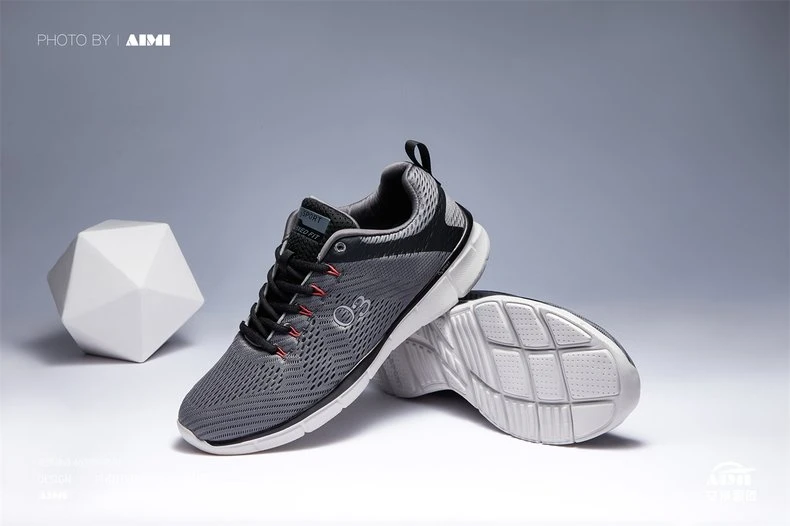
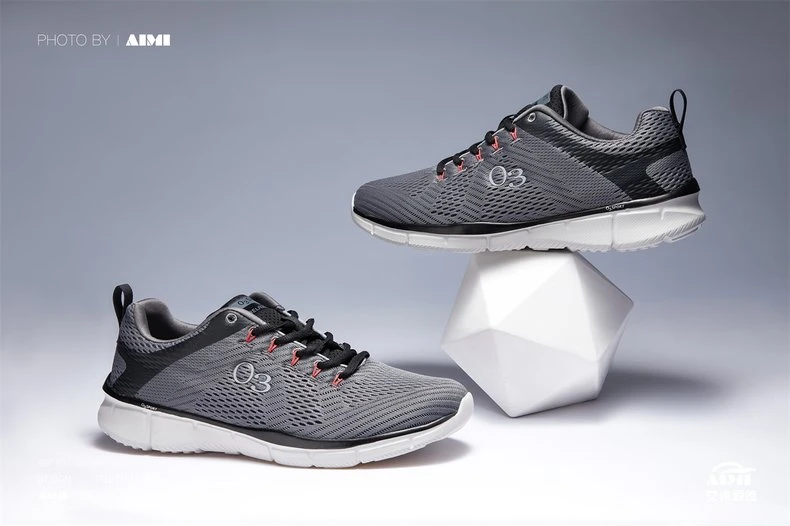
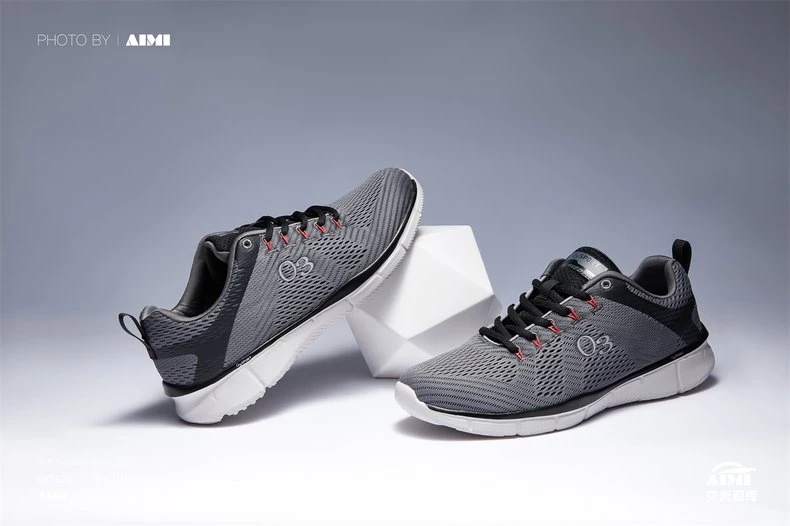
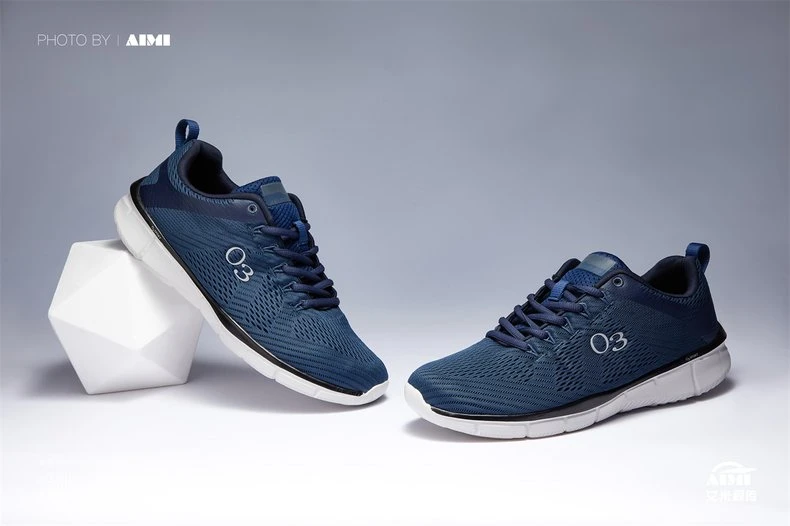
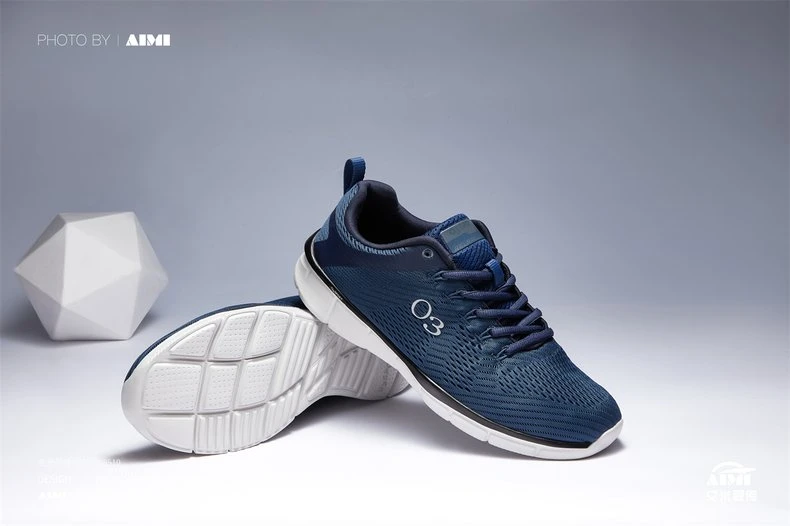
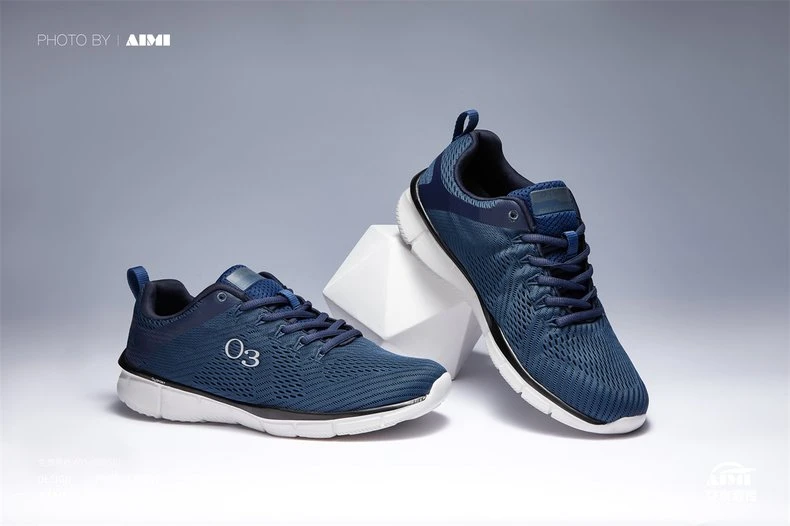
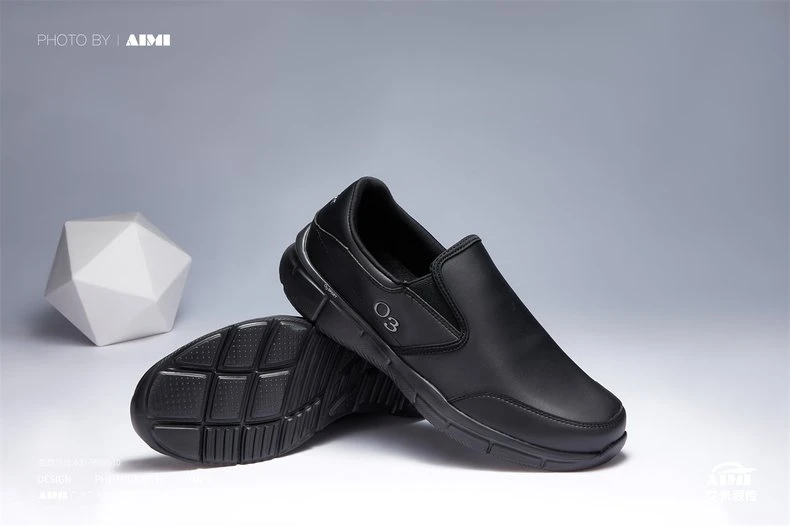
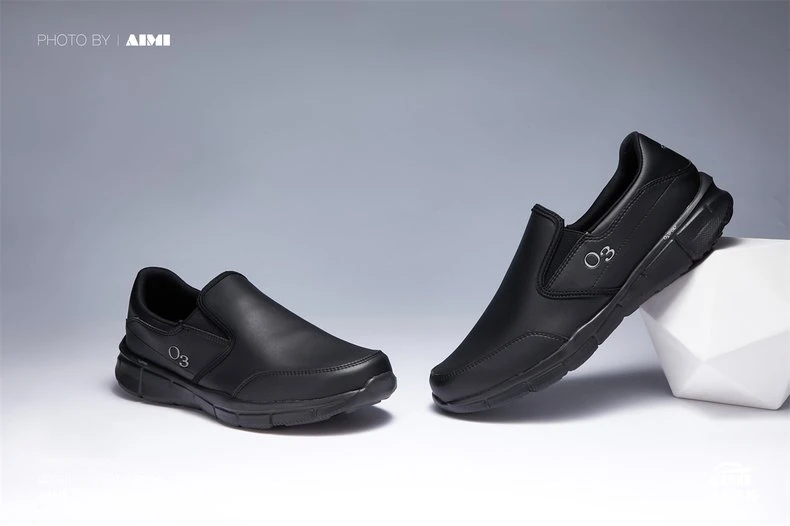
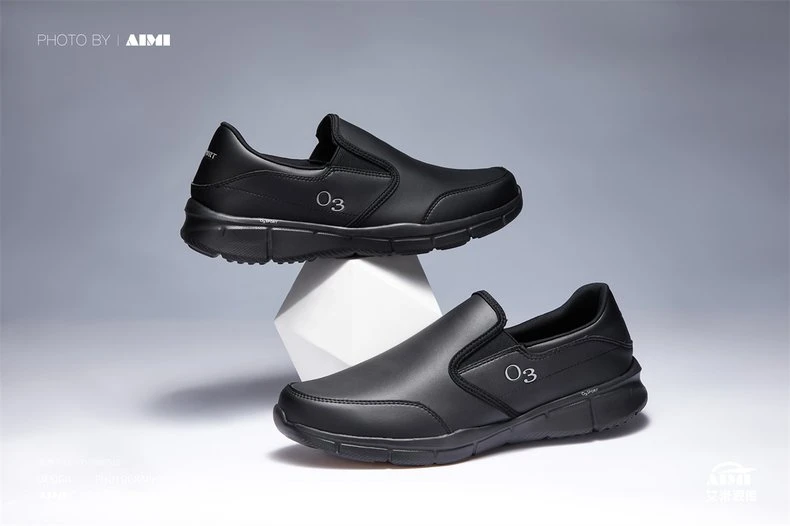
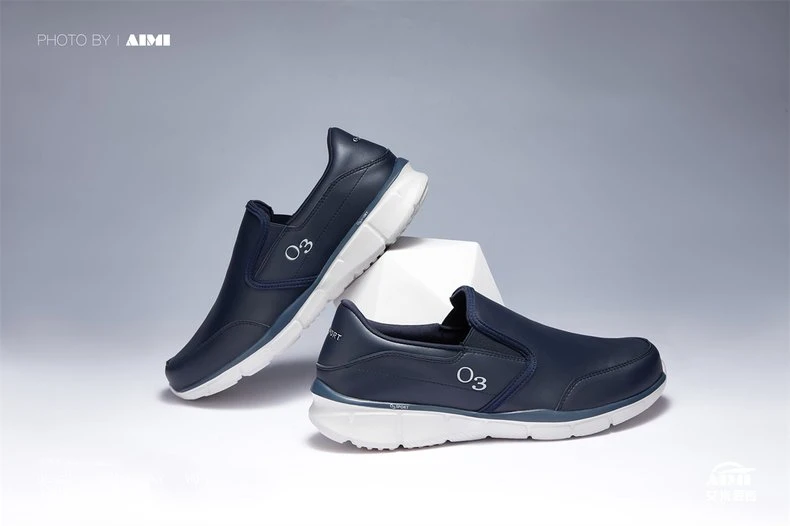
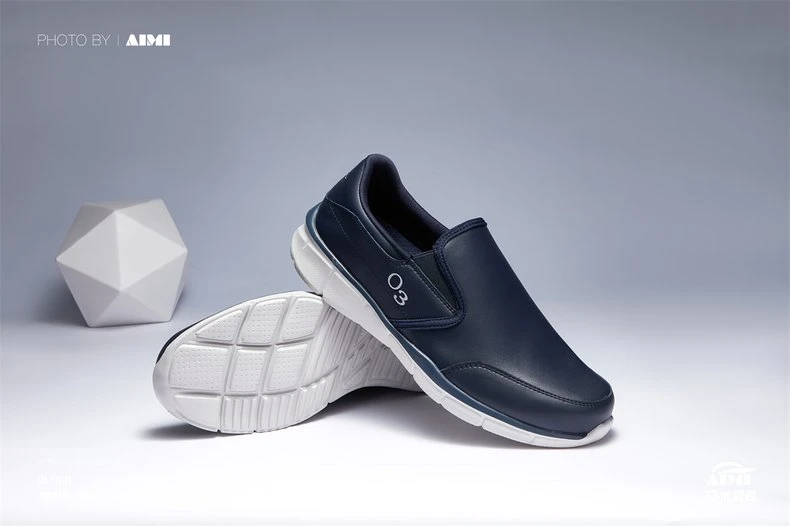
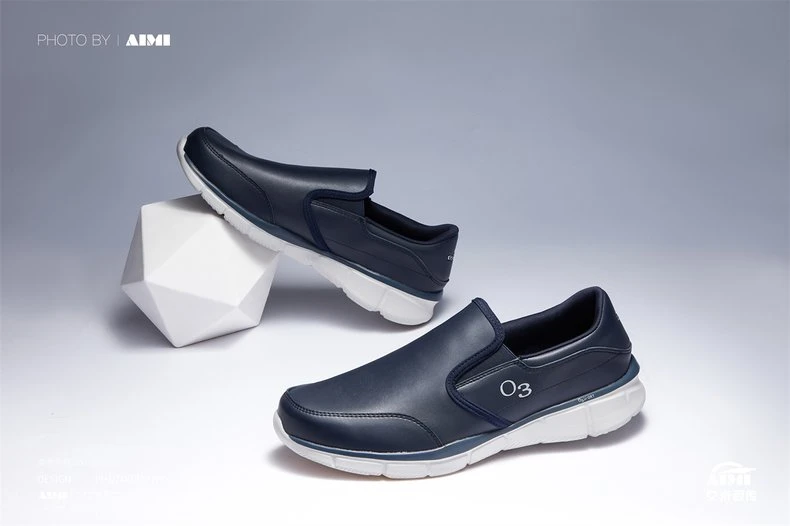
AIMI Visual Media is a footwear photography studio in Guangzhou, China. This dual-style project delivered 12 still-life images across 2 designs and 4 colorways in 5 business days, shot on a grey sweep at 2000x2000px, under a full commercial license.
▶ View full project details, specifications & FAQ
A cross-border footwear seller sent two comfort lines from the same collection: a breathable knit runner in heather grey and navy, and a wipeable leather slip-on in black and navy. Both share the same cushioned white EVA sole unit, and the brief asked for catalog frames that make the family relationship obvious at a glance. The shot list called for 12 still-life images covering side profiles, raised hero angles, and outsole treads, all on one seamless grey sweep with a single white geometric prop. Everything was shot in our Guangzhou studio in one session, delivered in 5 business days with a full commercial license.
| Project Overview | |
|---|---|
| Client | Cross-border footwear seller with Amazon and DTC channels |
| Product | Breathable knit runners and leather slip-on comfort shoes, two styles across grey, navy, and black colorways |
| Shots Delivered | 12 images (side profiles, raised heroes, outsole frames) |
| Lead Photographer | June — Product Photography Team Lead |
| Shoot Location | AIMI Visual Media studio, Guangzhou, China |
| Turnaround | 5 business days |
| Usage License | Full commercial license |
Photography Challenges
1. Knit mesh shows whatever sits behind it. The runner's upper is an open engineered knit, and every perforation is a tiny window to the backdrop. On a mid-grey sweep those holes read darker than the solid panels, which makes the shoe look dirty if the background is uneven. We lit the sweep separately to a perfectly even gradient and kept the shoe one stop brighter, so the mesh apertures read as clean shadow dots instead of smudges.
2. Black shoe, black sole, one flat mass. The black slip-on is tonal from upper to outsole, and a single meter reading merges leather, elastic gusset, and rubber into one silhouette with no material separation. We metered in zones: base exposure for the white sole, a flagged kicker from camera-right to skim the leather grain, and a low fill to keep the gusset weave readable, so the buyer sees three materials, not one black blob.
3. White EVA soles clip before anything else. The shared foam sole is the brightest object in every frame, and it clips to featureless white while the upper is still underexposed. We exposed for the sole first and held it a half stop below clipping, then lifted the uppers back in post, so the foam keeps its molded texture and the knit keeps its color.
4. Twelve catalog frames that must match exactly. Buyers flip between colorways expecting identical geometry, and a two-millimeter camera shift reads as a different shoe. We locked the camera on a geared head, taped prop and shoe positions on the sweep, and swapped colorways through the same marks, so all 12 frames align pixel-to-pixel when toggled.
Our Approach
The Grey Sweep Catalog Setup
The whole set ran on one seamless grey sweep lit to an even gradient, with a single white polyhedron as the only prop: one shoe flat for the natural resting profile, one propped or flipped to show sole thickness and tread. The key was a large softbox camera-left at 45 degrees, flagged off the backdrop so light lands on the shoe without flattening the gradient behind it. We shot at 70mm to keep sole proportions honest, at f/8 for full-pair sharpness. The two-shoe stack is deliberate: one frame carries both the upper design and the outsole tread, so a 12-image set covers 24 angles of information.
Raking Light for Knit and Leather Texture
Two materials needed two texture treatments. For the knit runner we raked the key at a shallow 30 degrees across the upper, so the engineered mesh rows throw micro-shadows and the fabric reads as structure instead of flat grey cloth. For the leather slip-on we used the same position but flagged it tighter, because smooth PU only needs a thin highlight line to show its finish, and anything broader turns into glare. Tethered 100% checks confirmed the knit perforations stayed clean-edged and the moc-toe stitching on the slip-on stayed readable at listing size.
Colorway-Matched Post-Production
Post-production locked the family look. White balance at 5300K, exposure matched across all 12 frames to the grey card reads, with the white soles held at -0.5 EV to protect the foam texture. The navy knit got +5 blue saturation to separate it from the black leather, and the heather grey stayed neutral to avoid a beige drift. Local texture +12 on the knit panels only, 0.5px output sharpening, and files exported at 2000x2000px sRGB, JPEG quality 90 plus WebP, all frames on one preset so colorway toggles show no grade jump.
"A two-shoe stack is the most honest catalog frame: one shoe sells the design, the other proves the sole, and the buyer never has to ask for a second angle." — June, Product Photography Team Lead
Frequently Asked Questions
How is this kind of dual-style sneaker set priced?
These 12 images are styled still life with a prop, so they sit in the Growth tier starting at $35 per image, about $420 for the set. If you only need plain white-background frames without the geometric prop, those start at $12 per image under the Essential package. All rates are starting prices; the final quote depends on your shot list.
What is the delivery time for a two-style set?
This 12-image, two-style set was delivered in 5 business days from sample arrival. Swapping colorways through locked camera marks takes minutes per frame, so most of the schedule went to lighting calibration for the knit mesh and the white EVA soles.
Are these compliant with Amazon's footwear image rules?
The files are 2000x2000px sRGB with no borders, watermarks, or added text, so they upload directly. These styled frames belong in secondary slots and A+ Content; the main slot requires a pure white-background image, which we can add at $12 per image.
How do you keep knit mesh texture visible without it going muddy?
Open knit shows the backdrop through every hole, so we light the sweep separately to an even gradient and rake the key across the upper at 30 degrees, making the mesh rows throw micro-shadows. The navy and grey runners in this set kept clean perforation edges at full listing size.
Can you show the outsole tread without an unflattering sole-up shot?
Yes, we stack the pair: one shoe rests naturally showing the upper, the other flips or tips up to face the tread to camera at a controlled angle. The buyer sees flex grooves and traction pads without the awkward full-sole mugshot, and every frame in this set carries both views.
How do you keep all-black shoes from losing detail?
We meter in zones instead of averaging: base exposure on the sole, a flagged kicker from camera-right to skim the leather grain, and low fill for the elastic gussets. The black slip-ons here show three distinct materials, leather, elastic, and rubber, instead of one flat black shape.
We have more colorways coming. Can you match this set later?
Yes. Camera height, prop marks, lighting diagram, and export preset are archived per project. A new colorway drops into the same framing and grade, so next season's images sit beside this set in your listing without a visible break.
Need professional photography for your sneaker and comfort footwear products?
Contact AIMI Visual Media in Guangzhou, China for sneaker and comfort footwear photography built for Amazon catalogs and DTC stores.
Get a Free Custom QuoteView More Footwear CasesRelated services: Amazon FBA Photography · Near-Factory Photography
Related cases: Twist-dial chunky sneakers photography · Women's platform sneakers photography · Men's nubuck summer sandals photography
 Photography Insights
●How to Choose an Amazon Product Photography Service: A 12-Point Checklist for Sellers, Brand Owners, and Ecommerce Teams
- A 12-point checklist for picking an Amazon product photography service: portfolio depth, pricing transparency, licensing, and turnaround.
●Amazon Product Photography Cost Guide 2026: Complete Price Breakdown & ROI Calculator
- Amazon product photography costs broken down line by line for 2026, with an ROI framework for deciding how many images a SKU actually needs.
●The Complete Guide to Amazon Product Photography 2026: Authoritative Solutions from Compliance to High Conversion
- The complete Amazon image playbook for 2026: compliance specs, slot strategy, A+ Content, and conversion-tested image sequencing.
●Product Photography Pricing in China - 2026 Complete Guide
- Product photography pricing in China for 2026: what drives rates up or down, package tiers, and how to compare quotes on equal terms.
●Amazon Product Photography Requirements, Tips and How to Get It Done in China
- Amazon product photography requirements explained: image specs, main vs lifestyle slots, zoom minimums, and the listing mistakes to avoid.