

Ergonomic Baby Carrier with Hip Seat Product Photography
- Published:
- 2025-08-28
- Lead Photographer:
- Garbo (Director of Photography)
- Source:
- AIMI Visual Media Co., Ltd.
- Last Updated:
- 2026-09-14 21:05:18
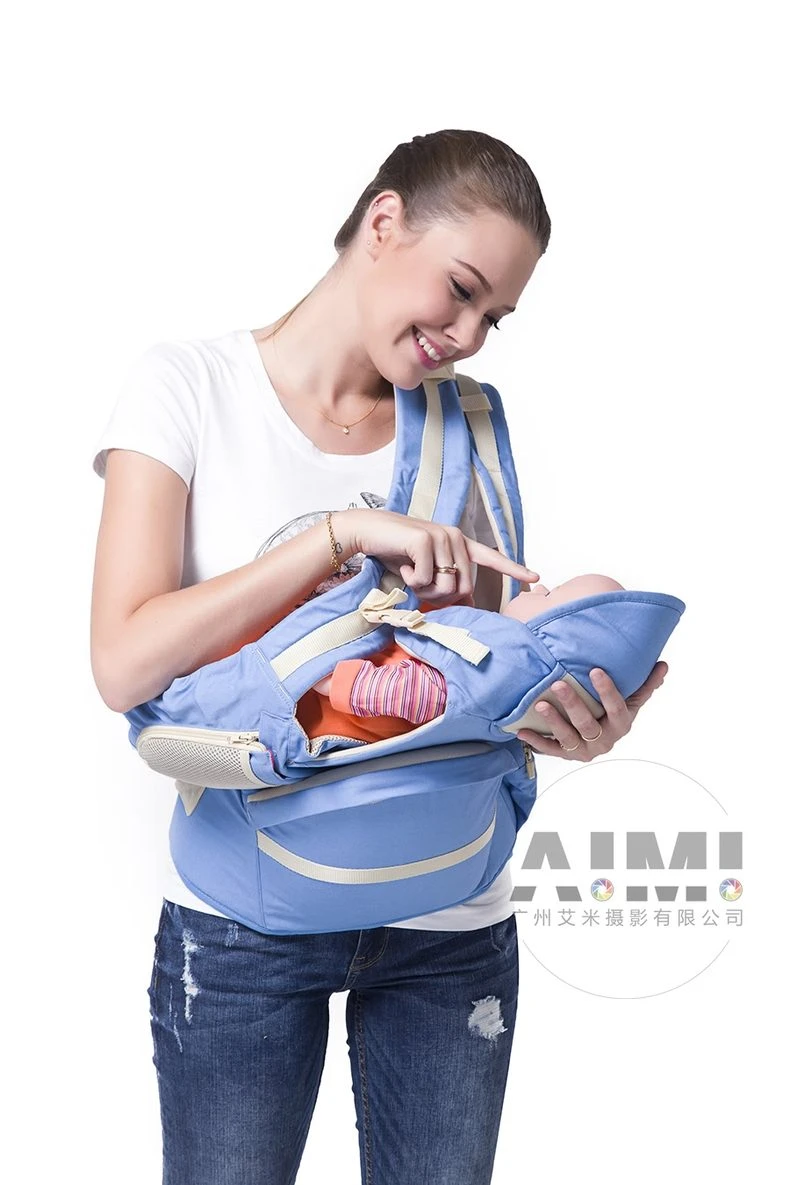
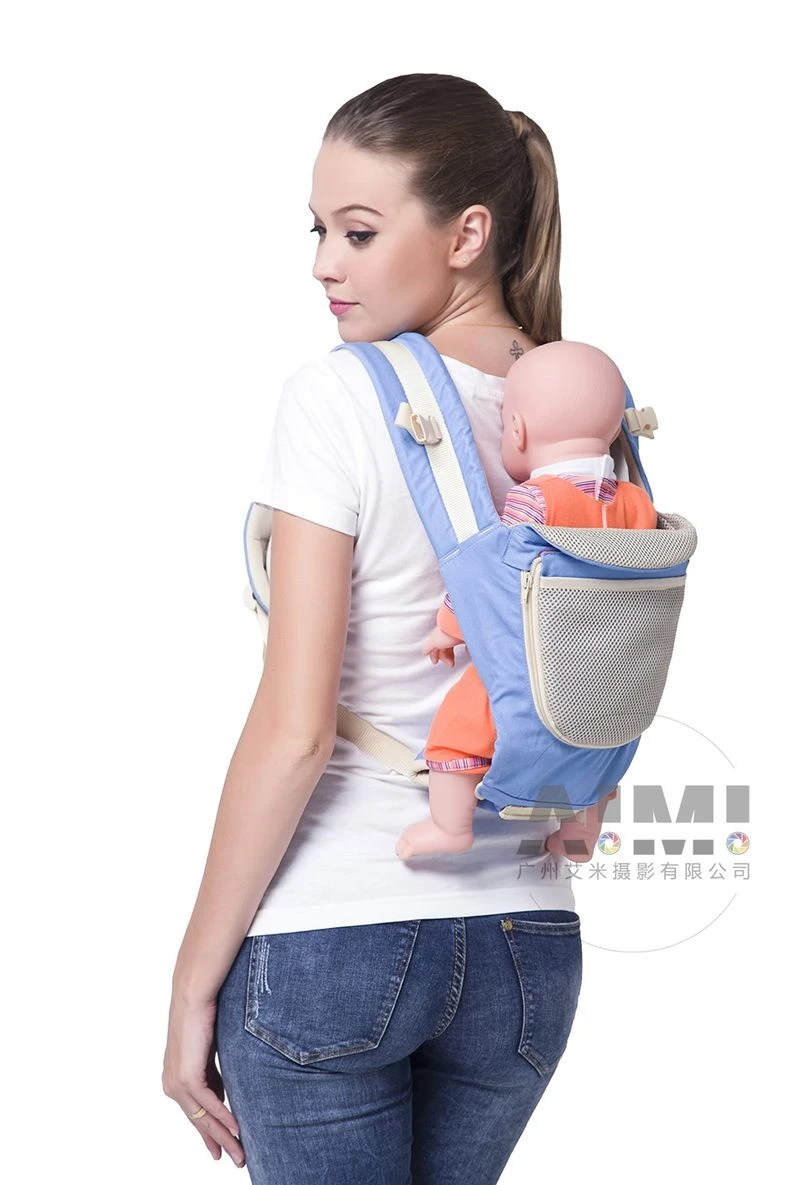
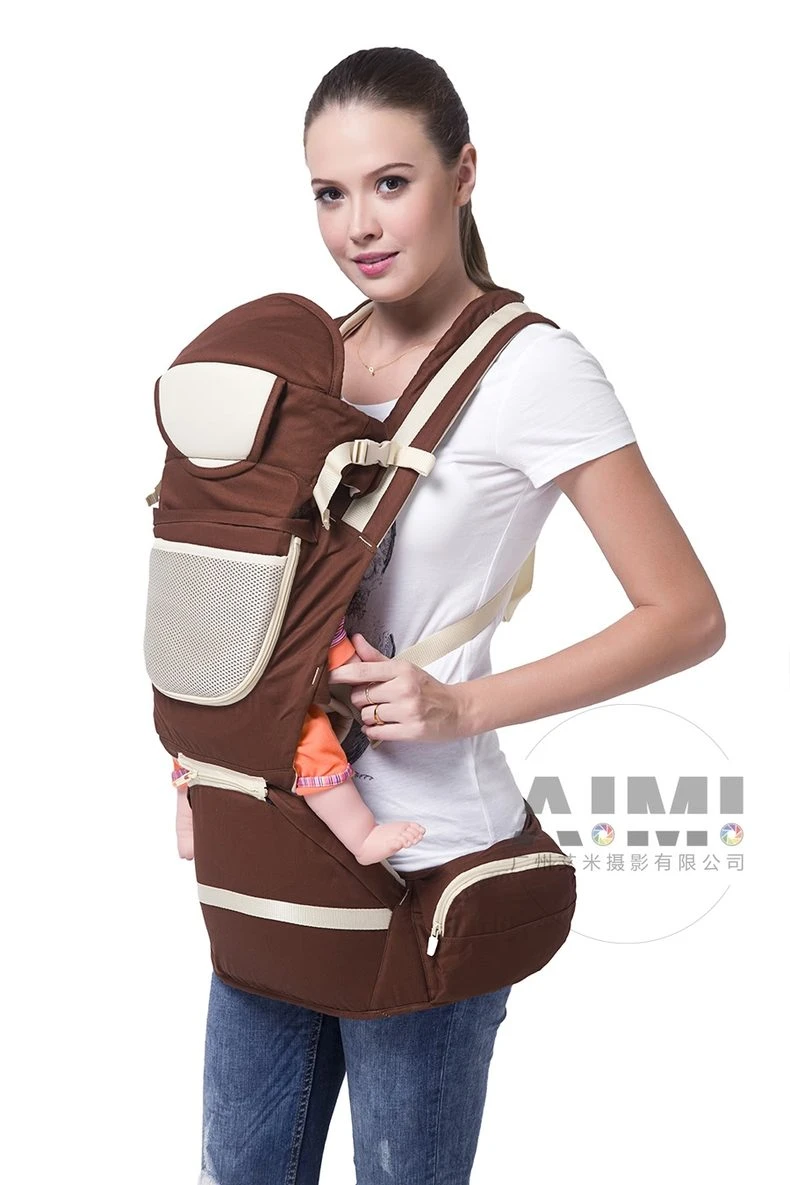
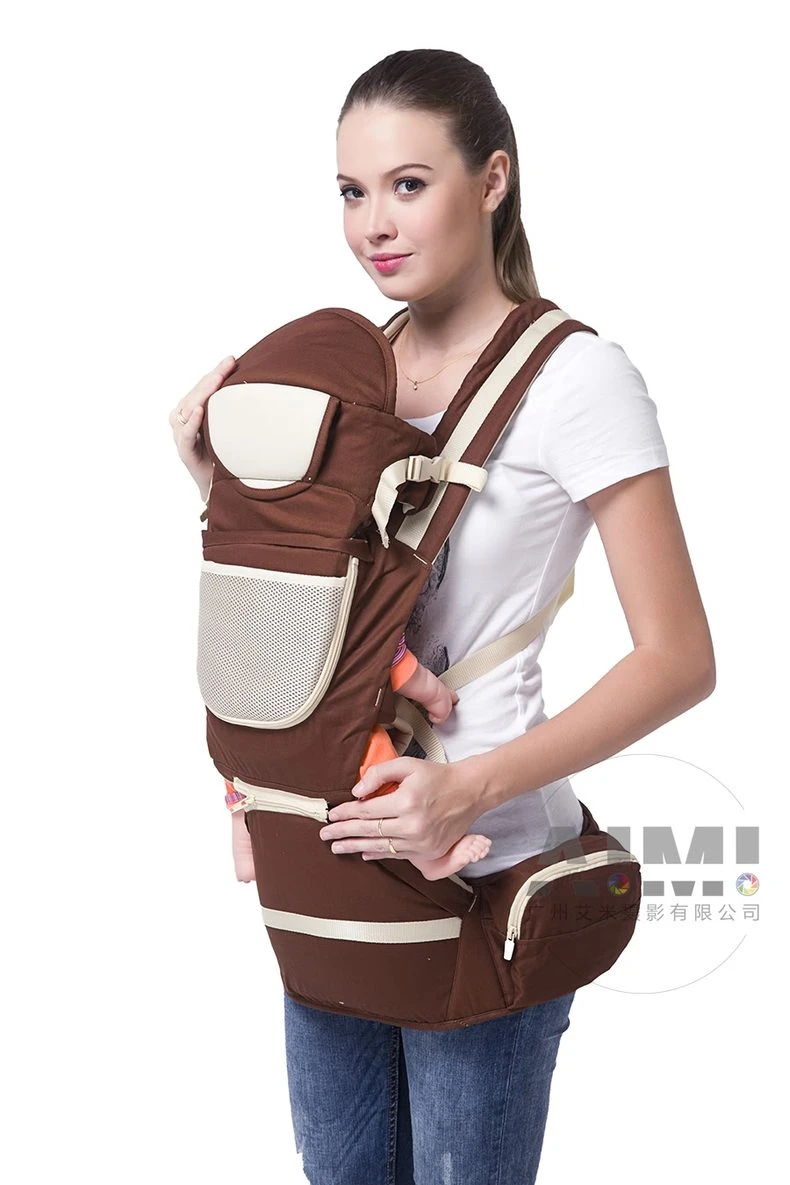
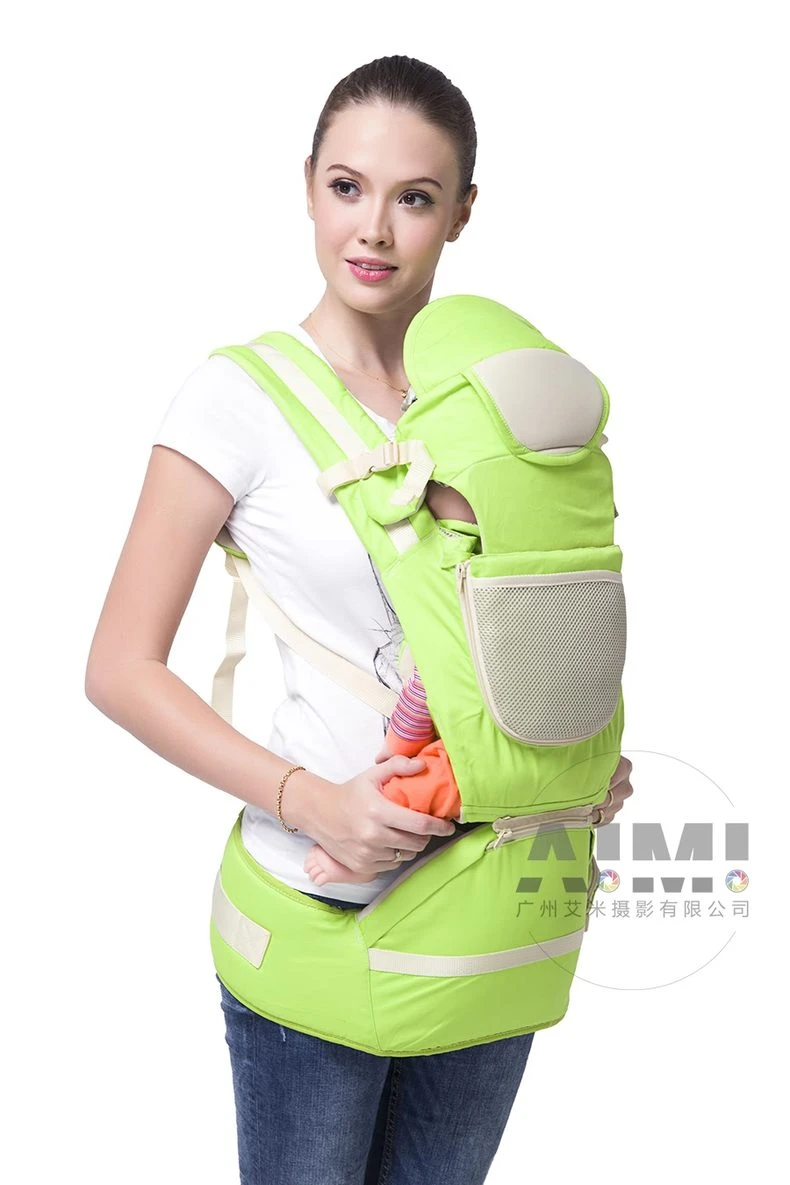
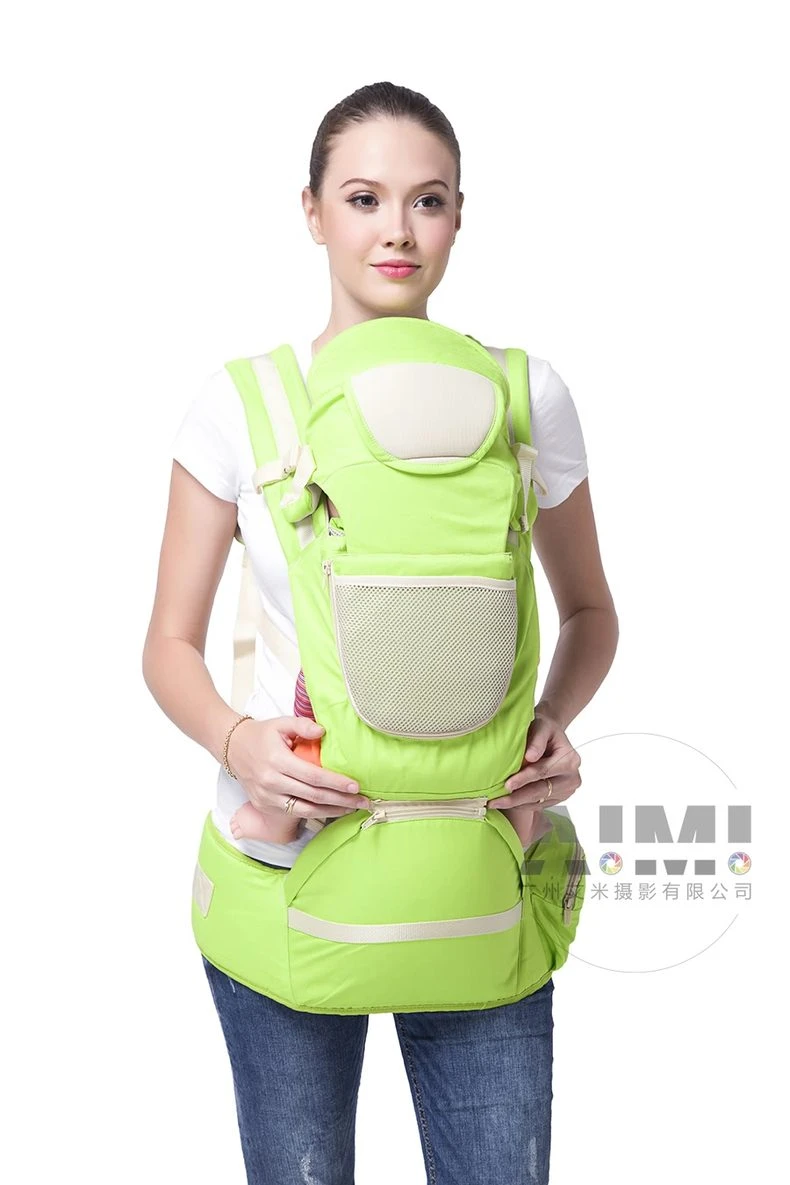
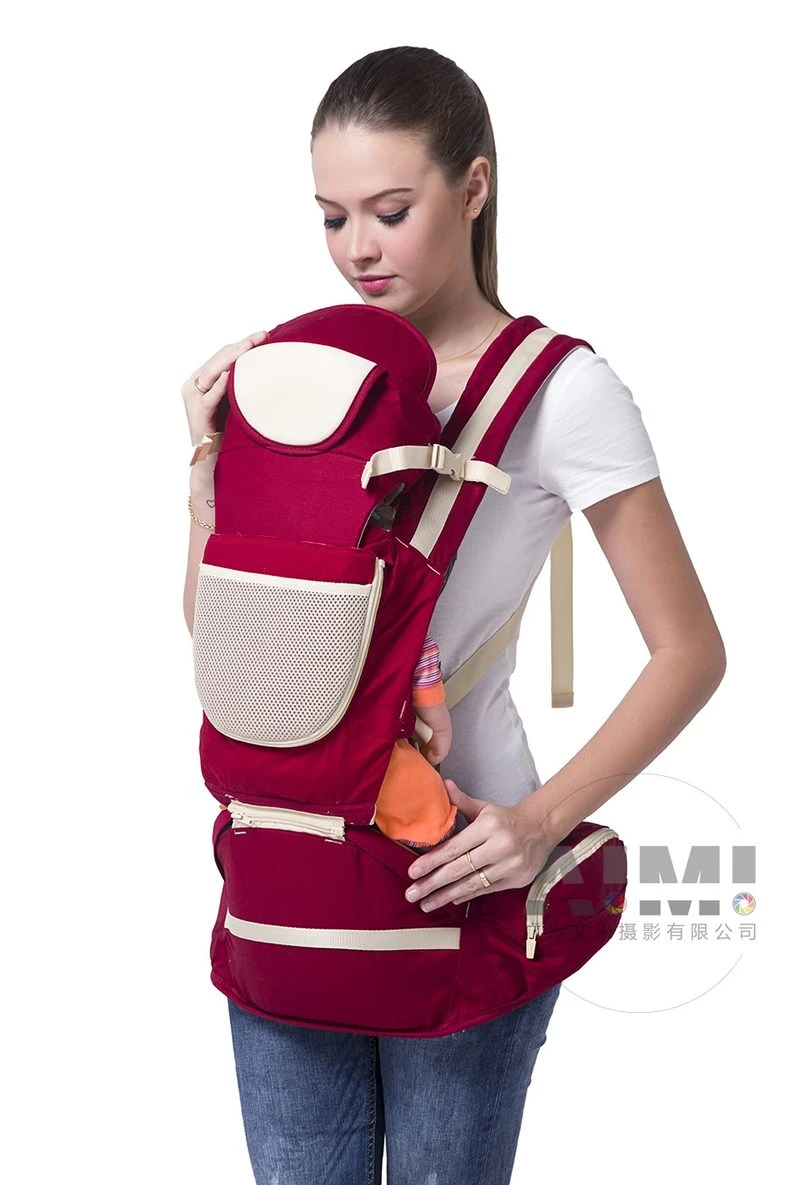
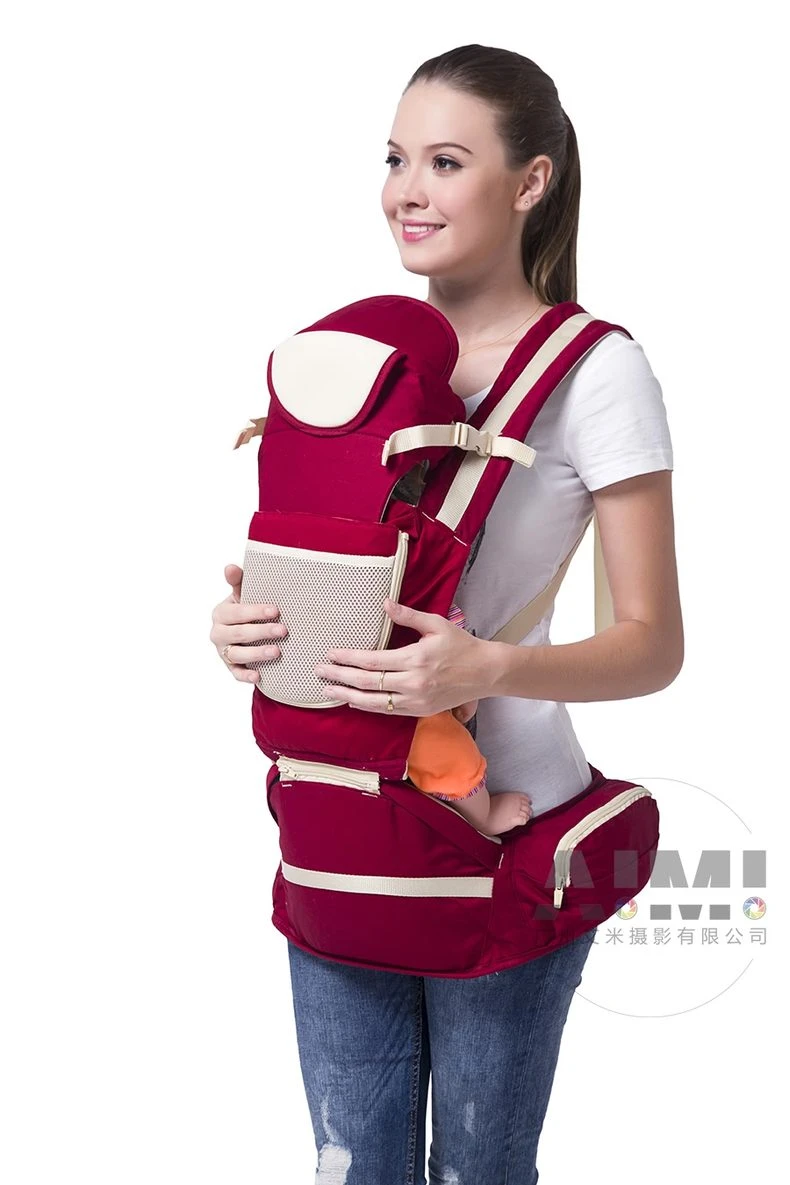
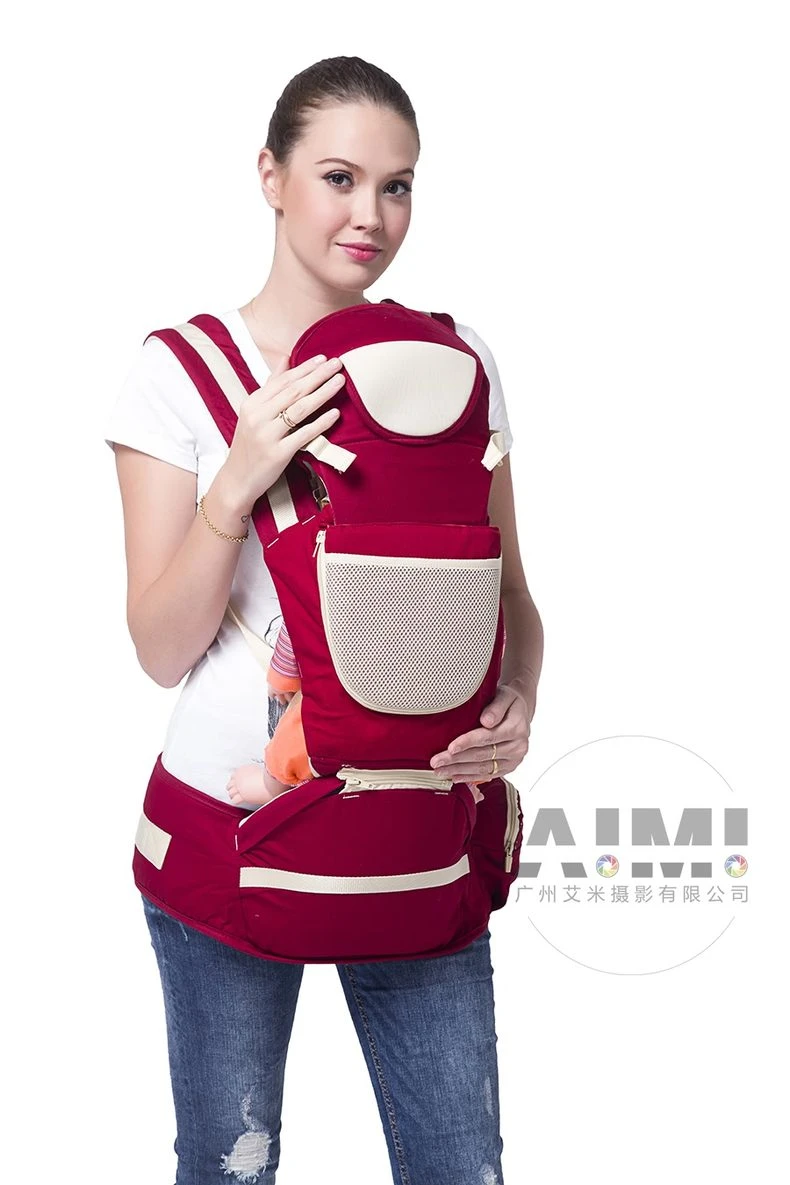
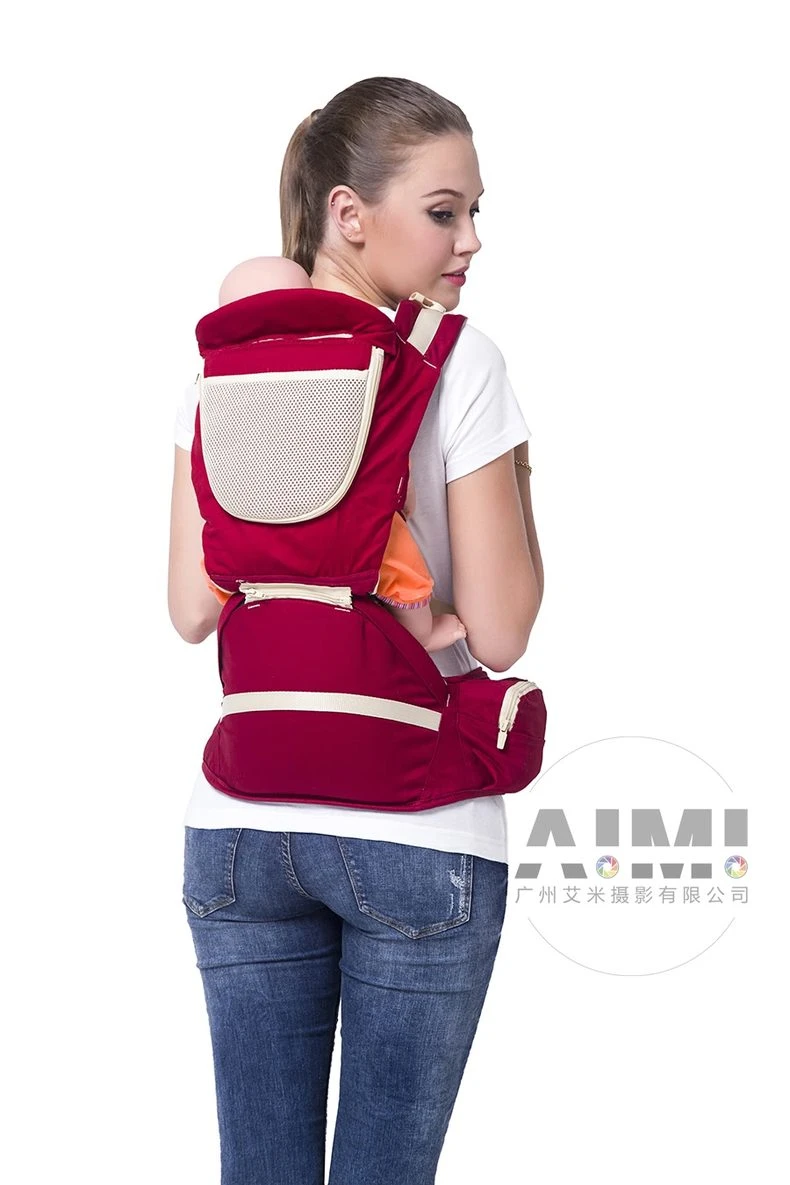
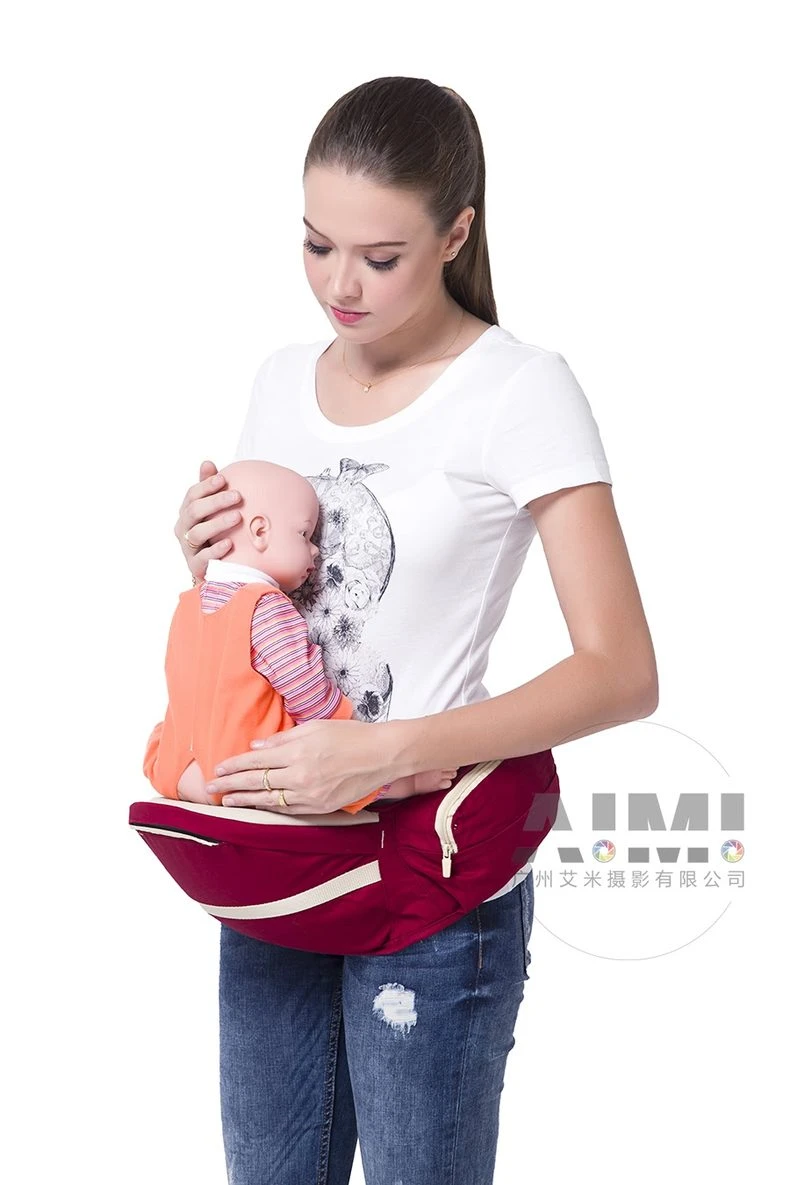
An unbranded OEM baby carrier brand commissioned 11 model-worn images of its ergonomic hip seat carrier across 4 color variants — light blue, chocolate brown, lime green, and burgundy — demonstrating front carry, back carry, and hip seat positions at our Guangzhou studio. Delivered in 5 business days for Amazon and Shopify listings.
▶ View full project details, specifications & FAQ
An unbranded OEM baby products brand approached our team for model-worn lifestyle photography of its ergonomic baby carrier with integrated hip seat, designed for distribution across Amazon, Shopify, and cross-border e-commerce platforms. The carrier comes in 4 color variants — light blue, chocolate brown, lime green, and burgundy — each with padded shoulder straps, a wide waist belt with built-in hip seat, mesh ventilation panels, zippered storage pockets, and an adjustable head support. We delivered 11 retouched images covering 3 carry positions (front inward, back carry, hip seat demonstration) across all 4 colors, shot at our Guangzhou studio with a female model and a newborn demonstration doll. Every file includes a full commercial license for unrestricted use across the brand's sales channels, advertising creative, and social media. AIMI Visual Media, Guangzhou, China, managed all photography, model casting, styling, and post-production in-house.
| Project Overview | |
|---|---|
| Client | Unbranded OEM baby products brand (ergonomic hip seat carrier) |
| Product | Ergonomic baby carrier with integrated hip seat, 4 color variants |
| Shots Delivered | 11 retouched model-worn images (4 colors, 3 carry positions) |
| Lead Photographer | Garbo — Director of Photography |
| Shoot Location | AIMI Visual Media studio, Guangzhou, China |
| Turnaround | 5 business days (1 day photography, 4 days retouching) |
| Usage License | Full commercial license, no usage restrictions |
Photography Challenges
1. Fabric Color Accuracy Across 4 Variants. The carrier comes in light blue, chocolate brown, lime green, and burgundy — four colors that sit at opposite ends of the light absorption spectrum. Blue fabric reflects cool wavelengths and absorbs warm ones; burgundy does the inverse. When you light both colors with the same strobe power and white balance, the blue variant looks correctly exposed but the burgundy variant shifts muddy and underexposed, because burgundy absorbs roughly 40% more light than blue at equivalent strobe output. Auto white balance compounds the problem by reading each fabric's dominant color as a color cast — it warms up the blue carrier to compensate for its cool tone, and cools down the burgundy carrier to compensate for its warm tone, making both variants look less saturated than the physical product. Buyers comparing color options on a product page see inconsistent tones and question whether the product photos match the real item. We locked white balance to a fixed 5500K and adjusted strobe power by 0.3-0.7 EV per variant, metering off a gray card held against the carrier fabric for each color change.
2. Carrier Fit and Shape on a Model Without a Real Baby. A baby carrier photographed flat on a surface looks deflated — the padded structure collapses without weight inside it, and buyers cannot see how the hip seat supports an infant or how the shoulder straps route over an adult body. Putting the carrier on a model solves the shape problem, but a real infant introduces safety risks and cannot hold a pose for the 10-15 seconds needed per shot. We used a medical-grade newborn doll (3.2kg, matching average newborn weight) positioned in the carrier to simulate how the hip seat shelf and contoured panel hold a baby's body. The doll's weight is distributed unevenly compared to a real infant who shifts and grabs, so we adjusted the carrier straps tighter than a real parent would, pulling the fabric taut so the structural padding and ergonomic curves are visible to the camera. The model was directed to support the doll with one hand in a way that looks natural but doesn't block the carrier's features from view.
3. Mesh and Padding Texture Visibility. Buyers of baby carriers prioritize two material qualities they can only judge from photos: breathability (the mesh panel) and cushioning (the padded shoulder straps and waist belt). Flat, even lighting — the default for white-background product photography — eliminates the micro-shadows that make mesh weave and padding compression visible to a camera. Without visible texture, the mesh panel photographs as a flat beige rectangle and the padding looks like thin fabric rather than structured foam. We used a 60cm strip softbox at camera-left, positioned at a 45-degree elevation angle relative to the model's torso, aimed to rake across the mesh panel and padded surfaces at a shallow angle. Raking light creates micro-shadows in the mesh holes and along the padding seams, making both textures readable. A white fill card at camera-right bounces 30% of the key light back onto the shadow side, lifting the shadows without flattening the texture.
4. Multi-Position Consistency Across 11 Images. The 11 images cover 3 carry positions (front, back, hip seat) across 4 color variants, shot in a single session. Each position requires a different camera angle: front carry is shot at eye level to show the carrier panel and head support; back carry is shot at a 45-degree rear angle to show shoulder strap routing; hip seat is shot from the side at waist level to show the padded seat shelf. Maintaining visual consistency across 11 images shot from 3 different angles requires a systematic shooting workflow: the model stands on a marked position on the studio floor, the camera tripod is moved to pre-marked positions for each angle, and lighting is adjusted in 0.3 EV increments per angle to compensate for the different surface areas of the carrier visible from each position. Without this system, the collection page looks like 11 random photos rather than a cohesive product catalog.
Our Approach
Color-Variant Lighting Strategy
We set up two 500W strobes with 120cm octaboxes at 45 degrees camera-left and camera-right, 1.5m from the model at chest height. This base configuration was used for all 4 color variants, but strobe power was adjusted per variant based on gray card metering: light blue at 1/4 power (reflects more light, needs less strobe output), lime green at 1/4 power (similar reflectance to blue), chocolate brown at 1/3 power (absorbs more light, needs 0.3 EV more output), and burgundy at 1/2 power (absorbs the most light, needs 0.7 EV more output than blue). White balance was locked to 5500K for all variants, matching the strobes' stated color temperature. An X-Rite ColorChecker Passport was shot before each variant for post-production color matching.
Model Posing for Carry Positions
The model was directed through 3 carry positions per color variant. For front inward carry, the model faces the camera at eye level, hands positioned to frame the carrier panel without covering the mesh pocket or zippered details. For back carry, the model turns 45 degrees away from the camera so the shoulder strap routing and back panel are visible; the camera drops to waist height to show how the straps connect to the waist belt. For the hip seat demonstration (image 11), the carrier is shown without the model, laid flat to display the padded seat shelf, zippered side pocket, and adjustable buckle hardware from above. Each pose was held for 10-15 seconds while the model supported the demonstration doll with one hand in a natural-looking grip.
Texture and Detail Lighting
To make mesh and padding readable in images, we added a 60cm strip softbox at camera-left, elevated 45 degrees above the model's torso, aimed at a 20-degree raking angle across the carrier's front panel. This low-angle directional light creates micro-shadows in the mesh weave holes and along the padded seam edges, giving both textures dimensional depth in the photograph. A 80x100cm white foam-core fill card at camera-right, positioned 1m from the model, bounces approximately 30% of the key light back onto the shadow side of the carrier, lifting shadow detail without flattening the raked texture. Buckle and zipper details were lit with the same strip softbox, which creates a controlled specular highlight along the metal zipper teeth and plastic buckle edges that defines their shape without blowing out to white glare.
Post-Production and Color Matching
Retouching followed 4 steps. First, the ColorChecker reference shots were used to create a shared camera profile in Lightroom, applied to all 11 images to establish consistent color baseline across the 4 variants. Second, skin retouching was kept to frequency separation at a 6px radius — enough to smooth temporary blemishes and even out lighting on the model's face and arms without creating a plastic, over-retouched look that undermines buyer trust in lifestyle imagery. Third, the white background was cleaned to pure white (#FFFFFF) using a 5% tolerance selection, with 2px feathering at the model's silhouette edge to prevent halos. Fourth, fabric saturation was matched across variants by sampling each color's HSL values and adjusting so all 4 variants sit at equivalent saturation levels, allowing buyers to compare colors accurately on a collection page.
"A baby carrier on a model is a lighting composition problem disguised as a product shot. You have to light the fabric color accurately, reveal the mesh texture, and make the padding look like it actually cushions — all on a moving person who can only hold a pose for 10 seconds." — Garbo, Director of Photography
| Technical Specifications | |
|---|---|
| Camera | Canon EOS 5D Mark IV (30.4MP full-frame) |
| Lens | Canon EF 24-70mm f/2.8L II, at 35-50mm, f/8, ISO 100 |
| Lighting | Two 500W strobes with 120cm octaboxes at 45 degrees; 60cm strip softbox camera-left at 45-degree elevation for texture raking; power adjusted 0.3-0.7 EV per color variant |
| Modifiers | 80x100cm white foam-core fill card camera-right at 1m; 5500K locked white balance |
| Model | Female model, white T-shirt and blue jeans; 3.2kg medical-grade newborn doll |
| Color Management | X-Rite ColorChecker Passport per variant, gray card metering per color change, i1Display Pro monitor calibration |
| Retouching | Shared Lightroom camera profile, frequency separation skin retouching (6px radius), background cleanup to #FFFFFF, HSL saturation matching across 4 variants |
| Deliverables | 11 retouched images, 2000x2000px sRGB, JPEG q90 + WebP, full commercial license |
Frequently Asked Questions
How is baby carrier and hip seat product photography priced?
Model-worn lifestyle images like these fall under our Growth package, from $35 per image — including model fees, styling, and professional retouching. White-background product-only shots (carrier without model) start from $12 per image under our Essential package. A set of 11 model-worn images across 4 color variants costs approximately $385. All rates are starting prices; final quote depends on the number of color variants and carry positions.
How long does a multi-color baby carrier model shoot take?
Standard turnaround is 5-7 business days from shoot confirmation to final file delivery. This 11-image shoot across 4 color variants required 1 full day for photography (model fitting, 3 carry positions per color, outfit changes) and 4 days for retouching, including color matching across all 4 variants and skin retouching.
Are your baby carrier images compliant with Amazon baby product category requirements?
Yes. All images meet Amazon's technical requirements: 2000x2000px minimum for zoom, pure white (#FFFFFF) background for main image slots, and 85%+ product fill ratio. Lifestyle images with model are delivered as secondary listing images. We also produce Amazon A+ Content layouts showing carry position diagrams and feature callouts, starting from $80 per SKU under our Premium package.
How do you handle fabric color accuracy across different carrier color variants?
We lock white balance to 5500K and shoot an X-Rite ColorChecker Passport before each color variant. The blue, brown, green, and burgundy carriers each absorb light differently, so we adjust strobe power by 0.3-0.7 EV per variant to maintain consistent exposure density. In post-production, the ColorChecker readings from each variant are matched to a shared baseline.
Do you provide the model, or do we need to send one?
We provide the model. Our casting roster includes female models experienced in baby product demonstration shoots. The model wears a plain white T-shirt and blue jeans to keep visual attention on the carrier. For the baby, we use a medical-grade newborn doll rather than a real infant, which allows us to control positioning and hold each carry pose for the 10-15 seconds needed per shot without safety concerns.
Can you show multiple carry positions in one shoot?
Yes. This shoot covered 3 carry positions: front inward carry, back carry, and hip seat demonstration. Each position requires a different model pose, camera angle, and lighting adjustment. Front carry is shot at eye level to show the carrier panel and head support. Back carry is shot at a 45-degree rear angle to show shoulder strap routing. Hip seat is shot from the side at waist level to show the padded seat shelf.
How do you show mesh and padding texture in carrier photos?
We use a 60cm strip softbox at camera-left, 45 degrees above the model, angled to rake across the mesh panel surface. Raking light creates micro-shadows in the mesh weave and padding indentations, making texture visible to the camera. A fill card at camera-right bounces 30% of the key light back to lift shadow detail without flattening the texture.
Need professional photography for your baby carrier and maternity products?
AIMI Visual Media, Guangzhou, China — model-worn lifestyle and white-background photography for baby product brands selling on Amazon, Shopify, and Tmall.
Get a Free Custom QuoteView More Home & Living CasesRelated services: Amazon FBA Photography · Near-Factory Photography
Related cases: Baby stroller photography · Lightweight baby stroller photography · M-Castle stroller outdoor photography
 Photography Insights
●How to Choose an Amazon Product Photography Service: A 12-Point Checklist for Sellers, Brand Owners, and Ecommerce Teams
- A 12-point checklist for picking an Amazon product photography service: portfolio depth, pricing transparency, licensing, and turnaround.
●Amazon Product Photography Cost Guide 2026: Complete Price Breakdown & ROI Calculator
- Amazon product photography costs broken down line by line for 2026, with an ROI framework for deciding how many images a SKU actually needs.
●The Complete Guide to Amazon Product Photography 2026: Authoritative Solutions from Compliance to High Conversion
- The complete Amazon image playbook for 2026: compliance specs, slot strategy, A+ Content, and conversion-tested image sequencing.
●Product Photography Pricing in China - 2026 Complete Guide
- Product photography pricing in China for 2026: what drives rates up or down, package tiers, and how to compare quotes on equal terms.
●Amazon Product Photography Requirements, Tips and How to Get It Done in China
- Amazon product photography requirements explained: image specs, main vs lifestyle slots, zoom minimums, and the listing mistakes to avoid.