

Baby Feeding Bottle & Fruit Feeder Collection Product Photography
- Published:
- 2025-08-28
- Lead Photographer:
- June (Product Photography Team Lead)
- Source:
- AIMI Visual Media Co., Ltd.
- Last Updated:
- 2026-09-14 21:05:18
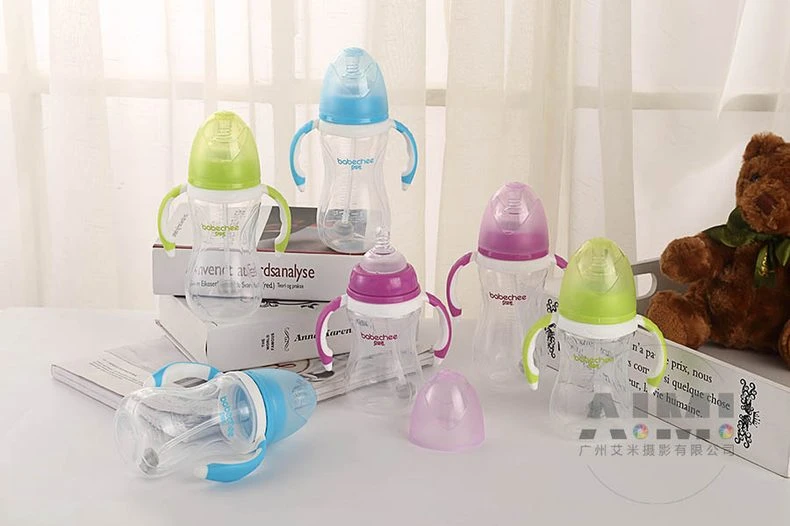
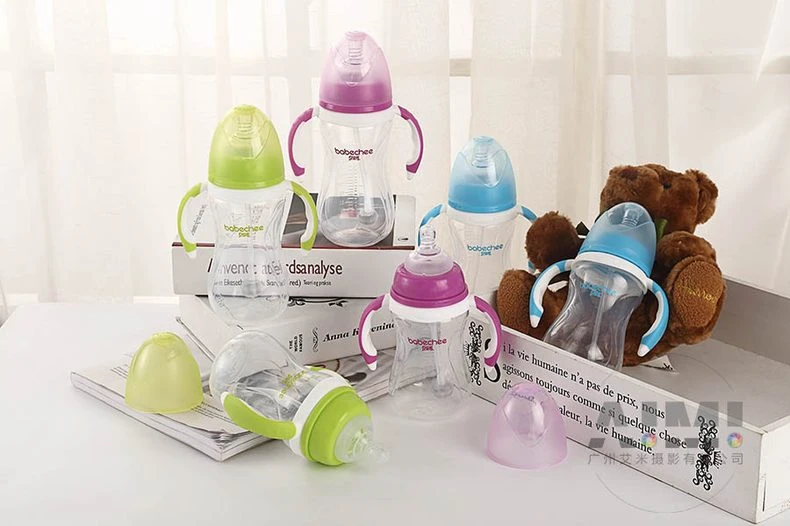
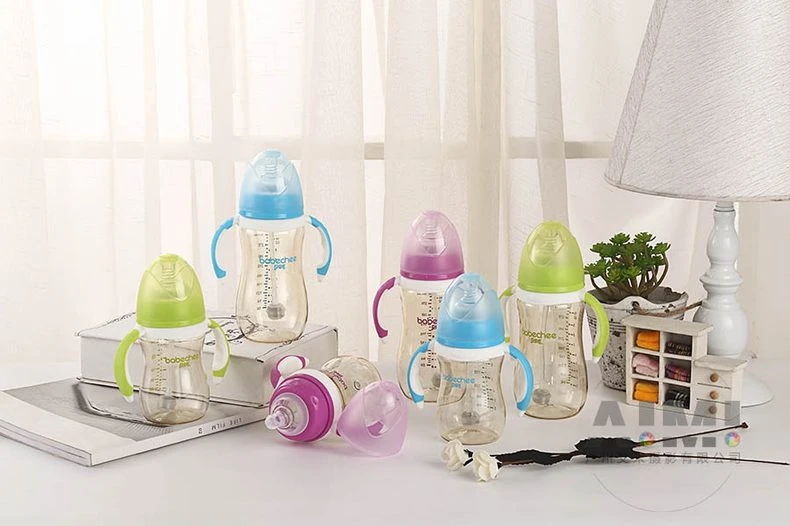
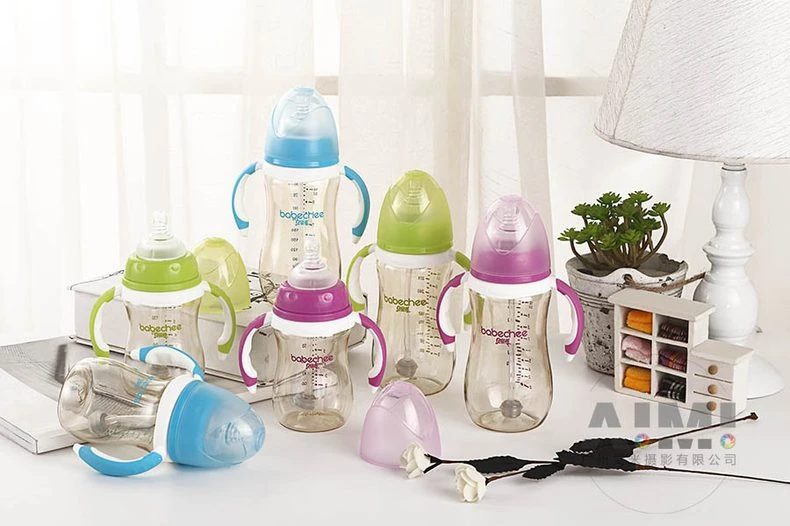
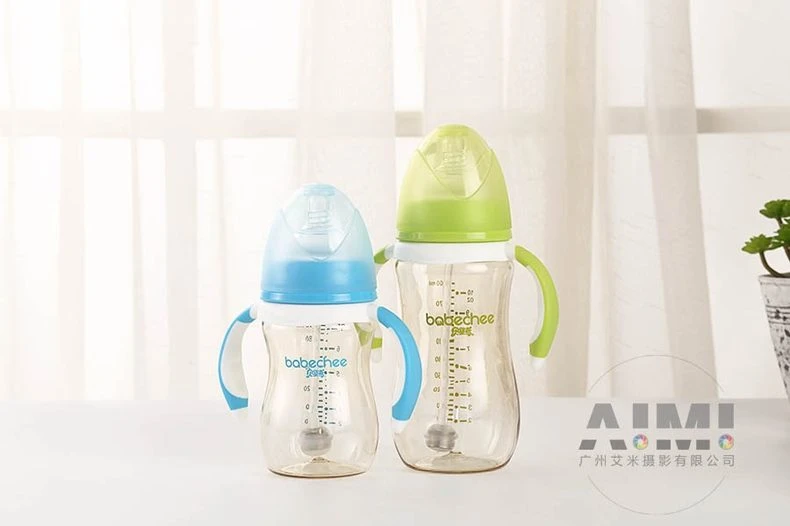
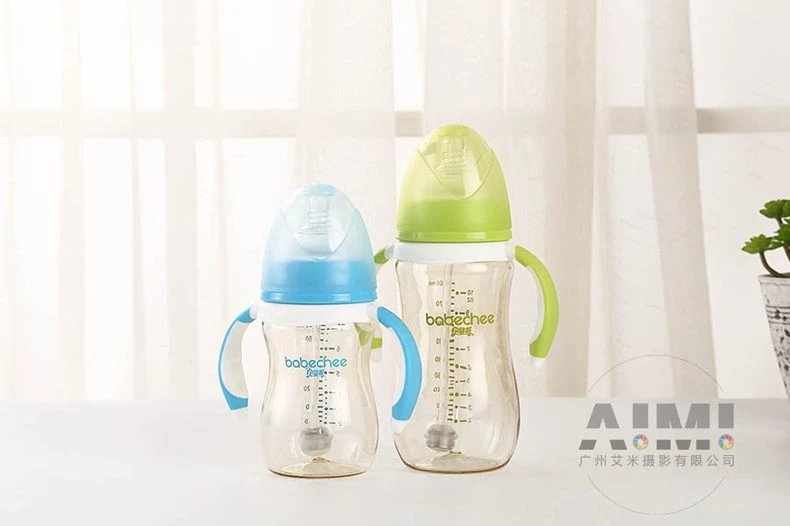
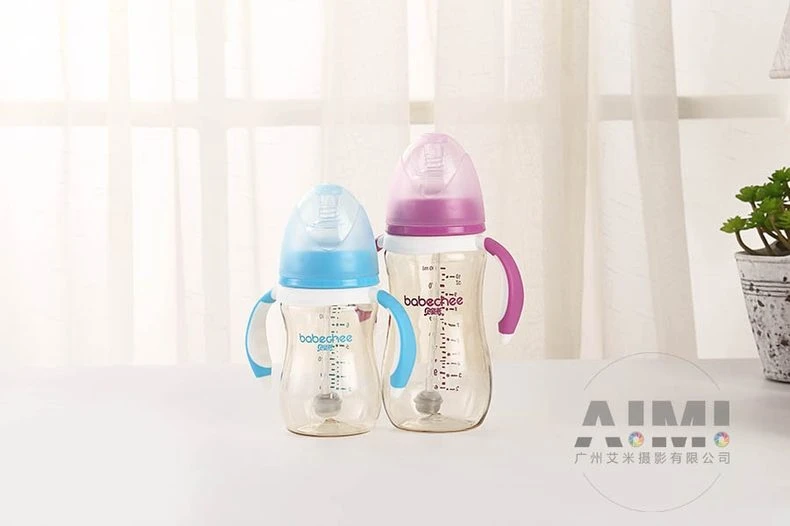
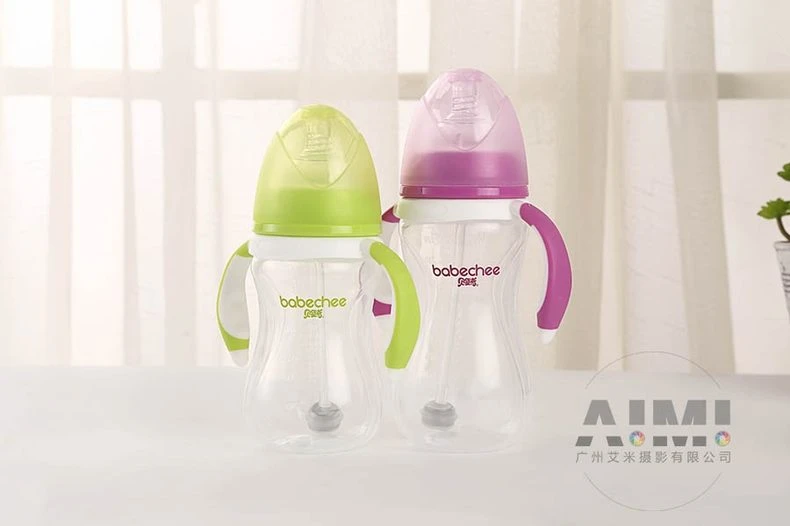
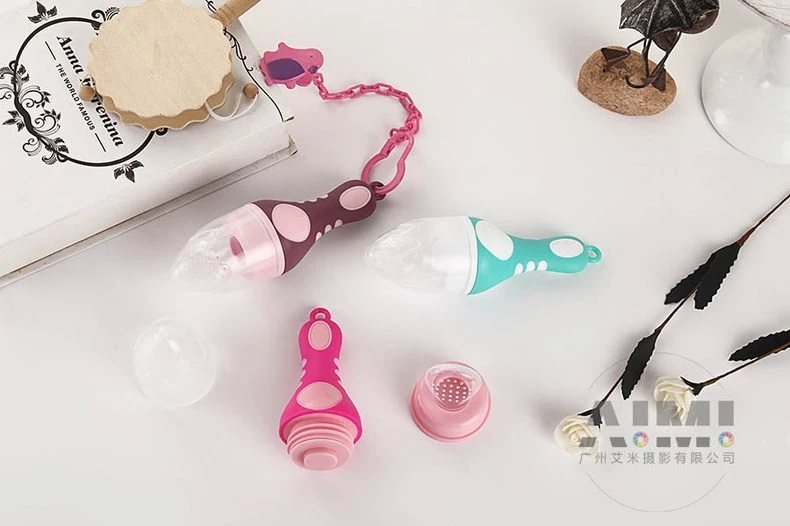
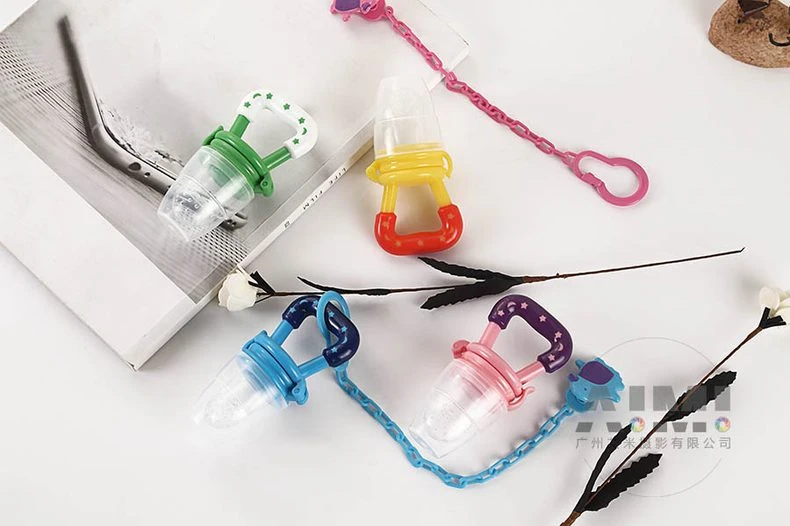
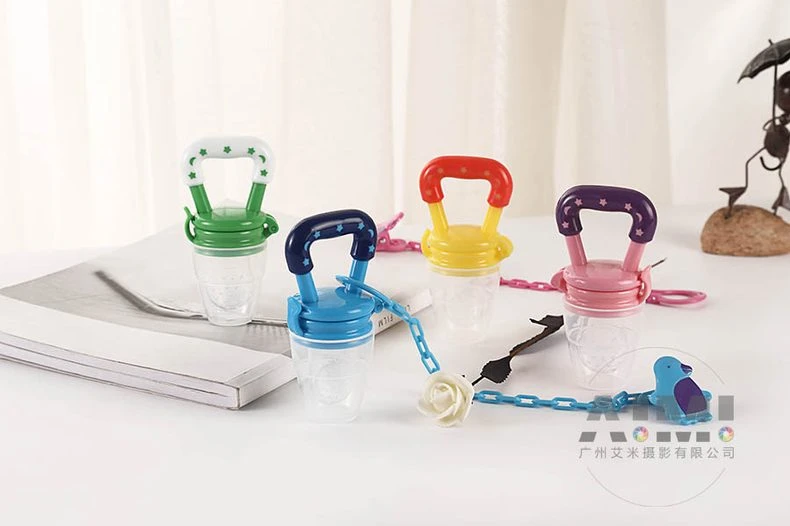
A baby feeding products brand commissioned 11 images of its dual product line — PPSU baby bottles with weighted straws in 3 color variants and silicone fruit feeders in 4 color variants. 8 bottle images plus 3 feeder images, mixing white background and styled nursery scenes, delivered in 5 business days at our Guangzhou studio.
▶ View full project details, specifications & FAQ
A baby feeding products brand approached our team for product photography of its dual product line at our Guangzhou studio: PPSU baby bottles with ergonomic handles and internal weighted straws, and silicone baby fruit feeders with anti-drop tether chains. The bottle line comes in 3 color variants (lime green, sky blue, magenta pink) with 180ml and 240ml capacity options, and the fruit feeder line comes in 4 color variants (plum, teal, hot pink, and a mixed green-yellow-pink-blue set). We delivered 11 retouched images: 8 bottle images (white background and styled nursery scenes) and 3 feeder images (white background flat-lays including a disassembled parts shot). Every file includes a full commercial license for use across Amazon, Shopify, and Tmall listings. AIMI Visual Media, Guangzhou, China, handled all photography, prop styling, and post-production in-house.
| Project Overview | |
|---|---|
| Client | Baby feeding products brand (PPSU bottles + silicone fruit feeders) |
| Product | PPSU baby bottles with weighted straws (3 colors, 2 sizes) + silicone fruit feeders (4 colors) |
| Shots Delivered | 11 retouched images (8 bottle + 3 feeder, white background + styled scenes) |
| Lead Photographer | June — Product Photography Team Lead |
| Shoot Location | AIMI Visual Media studio, Guangzhou, China |
| Turnaround | 5 business days (2 days photography, 3 days retouching) |
| Usage License | Full commercial license, no usage restrictions |
Photography Challenges
1. PPSU Amber Tint Color Accuracy. PPSU (polyphenylsulfone) plastic has a natural amber/honey tint that signals heat resistance and medical-grade quality to buyers, but camera sensors exaggerate this tint under warm lighting. The amber tone shifts depending on the light source color temperature: at 5500K it reads as a light honey color, but at 4500K it deepens to a dark yellow that looks degraded. Buyers comparing bottle colors on a product page return products that look more yellow in person than they did online, because the photo set a wrong expectation. Auto white balance reads the white PP plastic components as the dominant tone and compensates, which can push the PPSU body toward a green-yellow cast. We locked white balance to 5500K and metered off a gray card placed against the bottle body, then verified PPSU tint against a physical product swatch under set lighting before shooting. In post-production, we sampled the PPSU tint from the ColorChecker reference and applied a -5 yellow adjustment in HSL to match the physical product.
2. Weighted Straw Visibility Through PPSU Body. The internal weighted straw is the bottle's primary selling feature — it allows babies to drink at any angle because a stainless steel weight at the end of the silicone tube follows the liquid. PPSU is semi-transparent, so the straw, weight ball, and tubing are visible inside the bottle, but they create overlapping shadows that look like manufacturing defects if not lit properly. Front lighting alone doesn't penetrate the PPSU wall thick enough to illuminate the straw mechanism, and the straw silhouette becomes a dark, unreadable shadow. We positioned a 250W strobe with a 30cm strip softbox directly behind the bottle at 15cm distance, aimed through the PPSU body. This backlight pushes light through the semi-transparent plastic, illuminating the internal straw, weight ball, and silicone tubing as defined silhouettes that buyers can recognize as a functional mechanism rather than a defect. A white fill card at camera-right bounces 30% of the key light back onto the external surface so brand text and measurement markings stay readable.
3. Multi-Product Multi-Color Consistency. This shoot covers 2 product types (bottles and fruit feeders) in 7+ color variants, all photographed in one session for use on a single collection page. Each color variant absorbs and reflects light differently — lime green handles reflect more light than magenta, and teal feeder silicone absorbs more than pink. Maintaining consistent exposure and white balance across all variants without making each look over-processed requires a systematic approach. We set a base exposure using a gray card, then adjusted strobe power by 0.3-0.5 EV per color variant to maintain consistent density. White balance was locked to 5500K for all variants, and an X-Rite ColorChecker Passport was shot before each variant for post-production matching. In retouching, all variants were adjusted to a shared baseline so buyers can compare colors side by side without perceptual shifts.
4. Styled Scene Prop Management. Images 1 and 5 use styled nursery scenes with props including a brown teddy bear, white books, sheer curtains, and a small potted plant. Props must complement the product's bright pastel color palette without competing for visual attention — a red prop next to a green bottle creates color conflict that pulls the eye away from the product. We selected props in neutral tones (brown, white, cream, green foliage) that frame the bottle colors without adding visual noise. Depth of field was set to f/4 for styled scenes (versus f/16 for white background shots), creating a shallow focus plane that keeps the product sharp while props fall into soft focus as contextual background. This aperture difference means styled scene shots require 4x less strobe power than white background shots at the same ISO, so we reduced strobe output from 1/2 to 1/8 power when switching setups.
Our Approach
Color-Variant Lighting Strategy
Two 500W strobes with 120cm octaboxes were positioned at 45 degrees camera-left and camera-right, 1.2m from the product at table height. Strobe power was adjusted per color variant based on gray card metering: lime green at 1/4 power (high reflectance), sky blue at 1/4 power, magenta pink at 1/3 power (0.3 EV more than green), and the fruit feeder colors ranged from 1/4 to 1/2 power depending on silicone darkness. White balance was locked to 5500K. An X-Rite ColorChecker Passport was shot before each variant for post-production color matching. For the PPSU body tint, a physical product swatch was kept on set as a visual reference, and the camera's LCD was compared to the swatch after each variant to catch tint shifts before moving to the next setup.
Internal Straw Illumination
To reveal the weighted straw mechanism through the PPSU body, we placed a 250W strobe with a 30cm strip softbox directly behind the bottle at 15cm distance. This backlight passes through the semi-transparent PPSU wall and illuminates the internal straw, weight ball, and silicone tubing as readable silhouettes. The strip softbox shape creates a narrow vertical light source that matches the bottle's cylindrical form, so the backlight is evenly distributed across the entire internal volume rather than creating a bright spot at the center. A white fill card at camera-right (80x100cm, positioned 60cm from the product) bounces 30% of the key light back onto the external surface so brand text and measurement markings remain legible against the backlit glow.
Styled Scene Composition and Prop Management
For styled nursery scenes, we built a white tabletop set with sheer white curtains as a background diffuser. Props were selected in neutral tones — a brown teddy bear, white paperback books, a small potted succulent, and a white decorative panel — to frame the bright bottle colors without competing for attention. Products were positioned 40cm from the curtain background to create depth separation. A single 500W strobe with a 120cm octabox was placed outside the curtain at 2m distance, aimed through the sheer fabric to simulate soft window light. Camera aperture was set to f/4 for styled scenes (versus f/16 for white background shots) to create shallow depth of field that isolates the product while props fall into soft focus.
Post-Production and Retouching
Retouching followed 4 steps. First, the ColorChecker reference shots were used to create a shared camera profile in Lightroom, applied to all 11 images to establish consistent color across both product types and all color variants. Second, PPSU tint was corrected by sampling the body color from the reference swatch and applying a -5 yellow adjustment in HSL to match the physical product's amber tone. Third, weighted straw clarity was enhanced using a clarity brush (+15) applied selectively to the internal straw silhouette, making the mechanism more readable without affecting the external surface. Fourth, backgrounds were cleaned to pure white (#FFFFFF) for the white background shots, and color grading was applied to styled scene images (+3 warmth in split toning) to match the nursery mood.
"When a bottle's selling point is on the inside — a weighted straw that lets a baby drink at any angle — your lighting has to show the mechanism through the plastic wall. Backlight the bottle, and the straw becomes a feature, not a shadow." — June, Product Photography Team Lead
| Technical Specifications | |
|---|---|
| Camera | Canon EOS 5D Mark IV (30.4MP full-frame) |
| Lens | Canon EF 100mm f/2.8L Macro IS (white bg at f/16) / EF 24-70mm f/2.8L II at 50mm (styled scene at f/4), ISO 100 |
| Lighting | Two 500W strobes with 120cm octaboxes at 45 degrees; 250W strobe with 30cm strip softbox behind bottle for straw illumination; 120cm octabox through curtain for styled scenes; 5500K locked |
| Modifiers | 80x100cm white fill card camera-right; PPSU product swatch reference on set; X-Rite ColorChecker Passport per variant |
| Surface | Matte white seamless paper (white bg); white tabletop with sheer curtains (styled scene) |
| Retouching | Shared Lightroom camera profile, PPSU tint correction (-5 yellow HSL), weighted straw clarity enhancement (+15 selective), background cleanup to #FFFFFF |
| Deliverables | 11 retouched images, 2000x2000px sRGB, JPEG q90 + WebP, full commercial license |
Frequently Asked Questions
How much does baby feeding product photography cost?
White background product shots start at $12 per image under our Essential package. Styled nursery scene images start from $35 per image under our Growth package. A 11-image set mixing white background and styled scene shots across 2 product types and 4+ color variants costs approximately $260. All rates are starting prices; final quote depends on the number of SKUs and color variants.
How long does a multi-product baby feeding shoot take?
Standard turnaround is 5-7 business days. This 11-image shoot covering 2 product types (bottles and fruit feeders) across 7+ color variants required 2 days for photography and 3 days for retouching, including PPSU color matching and weighted straw clarity enhancement.
How do you photograph PPSU bottles without the amber tint looking too yellow?
PPSU plastic has a natural amber tint that camera sensors exaggerate under warm lighting. We lock white balance to 5500K and meter off a gray card placed against the bottle body. In post-production, we sample the PPSU tint from the ColorChecker reference and apply a -5 yellow adjustment in HSL to bring the amber tone back to its physical product appearance.
Can you show the weighted straw inside the bottle?
Yes. We position a 250W strobe with a 30cm strip softbox behind the bottle at 15cm distance, aimed through the PPSU body. This backlight pushes light through the semi-transparent plastic, illuminating the internal straw, weight ball, and silicone tubing as silhouettes inside the bottle. A front fill card at camera-right lifts shadow detail on the external surface so the brand text and measurement markings remain readable.
Are your baby feeding product images compliant with Amazon requirements?
Yes. All white background images are delivered at 2000x2000px sRGB with pure white (#FFFFFF) backgrounds, exceeding Amazon's 1000px minimum for zoom. Styled scene images are delivered as secondary listing images. We also produce Amazon A+ Content layouts showing product feature callouts and color variant comparisons, starting from $80 per SKU.
Can you photograph disassembled product parts for cleaning instructions?
Yes. Image 9 shows the fruit feeder disassembled into its component parts — handle, silicone pouch, locking collar, and dust cap — arranged in a flat-lay composition. This type of image is useful for Amazon A+ Content modules showing how the product opens for filling and cleaning. Each part is lit individually with a raking softbox to reveal material texture and threading detail.
Need professional photography for your baby feeding products?
AIMI Visual Media, Guangzhou, China — white background and styled scene photography for baby bottle and feeder brands selling on Amazon, Shopify, and Tmall.
Get a Free Custom QuoteView More Home & Living CasesRelated services: Amazon FBA Photography · Near-Factory Photography
Related cases: Wide-neck baby bottle with handles photography · Children formula packaging & baby bottle photography · Eleser kids toothgel photography
 Photography Insights
●How to Choose an Amazon Product Photography Service: A 12-Point Checklist for Sellers, Brand Owners, and Ecommerce Teams
- A 12-point checklist for picking an Amazon product photography service: portfolio depth, pricing transparency, licensing, and turnaround.
●Amazon Product Photography Cost Guide 2026: Complete Price Breakdown & ROI Calculator
- Amazon product photography costs broken down line by line for 2026, with an ROI framework for deciding how many images a SKU actually needs.
●The Complete Guide to Amazon Product Photography 2026: Authoritative Solutions from Compliance to High Conversion
- The complete Amazon image playbook for 2026: compliance specs, slot strategy, A+ Content, and conversion-tested image sequencing.
●Product Photography Pricing in China - 2026 Complete Guide
- Product photography pricing in China for 2026: what drives rates up or down, package tiers, and how to compare quotes on equal terms.
●Amazon Product Photography Requirements, Tips and How to Get It Done in China
- Amazon product photography requirements explained: image specs, main vs lifestyle slots, zoom minimums, and the listing mistakes to avoid.