

Children Formula Packaging & Baby Bottle Product Photography
- Published:
- 2025-08-28
- Lead Photographer:
- June (Product Photography Team Lead)
- Source:
- AIMI Visual Media Co., Ltd.
- Last Updated:
- 2026-09-14 21:05:18
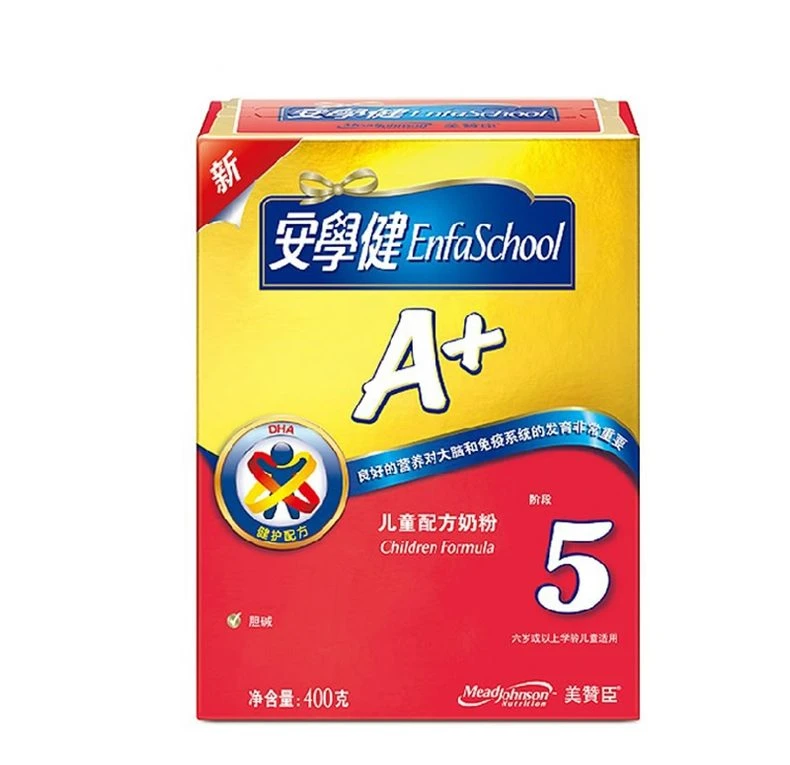
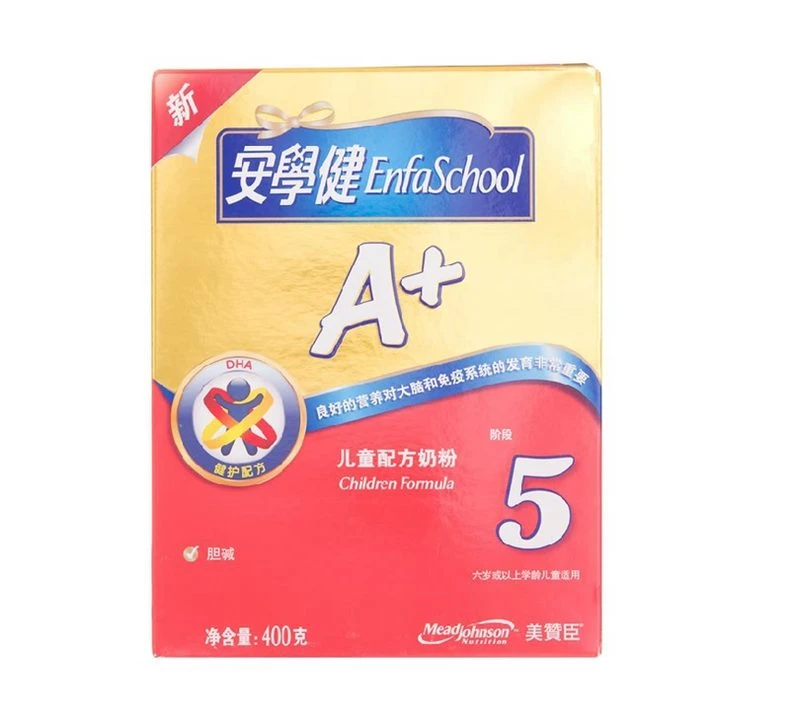
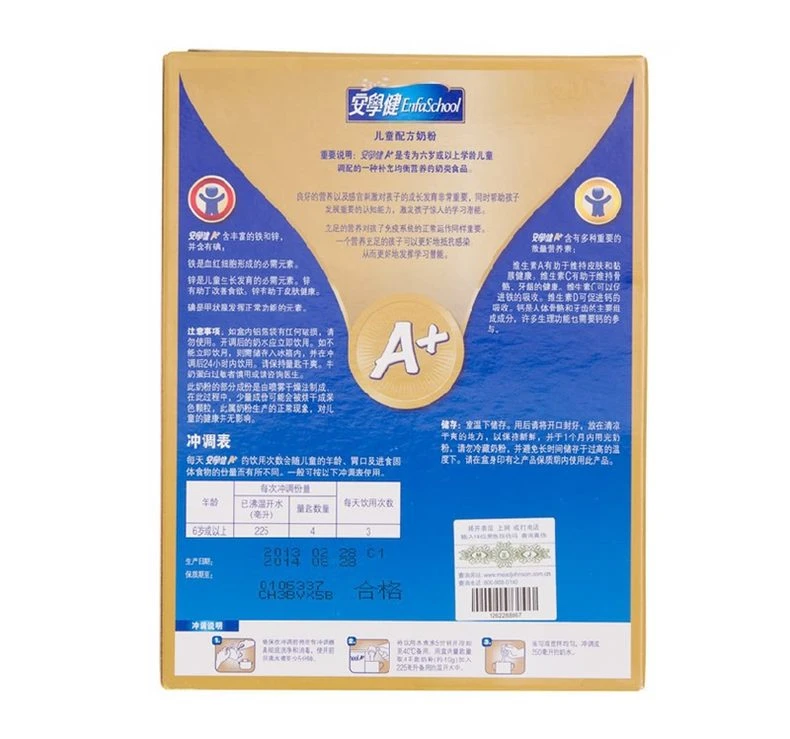
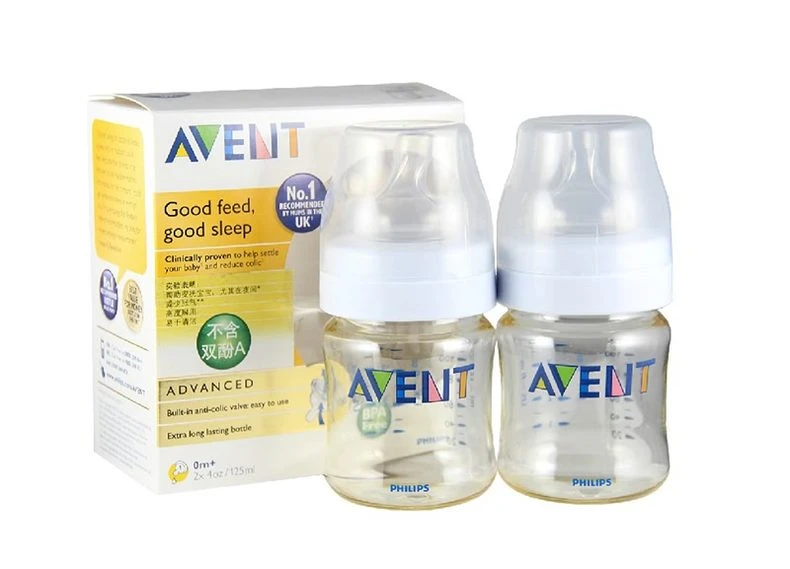
A children's nutrition brand commissioned 4 white background images of its formula milk powder carton (front and back panels) and anti-colic baby bottle twin pack. 2 product types, 4 images, delivered in 5 business days at our Guangzhou studio for e-commerce and marketplace listings.
▶ View full project details, specifications & FAQ
A children's nutrition brand commissioned white background product photography of two product types at our Guangzhou studio: a Stage 5 children's formula milk powder carton (400g, front and back panels) and a twin pack of anti-colic baby bottles (2x 4oz/125ml, 0m+). The formula carton features a glossy coated cardboard finish with yellow, red, blue, and gold foil printing, while the baby bottles use transparent PES plastic bodies with off-white collars and clear silicone nipples. We delivered 4 retouched images: 2 carton shots (front face and back panel with nutritional information) and 1 bottle shot showing both bottles with retail packaging. Every file includes a full commercial license for unrestricted use across Amazon, Shopify, and Tmall listings. AIMI Visual Media, Guangzhou, China, handled all photography and post-production in-house.
| Project Overview | |
|---|---|
| Client | Children's nutrition brand (formula milk powder + baby bottles) |
| Product | Stage 5 children formula carton (400g) + anti-colic baby bottle twin pack (2x 4oz/125ml) |
| Shots Delivered | 4 retouched white background images (2 carton angles + 1 bottle + 1 packaging) |
| Lead Photographer | June — Product Photography Team Lead |
| Shoot Location | AIMI Visual Media studio, Guangzhou, China |
| Turnaround | 5 business days (1 day photography, 2 days retouching) |
| Usage License | Full commercial license, no usage restrictions |
Photography Challenges
1. Glossy Cardboard Specular Reflection Control. The formula carton uses coated cardboard with a semi-gloss finish that catches any light source pointed in its direction as a bright streak. Unlike matte packaging, which absorbs scattered light, glossy coated cardboard behaves like a low-grade mirror — every softbox, light stand, and white ceiling surface reflects off the carton face as a visible bright patch. These patches obscure printed text underneath, making brand names, nutritional badges, and preparation instructions unreadable. A standard 120cm octabox aimed at the product from 45 degrees creates a large rectangular reflection that covers the center of the carton face, blowing out the brand logo area. We solved this with 30cm strip softboxes positioned at 90 degrees to the camera axis (cross-lighting), which creates a narrow vertical highlight that defines the carton's gloss finish without spreading across the printed text. A circular polarizing filter on the lens, rotated to maximum suppression angle, removes the remaining specular scatter from the coated surface. This two-layer approach (strip softbox angle + polarizer) keeps all printed text readable at 100% crop while preserving the premium gloss appearance that signals product quality to buyers.
2. Small Nutritional Text Legibility. The back panel of the formula carton contains 4-6pt Chinese text including preparation instructions, ingredient lists, storage warnings, and nutritional tables. At a standard product photography aperture of f/8, the depth of field at 60cm shooting distance is approximately 3cm — not enough to keep text sharp from the front face to the side edge of the 6cm-deep carton. Text on the curved edge and near the bottom of the panel falls out of focus, making critical safety information (allergy warnings, dosage instructions) unreadable. The front face also has small regulatory text near the bottom that buyers need to read, including net weight, age suitability, and trademark information. We stopped down to f/16, which extends depth of field to approximately 8cm, enough to cover the full depth of the carton including edge text that wraps around the corners. At f/16, the aperture lets in 4x less light than f/8, so we increased strobe power from 1/8 to 1/2 output to maintain proper exposure at ISO 100, keeping digital noise at baseline for clean text edges.
3. Multi-Color Packaging White Balance. The formula carton has yellow, red, blue, and gold on the same surface, and each color reflects and absorbs light at different rates. Yellow and red are warm colors that absorb blue wavelengths; blue is a cool color that absorbs red wavelengths; gold foil is a metallic surface that reflects all wavelengths but with a warm bias. Auto white balance reads the dominant yellow and red areas as a warm color cast and compensates by cooling the image, which shifts the blue branding text toward purple and the gold foil toward a flat brown. Buyers comparing the product photo to the physical packaging see color mismatch and question product authenticity. We locked white balance to 5500K (matching the strobes' color temperature) and shot an X-Rite ColorChecker Passport reference card under set lighting. In post-production, the ColorChecker readings were used to create a camera profile that corrects for the sensor's tendency to oversaturate warm tones while undersaturating cool tones, so all four colors render at their true printed values.
4. Transparent Bottle Body and Nipple Definition. The PES plastic bottle bodies are nearly transparent, with no inherent edge contrast against a white background sweep. Without intervention, the bottle silhouette disappears into the white sweep — the viewer sees the off-white collars and retail box floating, with the bottle bodies invisible between them. The clear silicone nipples inside the dome caps have the same problem: the nipple and the cap are both transparent, so there is no contrast between them. We placed black foam-core flags (15x20cm) behind the bottles at 5cm distance on either side, which creates a thin dark edge line along the bottle silhouette, separating the transparent body from the white background. A 30cm strip softbox at camera-left, positioned at 45 degrees elevation, adds a controlled highlight on the curved bottle surface that defines the cylindrical form. For the nipples inside the dome caps, a 10cm white fill card placed behind the bottles bounces backlight through the transparent cap and nipple, giving the silicone enough luminance to be visible as a defined shape inside the dome.
Our Approach
Glossy Surface Reflection Control
The core lighting setup used two 30cm strip softboxes on 500W strobes, positioned at 90 degrees to the camera axis at 30-degree forward tilt from the product. This cross-lighting approach skims light across the glossy cardboard surface at a shallow angle rather than hitting it head-on, preventing the coating from reflecting the softbox shape back at the camera. A circular polarizing filter on the lens, rotated to the angle of maximum reflection suppression, removed the remaining specular scatter. For the gold foil trim elements, which are more mirror-like than the coated cardboard, black foam-core flags were positioned between the strip softboxes and the product at 45 degrees to block any light that would strike the foil at angles producing hotspots. This three-layer approach (strip softbox angle + polarizer + flag blocking) brought all surface luminance into a range where printed text and foil details stayed legible at 100% crop.
Deep Depth of Field for Nutritional Text
To keep 4-6pt nutritional text sharp across the entire carton surface, we shot at f/16 using a Canon EF 100mm f/2.8L Macro lens at 60cm distance. At f/16, depth of field extends to approximately 8cm, covering the full 6cm depth of the carton including text that wraps around the side edges. The reduced aperture at f/16 lets in 4x less light than the standard f/8 product photography aperture, so we increased strobe power from 1/8 to 1/2 output to maintain proper exposure at ISO 100. Shooting at ISO 100 rather than raising ISO to compensate keeps digital noise at baseline, which is critical for text legibility — digital noise at ISO 400+ creates grain patterns that interfere with small character edges, making 4pt text look fuzzy even when technically in focus. The 100mm macro lens was chosen over a standard 50mm because its flat field design keeps the entire carton face sharp edge-to-edge, while a 50mm lens at the same aperture would show slight curvature softening at the frame edges.
Color-Calibrated Multi-Surface Workflow
All images were shot with white balance locked to 5500K, matching the strobes' stated color temperature. An X-Rite ColorChecker Passport was photographed in set lighting before each product setup, providing a reference target for post-production color matching. For the formula carton, which has yellow, red, blue, and gold on the same surface, the ColorChecker readings were used to create a camera profile that corrects for the sensor's tendency to oversaturate warm tones (yellow, red, gold) while undersaturating cool tones (blue). Monitor calibration was verified with an X-Rite i1Display Pro before retouching began, ensuring that color adjustments made on screen would translate accurately to the final delivered files.
Transparent Bottle Edge Definition
For the baby bottle shot (image 4), we positioned the two bottles upright on a 5mm clear acrylic riser on the white sweep. Black foam-core flags (15x20cm) were placed behind the bottles at 5cm distance on either side, creating a thin dark edge line along the transparent PES plastic silhouette. A 30cm strip softbox at camera-left, 45 degrees elevation, added a controlled highlight on the curved bottle surface that defines the cylindrical form. The retail packaging box behind the bottles was lit with the same strip softbox, which creates a consistent gloss definition across both the box and the bottle surfaces. A 10cm white fill card placed behind the bottles bounces backlight through the transparent dome caps and silicone nipples, making the nipple shape visible inside the cap.
Post-Production and Retouching
Retouching followed 4 steps. First, the ColorChecker reference shots were used to create a shared camera profile in Lightroom, applied to all 4 images to establish consistent color across both product types. Second, glossy surface areas that still showed minor specular blowout were recovered using the Highlight slider set to -20 and Whites set to -8, pulling blown highlights back into a range where printed text underneath is defined. Third, nutritional text on the back panel was selectively sharpened using a high-pass filter at 1.5px radius, applied as a luminosity layer mask to boost character edge contrast without affecting the surrounding cardboard texture. Fourth, backgrounds were cleaned to pure white (#FFFFFF) using a 5% tolerance selection with 2px feathering at the product silhouette edge.
"Packaging photography is a readability problem. The buyer needs to read 4-point text on a glossy surface through a web browser at 2000 pixels — so every lighting decision comes down to: can you still read it?" — June, Product Photography Team Lead
| Technical Specifications | |
|---|---|
| Camera | Canon EOS 5D Mark IV (30.4MP full-frame) |
| Lens | Canon EF 100mm f/2.8L Macro IS, at f/16, ISO 100 |
| Lighting | Two 500W strobes with 30cm strip softboxes at 90-degree axis, 30-degree forward tilt; 250W background strobe; 5500K locked |
| Modifiers | Circular polarizing filter; black foam-core flags (15x20cm) for edge definition and foil blocking; 10cm white fill card behind bottles; 5mm clear acrylic riser |
| Surface | Matte white seamless paper sweep |
| Color Management | X-Rite ColorChecker Passport per setup, 5500K locked white balance, i1Display Pro monitor calibration |
| Retouching | Shared Lightroom camera profile, glossy highlight recovery (-20 highlights, -8 whites), high-pass text sharpening (1.5px radius, luminosity mask), background cleanup to #FFFFFF |
| Deliverables | 4 retouched images, 2000x2000px sRGB, JPEG q90 + WebP, full commercial license |
Frequently Asked Questions
How much does formula packaging and baby bottle product photography cost?
White background packaging and product shots like these start at $12 per image under our Essential package. A 4-image set covering a formula carton (front and back) plus a baby bottle twin pack costs approximately $48. All rates are starting prices; final quote depends on the number of SKU variants and packaging formats.
How long does a formula packaging and baby bottle shoot take?
Standard turnaround is 5-7 business days from shoot confirmation to final file delivery. This 4-image shoot required 1 day for photography (2 carton angles plus bottle setup) and 2 days for retouching, including glossy surface reflection cleanup and small text sharpening for the nutritional information panel.
Can you photograph glossy formula cartons without glare covering the text?
Yes. We use strip softboxes at 90 degrees to the camera axis, combined with a circular polarizing filter on the lens. The strip softbox shape creates a narrow vertical highlight that defines the carton's gloss finish without spreading across the printed text. The polarizer suppresses remaining specular scatter from the coated cardboard surface, keeping nutritional text and brand logos readable at 100% crop.
How do you keep small nutritional text sharp on packaging photos?
We stop down to f/16 to keep 4-6pt nutritional text and preparation instructions sharp across the entire carton face. At f/16, depth of field extends to approximately 8cm at a 60cm shooting distance, enough to cover the full width of the carton including edge text that curves around the corner. We compensate for the reduced aperture with 500W strobes at 1/2 power, maintaining ISO 100 for clean text edges.
Are your formula and baby bottle images compliant with Amazon requirements?
Yes. All white background images are delivered at 2000x2000px sRGB with pure white (#FFFFFF) backgrounds, exceeding Amazon's 1000px minimum for the zoom feature. Files are pre-checked against Amazon's 85%+ fill ratio requirement for the main image slot. The back panel shot with nutritional information is delivered as a secondary listing image for buyers who want to read ingredient details.
How do you photograph transparent baby bottles so they don't disappear into the white background?
Transparent PES plastic bottles have almost no edge contrast against a white sweep. We place black foam-core flags behind the bottle at 5cm distance on either side, which creates a thin dark edge line along the glass silhouette. A strip softbox at camera-left adds a controlled highlight on the curved surface, defining the bottle's cylindrical form. The clear silicone nipple inside the dome cap is lit with a white fill card placed behind the bottle, bouncing backlight through the transparent material.
Need professional photography for your formula packaging and baby products?
AIMI Visual Media, Guangzhou, China — white background photography for children's nutrition and baby product brands selling on Amazon, Shopify, and Tmall.
Get a Free Custom QuoteView More Home & Living CasesRelated services: Amazon FBA Photography · Near-Factory Photography
Related cases: Wide-neck baby bottle with handles photography · Baby feeding bottle & fruit feeder photography · Bottled milk powder details photography
 Photography Insights
●How to Choose an Amazon Product Photography Service: A 12-Point Checklist for Sellers, Brand Owners, and Ecommerce Teams
- A 12-point checklist for picking an Amazon product photography service: portfolio depth, pricing transparency, licensing, and turnaround.
●Amazon Product Photography Cost Guide 2026: Complete Price Breakdown & ROI Calculator
- Amazon product photography costs broken down line by line for 2026, with an ROI framework for deciding how many images a SKU actually needs.
●The Complete Guide to Amazon Product Photography 2026: Authoritative Solutions from Compliance to High Conversion
- The complete Amazon image playbook for 2026: compliance specs, slot strategy, A+ Content, and conversion-tested image sequencing.
●Product Photography Pricing in China - 2026 Complete Guide
- Product photography pricing in China for 2026: what drives rates up or down, package tiers, and how to compare quotes on equal terms.
●Amazon Product Photography Requirements, Tips and How to Get It Done in China
- Amazon product photography requirements explained: image specs, main vs lifestyle slots, zoom minimums, and the listing mistakes to avoid.